
Arts of Living with Machines
Johan Redström
HDK-Valand Academy of Art and Design, University of Gothenburg, Sweden
This paper offers a perspective on how design can respond to AI by framing current challenges within the broader historical context of design responses to machines. Tracing recurring tensions between technological advances and human agency in early Swedish industrial design, it explores the central role of “useful” things and tools in how design has historically addressed machine autonomy. Arguing that this aesthetic and conceptual foundation has reached its limits, the paper identifies new directions for design in relation to generative technologies and distributed agencies.
Keywords: Artificial Intelligence (AI), Design, Industrialization, Machines, Functionalism, Aesthetics, Agency.
Relevance to Design Practice – This article examines prevalent concepts and design approaches from a historical perspective, enabling a discussion of their contemporary relevance as design seeks to respond to the emerging challenges of new technologies such as AI.
Citation: Redström, J. (2026). Arts of Living with Machines. International Journal of Design, 20(1), 71-75. https://doi.org/10.57698/v20i1.06
Received March 27, 2026; Accepted April 20, 2026; Published April 30, 2026.
Copyright: © 2026 Redström. Copyright for this article is retained by the authors, with first publication rights granted to the International Journal of Design. All journal content is open-accessed and allowed to be shared and adapted in accordance with the Creative Commons Attribution 4.0 International (CC BY 4.0) License.
*Corresponding Author: johan.redstrom@gu.se
Johan Redström is Professor of Design at HDK-Valand Academy of Art and Design, University of Gothenburg, Sweden. Combining research through design with an interest in design philosophy, he has conducted research on emerging technologies and materialities, sustainability, and more-than-human reorientations in design. He has previously served as Rector of Umeå Institute of Design and Design Director of the Interactive Institute in Sweden.
Left by Our Own Devices
For a century, design has been creating and collecting a vast range of design concepts, methods, and practices that help us anticipate, rehearse, and enact that which is yet to take form. Nonetheless, new challenges sometimes leave us wondering whether our current resources are adequate to address them, or if there is a need for a radically different approach. Contemporary design is facing a series of such challenges, many of which are related to the questions of how to create liveable and sustainable futures for all life. Among such emerging challenges, we now find artificial intelligence (AI) and other generative technologies that, by shifting responsibilities and resources, have begun to occupy roles traditionally performed by humans at an alarming pace. With both wonder and worry, we ask what this may mean for design and designers. How will design change in response to generative technologies? What perspectives, ideas, and concepts will raise the right questions to guide the way forward?
This paper seeks to ask questions about where we find ourselves as we respond to the changes and challenges presented by new technologies such as AI. Our present actions and thoughts are largely built on the past, and our present circumstances significantly influence our next steps and future possibilities. It is equally important, however, that we approach this issue from several different directions, and what follows is one possible line of inquiry among many. This paper is also a story about my own design context and culture in Sweden; my hope is that in sharing it, you are inspired to reflect upon your own context and its history.
AIlienation
Reflecting on the constant flow of headlines warning of the profound impact of AI on work and life, there is something strangely familiar about them, as if design has been here before. Avery Gordon (1993) refers to a lingering feeling that something else is still present with us, haunting us, calling for us to put “life back in where only a vague memory or a bare trace was visible to those who bothered to look” (p. 22). To explore why this might be so, I would like to start with a quote:
Today’s world is a world of machines.
We live among machines, they help us with everything we do in our work and recreation. But what do we know about their moods, their natures, their animal defects, if not through arid and pedantic technical knowledge?
Machines reproduce themselves faster than mankind, almost as fast as the most prolific of insects; they already force us to busy ourselves with them, to spend a great deal of time taking care of them; they have spoiled us; we have to keep them clean, provide them with nourishment and rest, continually attend to them and meet their every need. In a few years’ time we will become their little slaves.
Artists are the only ones who can save mankind from this danger.
This quote from the “Manifesto of Machinism” was written by Bruno Munari, one of Italy’s first industrial designers, in 1938. It could as well have been written today—and it is not the only such example. In 1934, the exhibition Machine Art opened at the Museum of Modern Art (MoMA) in New York, featuring industrial objects and instruments, machine parts, tools, and other everyday objects side by side. The exhibition sought to encourage attendees to appreciate objects in new ways and to redefine perceptions of beauty in industrialized everyday life. As the exhibition’s corresponding publication explains:
Today man is lost in the far more treacherous wilderness of industrial and commercial civilization. On every hand machines literally multiply our difficulties and point our doom. If, to use L. P. Jack’s phrase, we are to “end the divorce” between our industry and our culture we must assimilate the machine aesthetically as well as economically. Not only must we bind Frankenstein — but we must make him beautiful. (Barr, 1934, Foreword section)
A theme is emerging: when machines threaten humanity, art and design must find new ways to reconcile human life with technology. At another exhibition in the 1930s, a related question was raised—one that sounds strikingly familiar to the ones we are asking ourselves today:
If we accept the state of things as they are today, will we not run the risk of becoming slaves to the machines?
We face the same risk if we do not accept it. Specialization has already left us dependent on numerous technological processes that only a few technicians understand in detail, and nobody has control over their outcomes. We depend on these processes for our supplies of nourishment, water, and other necessities, our communication systems, etc.
Technology and speed must not become ends in themselves. One important task is to oppose the unreflecting worship of the attributes of modern production that is becoming widespread… The aids we make use of are so complicated and powerful that we must employ them wisely. (Åhrén et al., 1931/2008, p. 267)
This is from the manifesto acceptera, which was published in connection with the Stockholm Exhibition of 1930. Since this relates to my own Swedish design context, I would like to explore these ideas at greater length.
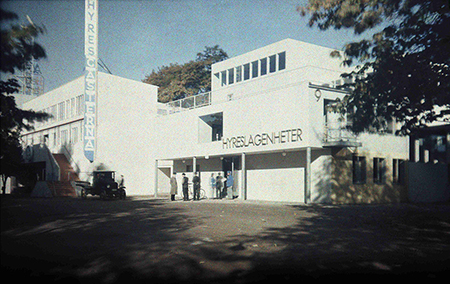
Figure 1. Photo of housing solutions at the Stockholm Exhibition in 1930: Hall 36, Hyreslägenheter. Architects: Gunnar Sundbärg och Uno Åhrén. Photographer: Gustaf W:son Cronquist. Arkitektur- och designcentrum, Stockholm (ARKM.1990-106-12, public domain).
AIccept
Unlike MoMA’s Machine Art, the Stockholm Exhibition was not primarily about art or machines but instead sought to present a vision for Sweden’s future development, including works that offered solutions to the housing crisis caused by accelerating industrialization and urbanization in the country.
In the late 1800s, Sweden remained one of Europe’s poorest countries, and in the years that followed, famine drove more than 20% of its population to North America to seek better lives. Sweden was industrialized relatively late, and in the early 20th century, it was changing rapidly. This included major political changes, with women obtaining the right to vote in 1921. It was against this backdrop of urgent need that the Stockholm Exhibition presented solutions for housing and daily life made possible by new technologies and production techniques.
As the manifesto’s name suggests, it was argued that going back to previous times was not an option. Instead, it was necessary to accept the present and start from current conditions and circumstances to find new ways forward:
Industrialism is the major fact of our new culture, if we want one. We must accept it to be able to use it for our own good. To see our situation clearly and arrive at a new and fruitful conception we must cleanse ourselves of all the old, purely aesthetic perspectives that in reality we have outgrown. (Åhrén et al., 1931/2008, p. 275)
However, leaving conventions behind and imagining something new is no easy task; how then, did they propose to do this? The example below offers a clue and is particularly relevant to our current encounters with generative AI:
Artistic eclecticism finally seems to have bankrupted itself after unsuccessful attempts to realize clearly pasted together or more less “modernized” versions of all the forms of preceding cultures, or to invent new styles analogous to these, i.e., styles consisting of a series of approved forms. We cannot embrace a certain form for any length of time and for its own sake. Our general approach is relativistic; no style can any longer be anything absolute for us…
On the other hand there can be no doubt that our age, in its desire for objectivity, to allow things to be what they are, to shape everything logically according to its function, has its specific characteristics…
By style we must then mean the ways and forms in which the needs of the age and the way in which people live find adequate expression. (Åhrén et al., 1931/2008, p. 282)
There are several ideas worth noting here. First, we encounter the familiar theme of mass-produced industrial objects exhausting—and in some ways destroying—what were once expressions of skilled craft and extensive human effort. For instance, rich ornamentation once expressed the skilled work of practiced artisans and conferred high value on objects. However, when such forms could be reproduced by machines, this association with craftsmanship and value was gradually undermined. Second, it presents a perspective on design that appears to run counter to prevailing narratives about modernism. However, rather than being dogmatic, it emphasizes the need to embrace a relativistic approach oriented toward how people actually live.
Essentially, this is not a call for a new style or look, but a search for a fundamentally different understanding of design and aesthetics, as the following statement makes clear:
Finally, we must not overlook the fact that a change in attitude and ways of thinking has taken place in principle, not merely in our taste for forms. Without forcing the comparison, we could say that in aesthetic terms we are now undergoing the same revolution in our very ways of thinking as science did when it liberated itself from its dependence on religion. (Åhrén et al 1931/2008, p. 286)
Following this thread, we may continue thinking along these lines as we move into more speculative territories to explore where such ideas might lead.
AItonomy
In 1934, the same year as MoMA’s Machine Art exhibition, Lewis Mumford published his seminal book Technics and Civilization. Notably, he makes an important distinction between two crucial categories of technical objects: machines and tools. He explains:
The essential distinction between a machine and a tool lies in the degree of independence in the operation from the skill and motive power of the operator: the tool lends itself to manipulation, the machine to automatic action. (Mumford, 1934, p. 10)
Let us consider what this distinction reveals about how we initially orient ourselves when encountering machines and tools. Since our concept of machines is oriented toward automatic action, our first questions will likely concern what those actions are; that is, what the machine does. In contrast, our notion of tools is oriented toward manipulation, so our attention will focus on our own actions—what we do. Therefore, with respect to design, when adopting these concepts, thinking tends to be based on one of two propositions:
Machines are defined by what they do.
Tools are defined by what we do.
Looking back over the history of design, it may not be possible to know why a given designer once chose a certain direction, but by considering the ideas and issues circulating at the time, we are able to reasonably speculate. One possible line of thought may have been as follows:
If tools are defined by what we do, why don’t we reimagine machines and all the everyday objects they produce as “tools” to relocate and regain our agency?
Admittedly, this may or may not be a historically accurate interpretation of what ideas guided early design practitioners, but in light of the issues raised above—regarding machines, alienation, agency, and the need for design to reorient humans’ relationship with everyday objects to overcome these challenges—it seems worthy of consideration.
To further unpack the idea of how design may address issues of machines and agency, another important shift occurred in early industrial design that merits discussion; specifically, the emphasis on the functional role of beauty as Modernism emerged. Here, another significant reference point in Swedish design history is Ellen Key.
Ellen Key was a feminist intellectual and educator who lived from 1849 to 1926. She is probably best known for her contributions to pedagogy and children’s rights, but in the context of Swedish design, her work on beauty was highly influential within early modernism. In her book Beauty in the Home, published in 1913, she writes:
…he fills his rooms to overflowing with furniture and decorative items. In such homes you get the impression that the people are there to serve the furniture and the rooms, not the reverse. Even such “tasteful” rooms lack true taste to the keener aesthetic eye. For, as has already been stressed, rooms must not appear as if they exist for their own sake. They should be an expression of the personal needs and taste of their inhabitants, their memories and feelings, their history. (Key, 1913/2008, p. 48)
And elsewhere:
Why is a lamp on a plain, column like foot – preferably one that can be lowered and raised – more beautiful than one with excrescences? Partly because the former is easier to keep clean and is more easily moved, but also because the light source itself – the most important part of the lamp – should be held up by a support that neither clamors for attention nor obscures other objects. Why, for example, is the longer and slender-necked wine bottle more beautiful than the short and thick-necked one? Primarily because it is easier to pour from. (Key, 1913/2008, p. 49)
At the center of this “new” idea about what makes something beautiful, we find a reorientation: from regarding things as decorative objects or works of art to be collected and displayed to an appreciation of things on the basis of how they are used, viewing everyday objects as tools to be worked with.1
The formation of early industrial design aesthetics seems to result from the convergence of several trajectories. In the Swedish context, design reoriented towards the usefulness of everyday things, marking a shift away from their role as decorative objects. Furthermore, machines were seen as part of a larger undertaking aimed at addressing pressing societal issues through active intervention. This suggests a profound connection between aesthetics and ethics, extending long-standing ideas about the relationship between beauty and truth (or what is “right”). It also indicates strong ties between poetics and politics, and that decisions about what and how to design cannot be separated from questions about why certain decisions are made.
AIsthetics
As we look back in time to better understand current challenges, another perspective on the intentions driving functionalism and early industrial design aesthetics comes into view. Importantly, this reorientation was not about technology, speed, or a specific style; rather, it was a matter of learning to see everyday objects—and indeed the world—in a different way. It appears to me as if this aesthetic, at the time it emerged, was about asking the world to reveal itself differently by making everyday things disappear as “objects” (in which we are passive observers) and making them reappear as “tools” (in which we become active users).
This reorientation toward “use” is so obvious and familiar to us now that it is difficult to see just how radical it once was. There are many differences between the 1930s and now—but there are also important similarities: we too have reached a critical point with respect to how we relate to machines. We may not have excessive ornaments, but we do have AI slop. We may not have cheap copies of craft objects, but we have generative models trained on original works that took time and effort to create. Perhaps we do not have the same issues with fake materials that mimic more expensive ones, but we are probably at least as lost in fake things as they were. And we too ask ourselves if it is possible to go back from here, or if it is necessary to accept the state of things and move on.
However, there appears to be a growing suspicion that treating machines as tools will not prove as effective as it once was. Having reflected on my own experience in relation to this history, the discussion below explores this issue in greater detail in order to identify possible solutions.
Today, machines do much more than make things; they make decisions, they make machines, and they make money. Our contemporary situation may seem infinitely more complex compared to the 1930s, but one of the basic problems remains the same: if we want to orient our efforts toward something other than the automatic actions of machines, we need to challenge our understanding of just what, exactly, these new machines are. This is because regardless of the kind of machine we are dealing with, we still tend to understand and approach a machine on the basis of what it does, and to change this perspective, we need to look beyond the machines themselves.
In the historical response to machines, the notion of “usefulness” represents a pivotal point: in terms of design aesthetics, it led to the disappearance of everyday things as “decorative objects” and their reappearance as “tools.” This shift was made possible by how concepts both reveal and hide aspects of the world, and how this interplay can be used when framing design. When we approach the design of something in terms of its use and usefulness, we enforce certain aspects of the relation between a thing and its user. But in doing so, we inevitably disregard several other aspects.
Traditional tools only “come to life” when they are put to use. That is, the tool and its user come to define each other—a lesson we have sometimes learned the hard way, especially when factoring in the political dimensions of how certain technologies are developed and used. Nonetheless, tools are still generally approached as resources waiting to be put to use, whenever and however we want. Thus, a paradox arises: how a tool is used appears to be determined by its user, yet the tool itself is by no means neutral, as it enables certain actions while restricting others. Still, traditional tools do little on their own. On the contrary, the use of a tool requires skill and invites users to achieve mastery over time.
Even though we implicitly understand that new computational machines, with their ability to perform independently, are qualitatively different, we still tend to approach them on the basis of their apparent (and carefully crafted) “tool-ness.” But as automatic action increases, it is bound to reach a point where “tool-ness” is no longer relevant.
As an example, consider performing an online search. Granted, the user manually types, points, and clicks, actively deciding what action to perform next, but also other processes are taking place underneath the surface—tracking, data harvesting, advertising, AI-summaries, dynamically ranking results, behavioral nudging, and much more—making it far less clear what, or whom, is “being used.” Thinking about these machines in terms of their usefulness is still relevant, but what we understand as “use” is nowhere near sufficient—no matter how much we care about user experiences. Indeed, in actual use there is an eerie experiential drift away from “to use” toward “working with” or even “being used.”
A narrow focus on usefulness is problematic for reasons that go beyond the tool and its user. As previously mentioned, preconceived notions of use and usefulness obscure important aspects from view; since “usefulness” is a relational concept, we might identify these hidden aspects by asking questions such as “for whom is it useful?” The shift toward functionality and usefulness was—and has remained for a very long time—a powerful way of bringing people to the center of attention by directly linking what is being designed with those for whom it is intended. What this also reveals, however, is that whoever and whatever is outside that relation is much less likely to be considered. Therefore, this also becomes an aesthetic of exclusion where agencies other than the one we explicitly design for are downplayed, rendered invisible, or irrelevant. (Re)Claiming our own agency comes at a cost; user-centeredness risks becoming a deceptive self-centeredness in situations where other actors and agencies must be considered. This results in a kind of tunnel vision of usefulness, in which the world tends to be reduced to resources—resources that, like a tool, lie there waiting for someone to make use of them to achieve some particular aim. Similar to the historical examples above, here we observe the convergence of several different societal and environmental challenges. Notably, the issue of treating the world as a resource to be used (up) is one of the core problems of sustainability.
Today, we are facing a series of such distinct but connected challenges, much like the early industrial designers did. However, as the machines and their role in our lives have changed, so too must our responses. Addressing the autonomy of machines and relocating our agency remain central issues, and in reimagining what machines are, there is much about this new technology that cannot be accounted for through conventional ideas about tools. To use the historical comparison, to think of these machines as “tools” is about as helpful to us now as the notion of “decorative objects” was to the early industrial designers—it is grounded in a relational orientation that is no longer valid. In other words, we need new aesthetical foundations just as much as the early industrial designers did.
There is no denying that the shift toward functionality and usefulness was immensely effective, and that the seminal work of early industrial design made significant change possible. It might, therefore, be tempting to try a similar approach as we seek to design (with) AI; that is, to seek out that single idea or ideal that can gather and generate enough momentum to drive change in a desirable direction. However, I do not believe that it was the intent of early industrial designers to pursue their goals in a dogmatic way. On the contrary, a range of relativistic appraoches was embraced. Despite this, in retrospect this functionalist aesthetic tends to be viewed as rigid, narrow, and excluding. There is an important lesson for us here. Conditioned by the constraints of mass production, our predecessors sought the optimal solution—the single best design response that could be multiplied on a large scale. However, our current conditions are different, and so are the complexities we must deal with. When it comes to the wicked problems of design, we have long understood that there will never be just one optimal solution. In fact, there is good reason to believe that ideas about diversity will have to be as important to us as universalism once was for the early industrial designers. That said, certain issues in design are likely to remain:
It is not about what machines do.
It is about what we do.
Endnote
- 1. If Key’s ideas sound familiar even though you have never encountered her work, consider the profound similarity with another design proposition made by Dieter Rams, about 60 years later: 5. Good design is unobtrusive. Products fulfilling a purpose are like tools. They are neither decorative objects nor works of art. Their design should therefore be both neutral and restrained, to leave room for the user’s self-expression. From Dieter Rams (“1970s”), Ten principles for good design. Retrieved March 12, 2026 from https://www.vitsoe.com/gb/about/good-design ).
Reference
- Åhrén, U., Asplund, G., Gahn, W., Markelius, S., Paulson, G., & Sundahl, E. (2008). acceptera. In L. Creagh, H. Kåberg, & B. M. Lane (Eds.), Modern Swedish design: Three founding texts (pp. 140-347). Museum of Modern Art. (Original work published 1931)
- Barr, A. H. (1934). Foreword. In Machine art, March 6 to April 30, 1934. Museum of Modern Art. https://www.moma.org/documents/moma_catalogue_1784_300061872.pdf
- Gordon, A. F. (1997). Ghostly matters: Haunting and the sociological imagination (2nd ed.). University of Minnesota Press.
- Key, E. (2008). Beauty in the home. In L. Creagh, H. Kåberg, & B. M. Lane (Eds.), Modern Swedish design: Three founding texts (pp. 32-57). Museum of Modern Art. (Original work published 1913)
- Mumford, L. (1934). Technics and civilization. Routledge & Kegan Paul.
- Munari, B. (1938). Manifesto del macchinismo [Manifesto of machinism]. Retrieved on March 12, 2026, from https://www.panarchy.org/munari/machinism.html
