
Design Protection for Automotive Interiors: Bridging Design Practice and Locarno Classification
Wonjoon Yoon 1,2 and Jieun Kim 2,*
1 Design Center, GM Technical Center Korea, Incheon, South Korea
2 Graduate School of Technology and Innovation Management, Hanyang University, Seoul, South Korea
The automotive interior has become the industry’s pivotal competitive advantage, serving as the crucial source for novel in-car experiences and brand differentiation. However, existing design patent classification systems, such as the Locarno Classification (LOC), fail to adequately capture these contemporary design innovations. This limitation severely compromises their design protection, increasing the likelihood of misclassification, unintentional infringement, and complex examination processes while complicating effective competitive trend analysis. To address this challenge, this study proposes the Automotive Interior Design Classification (AIDC) system. The AIDC features a four-depth matrix structure that incorporates both physical and multimodal elements, such as graphical user interfaces and ambient lighting. The system’s practical and taxonomic utility was validated by core user groups, including designers, IP analysts, patent attorneys, and examiners. A case study applying the AIDC to the design patent portfolios of ten traditional and emerging car companies highlights its utility by facilitating the analysis of design trends and competitors. These findings underscore its potential to bridge the gap between emerging design practices and the LOC for safeguarding automotive interior design.
Keywords – Automotive Interior Design, Intellectual Property, Design Patent, Locarno Classification, Multimodal Design.
Relevance to Design Practice – This paper presents a novel Automotive Interior Design Classification (AIDC) system designed to enhance the relevance of design patent data in design practices. The AIDC enables designers to systematically analyze emerging design trends, providing patent data-driven insights that strengthen design protections. Through more precise patent classification and designer-friendly terminology, the AIDC helps identify competitors’ design strategies while minimizing the risk of unintentional infringement. This AIDC enables designers to innovate while safeguarding their creative outputs in the rapidly evolving in-car industry.
Citation: Yoon, W., & Kim, J. (2026). Design protection for automotive interiors: Bridging design practice and Locarno classification. International Journal of Design, 20(2), 55-70. https://doi.org/10.57698/v20i2.04
Received December 22, 2024; Accepted March 9, 2026; Published August 31, 2026.
Copyright: © 2026 Yoon & Kim. Copyright for this article is retained by the authors, with first publication rights granted to the International Journal of Design. All journal content is open-accessed and allowed to be shared and adapted in accordance with the Creative Commons Attribution 4.0 International (CC BY 4.0) License.
*Corresponding Author: jkim2@hanyang.ac.kr
Wonjoon Yoon is an automotive interior design manager with over two decades of experience at the Design Center of GM Technical Center Korea, where he has led the design development of a wide range of vehicles across GM’s global brand portfolio. He holds a Master of Engineering Management from Yonsei University and a Ph.D. in Technology Management from Hanyang University, where he also serves as an adjunct professor at the School of Interdisciplinary Industrial Studies. His current research explores how design knowledge and creative practices can be systematically integrated into technology management and innovation strategy, with a particular focus on developing patent analytics for understanding design-driven innovation.
Jieun Kim is a full professor at the Graduate School of Technology and Innovation Management, Hanyang University, and co-directs an interdisciplinary research lab, the Imagine X Lab, since 2013. She has a BA in Industrial Design from KAIST (2007) and an MS and Ph.D. in Industrial Engineering from Arts et Métiers ParisTech, Paris (2008/2011), followed by the Leverhulme Research Fellowship (2012) at the Royal College of Art in London. She was a visiting associate professor at the Human Communication Technologies Lab at the University of British Columbia (2020). She served as a general co-chair of ACM TVX 2018 and continued to contribute to many international design and innovation management communities as a reviewer and speaker.
Introduction
In 2012, the iconic legal battle between Apple and Samsung captured global attention and revealed that design patents are far more than mere legal safeguards. The district court, applying 35 U.S.C. §289, awarded Apple an astronomical sum in design patent damages, corresponding to Samsung’s entire profits from sales of the infringing smartphones, ironically marking the first case to demonstrate the immense financial value of a design patent (Van Pelt et al., 2016). This unprecedented penalty signaled to the broader industry that design patents possess substantial financial and strategic value, prompting heightened attention from other sectors. Rather than being viewed as secondary rights, design patents emerged as essential tools for securing market competitiveness and strengthening intellectual property (IP) portfolios in rapidly evolving industries (Albasoos & Al-Musallami, 2020; Saardchom, 2014). The automotive industry is no exception.
Automobile interiors have become one of the primary differentiators between brands. The growing importance of interiors is therefore driven by the demand for personalized, comfortable, and technology-integrated spaces that deliver tailored in-car experiences (Fernandes, 2020; Lopez-Vega & Moodysson, 2023; Möller et al., 2021; Wellbrock et al., 2020). As highlighted by Yardım and Pedgley (2023), designing for the in-car experience integrates aesthetic refinement with user-centric capabilities enhanced through multimodal design elements, making automotive interiors a crucial arena for innovation and differentiation. In the automotive context, multimodal design refers to the integration of multiple expressive and interactive elements, including form, display, lighting, material, and touch, to create a coherent in-car experience (Zheng & Ren, 2022). Empirical evidence from Pettersson (2017) indicates that potential consumers demonstrate a marked preference for interiors that combine efficient spatial organization with sophisticated aesthetics. As a result, interior design in the automotive sector has evolved into a critical factor for brand differentiation and consumer decision-making, far beyond its traditional aesthetic focus (Gu et al., 2018; Hirz et al., 2021; Zapata & Nieuwenhuis, 2010).
A recent consumer survey conducted by Digital Theater System (2023) supports that about 50% of respondents view their vehicles as a ‘third space’, a setting for relaxation and escape from work-related stresses, potentially replacing conventional third places like coffee shops and parks. This sentiment is particularly strong among 25- to 34-year-olds, with 74% agreeing. From the executive perspective, a McKinsey & Company survey found that 71% of automotive executives expect interiors to play a more significant role in overall vehicle appeal (Möller et al., 2021).
As the pace of car interior design innovation accelerates, the need to protect these advancements through intellectual property (IP), particularly design patents, has become increasingly critical. Figure 1 illustrates the trend in U.S. design patent applications in the car interior sector from ten emerging and traditional car companies between 2005 and 2022. Despite the general upward trend in application numbers, there were notable fluctuations over time, reflecting inconsistencies in the strategic direction of design patent filings. Additionally, significant disparities exist between companies, with emerging players like Geely and Rivian showing active protection strategies, while traditional car companies remain limited in this area.
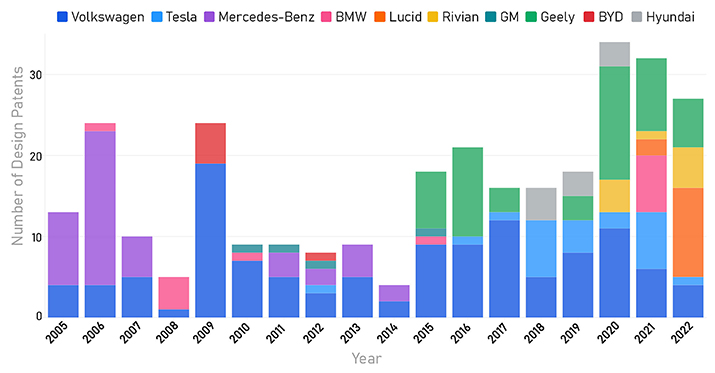
Figure 1. Growth of US automotive interior design patents of 10 global car companies (2005 ~ 2022).
Although car companies have long recognized the strategic value of design patents, a notable imbalance persists in the relative scarcity of interior-focused design patents (Berman, 2024; Neuworth et al., 2022). This reflects the historical emphasis on exteriors as key elements of brand identity and consumer recognition (Hong et al., 2020; Karjalainen, 2007). In contrast, interior innovations, especially those involving hybrid physical–multimodal features, have often been underrepresented (Yoon & Kim, 2024). Research suggests that design teams may lack systematic processes or training to leverage design patents in interior contexts, despite their growing role in shaping user experience and market differentiation (Farhana & Bimenyimana, 2015; Onem & Hasirci, 2020; Wagner et al., 2016).
Compounding these challenges, traditional design patent systems have struggled to keep pace with the rapid evolution of the automotive industry. The legal framework for patent classification is not merely administrative but serves as a critical pathway for innovation, enabling the systematic cataloging, retrieval, and analysis of patent information (Filitz et al., 2015; Rademaker, 2000). However, current design classifications, such as the Locarno Classification (LOC), face significant challenges in accommodating the rapid integration of multifunctional and technologically advanced elements into automotive interiors (Fernandes, 2020; Gao et al., 2018; Kim et al., 2021; Yoon, 2025; Yoon & Kim, 2023). The risk for misclassification is that it obscures the innovation landscape, weakens alignment between IP and R&D, creates competitive blind spots, and may even reduce legal clarity and enforceability.
Figure 2 illustrates some frequent examples of misclassifications in automotive interiors. LOC 06-04, intended for storage furniture, is sometimes inconsistently assigned to seats like LOC 06-01. LOC 12-08, which generally refers to motor cars, buses, and lorries, may also encompass smaller components like door trims or vent bezels, complicating the search process. In addition, it is challenging to search for specific graphical user interfaces (GUIs) within the broad LOC 14-04, intended for GUIs, because its scope is too general to enable precise identification of distinct GUI designs. Similarly, LOC 12-16, which refers to vehicle parts, has the same limitation, as there is no mechanism to differentiate between exterior and interior designs. This lack of granularity hinders effective search, analysis, and comparison of design patents, underscoring the need for a more refined classification framework.
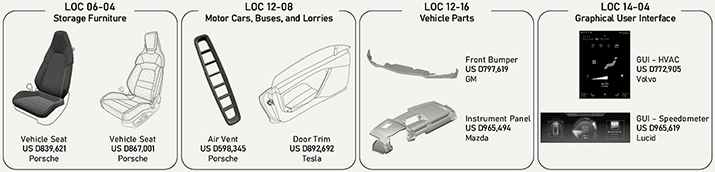
Figure 2. Examples of misclassifications in automotive interior parts.
The LOC system suffers from overly broad categories, inconsistent indexing, and insufficient granularity for emerging technologies (Japan Patent Office, 2018; WIPO, 2008). For example, Lucid’s large center displays, spanning the instrument panel and center console and replacing traditional physical buttons and dials, have become a hallmark of its design philosophy. Such distinctions need to be captured with far greater precision than the LOC does, which categorizes these innovations into broad, ambiguous classes such as “Multimedia Equipment” or “Vehicle Parts, Equipment, and Accessories.” Based on the analysis of ten car companies’ interior-related design patents from 2005 to 2022, a majority of design patents are classified into only three distinct categories; 56.8% of automotive interior design patents are being classified as LOC 12-16, and that 87.3% are sorted into only three categories which are LOC 12-16, 14-04, and 06-01 (see Figure 3). This suggests that the LOC lacks sufficient detail and granularity to capture the complexity of interior design. In addition, the misalignment between design classification systems and the evolving nature of automotive interiors highlights the urgent need for a pragmatic, systematic approach to design patent management, supported by a more designer-friendly, practical taxonomy.
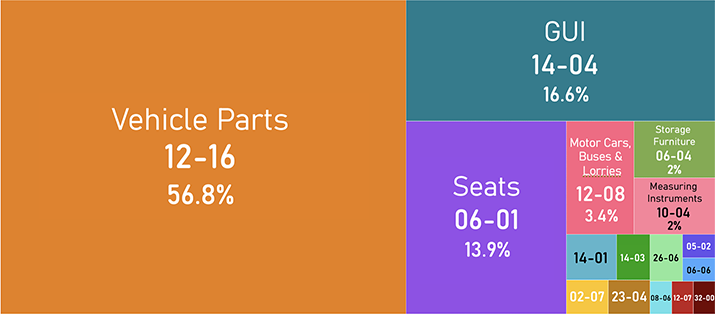
Figure 3. Locarno Classification (LOC) proportions of automotive interior design patent portfolio of 10 car companies (2005 ~ 2022).
In this context, this study raises the research question: “What would a better classification system for automotive interior design look like?” A better classification needs to (1) make it easier to sort things into the right categories; (2) make the categories more granular and more commensurate in size; and (3) enable people to use the classification data to identify industry trends and derive insights about their competitors’ next moves. Accordingly, the study proposes developing a new design classification system tailored specifically for automotive interior designers. It validates its effectiveness from both practical and taxonomic perspectives compared to the traditional LOC system.
This paper begins by exploring the fundamentals of design patents and classification systems. Following a six-step design patent classification development process, it outlines the development of the proposed Automotive Interior Design Classification (AIDC) system and its validation by core user groups, including designers, IP data analysts, patent attorneys, and examiners. A case study involving design patents from ten global automotive companies demonstrates the system’s applicability. Finally, the paper discusses how this new AIDC system has the potential to bridge the gap between emerging design practices and legal protections in this rapidly evolving automotive interior design.
Design Patents and Classification System
Intellectual property (IP) has long been recognized as an essential tool for understanding innovation, technological progress, and industrial knowledge in technology-intensive sectors (Filitz et al., 2015; Yoshioka-Kobayashi et al., 2018). As mentioned at the beginning, the legal battles between Apple and Samsung Electronics further highlighted the strategic importance of a comprehensive IP portfolio that combines utility and design patents to protect various aspects of their innovations. Unlike utility patents, which focus on functional inventions, design patents safeguard the visual characteristics of an object, such as its shape, configuration, pattern, or ornamentation, provided these features are new and original (United States Patent and Trademark Office, 2024).
Given the growing importance of design protection, efforts to standardize and streamline practices have been made globally. One notable initiative is the Industrial Design 5 (ID5), a collaborative group established to harmonize practices among five major intellectual property offices: the United States Patent and Trademark Office (USPTO), the European Union Intellectual Property Office (EUIPO), the Korean Intellectual Property Office (KIPO), the Japan Patent Office (JPO), and the China National Intellectual Property Administration (CNIPA). Collectively, these offices account for approximately 72% of global industrial design filing activity as of 2023, underscoring their central role in shaping international design protection systems (WIPO, 2024). Together, they work to harmonize practices, address challenges posed by evolving design trends, and ensure efficiency and consistency across jurisdictions.
Design patent classification systems are essential for organizing and analyzing the vast number of design patents generated across industrial sectors. These systems streamline patent examination processes, improve searchability, and ensure consistent legal protection across borders (Xie et al., 2025). Among these, the LOC, established in 1968, is the most widely used system for international design categorization. The LOC consists of 32 classes and 241 subclasses, offering a simple structure that is easy to understand and apply across international borders. However, its two-depth classification system lacks the granularity required to differentiate increasingly complex and innovative design elements (Japan Patent Office, 2018; WIPO, 2008; Yoon, 2025; Yoon & Kim, 2024).
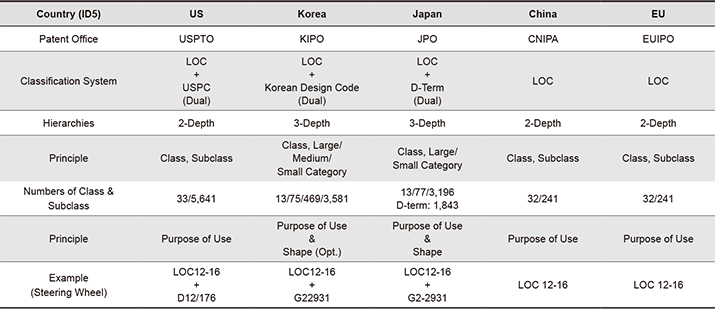
To address these limitations, some countries have adopted dual classification systems that integrate LOC standards while accommodating domestic market and legal needs. For example, while the European Union and China primarily rely on the LOC, countries like the United States, South Korea, and Japan use dual classification systems to provide a finer level of categorization (see Table 1).
Table 1. Comparison of ID5 design classification system.
Alongside the LOC’s lack of detail, critics argue that there is a need for more refined classification systems that can adapt to rapidly evolving industry trends (Dulken, 2002; Liu et al., 2020; Rademaker, 2000). As industries become more multifunctional and complex, the limitations of current classification systems stem not only from insufficient granularity but also from structural shortcomings. Categories remain broad, imbalanced, and product-based, making them ill-suited to capture emerging experience- or interface-driven innovations.
The automotive industry exemplifies these classification challenges. As shown in Figure 4, several design patents, such as US D787,994, D551,197, and D918,824, involve integrating display screens into various physical components, including the steering wheel, center console, and headliner. Although these designs share a similar categorical context under LOC 12-16 (Vehicle Parts, Equipment, and Accessories), the innovation points differ significantly: one focuses on steering-wheel–display integration, a second on a console-mounted interface, and a third on a headliner-based display system. From a designer’s perspective, each represents a distinct creative leap in merging GUIs (LOC 14-04) with physical design elements. However, under the current LOC framework, all are constrained within broad and insufficient categories that obscure their unique multimodal design characteristics. Given these inconsistencies, it becomes evident that a more granular and flexible classification system is needed to accurately capture the evolving convergence between physical and multimodal elements in automotive interior design.
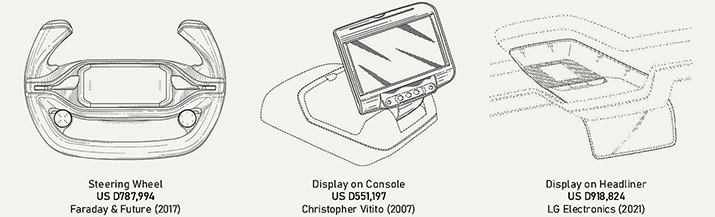
Figure 4. Examples of design patents integrated with multimodal design elements: US D787,994, D551,197, and D918,824.
In this regard, the next section introduces a new design classification system specifically tailored for automotive interior designers. It validates its taxonomical and practical utility, addressing the needs of core user groups such as IP data analysts, patent attorneys, and examiners.
Development of the AIDC System
The development of the automotive interior design classification followed six steps, the first five of which were based on the Locarno Classification for Industrial Designs, administered by the World Intellectual Property Organization (WIPO) (1994). The sixth step, a validation phase, was added to ensure a comprehensive evaluation from multiple professional perspectives.
The entire development process involved two automotive interior designers, each with over 20 years of experience, alongside a design patent expert with a decade of expertise. For the validation phase, the core user group was expanded to 12 experts, encompassing automotive interior designers, IP data analysts, private design patent attorneys, and examiners from the Korea Intellectual Property Office (KIPO).
Figure 5 outlines the key objective of each step. The development process for the AIDC follows a structured six-step approach. Step 1 involves extracting design elements from the LOC by identifying automotive interior designs based on design patents classified under LOC categories. Step 2 engages automotive interior designers to identify and validate design elements from their practical perspectives, ensuring relevance to practitioners. Step 3 integrates the identified design elements from Steps 1 and 2 to develop a matrix-based classification structure that segments the design domain in an organized, hierarchical manner. Step 4 defines classes and subclasses by categorizing design elements across four hierarchical levels, including multimodal design elements, to ensure detailed classification. Step 5 assigns unique indices to the design elements, structured by levels and specific design characteristics to facilitate categorization and retrieval. Finally, Step 6 validates the newly developed classification system through comparative user validation from its practical and taxonomical perspectives. This step-by-step process ensures that the AIDC addresses the limitations of existing classifications while supporting the evolving needs of automotive interior design.
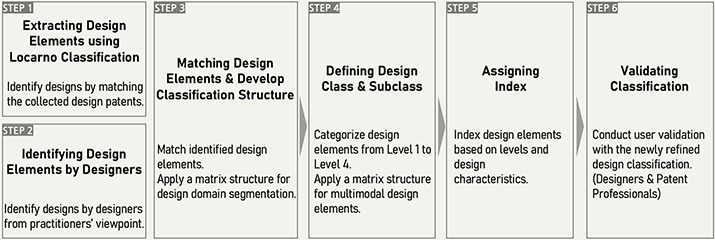
Figure 5. Development process of the automotive interior design classification.
Step 1: Extracting Design Elements Using LOC
Design patent data were collected from 10 global car companies (BMW, GM, Hyundai Motor Company, Mercedes-Benz, Volkswagen, BYD, Geely, Lucid, Rivian, and Tesla) that filed at the U.S. Patent and Trademark Office between 2005 and 2022. Initially, 5,967 design patents were filtered using the LOC system to identify automotive-related design patents such as LOC 12-08 (motor cars, buses, and lorries) and LOC 12-16 (vehicle parts, equipment, and accessories). For ambiguous or broad classifications, such as LOC 06-04 (storage furniture) and LOC 14-04 (graphical user interface, GUI), the “patent name, description, and drawings” were additionally reviewed to refine the dataset, resulting in 296 finalized automotive interior design patents.
Step 2: Identifying Design Elements by Designers
The second step captures the evolving landscape of automotive interior design from the viewpoint of practicing designers, emphasizing current and upcoming in-car experiences. By reviewing real-world design examples and the latest interior mockups with automotive design workplaces, a total of 106 design elements were identified. These included foundational physical design elements such as the instrument panel, console, door, seat, floor, trim, and overhead, as well as the more abstract yet essential multimodal design elements, such as GUIs and ambient lighting (see Figure 6). This approach emphasizes the need for a classification that can accommodate both the physical and multisensory dimensions of interior design.
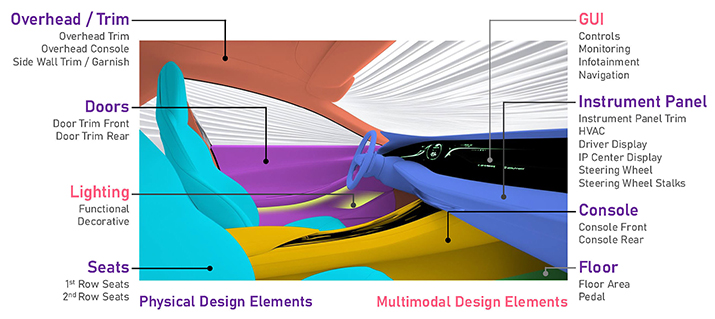
Figure 6. Automotive interior design elements: Physical and multimodal design elements.
Step 3: Matching Design Elements & Developing Classification Structure
The third step involves matching the automotive interior design elements identified by the design patent expert in Step 1 with those identified by the automotive interior designers in Step 2, and organizing them into a cohesive classification structure. Through a close collective workshop, a four-depth matrix structure is developed, comprising four distinct levels (Level 1 to Level 4), with the design areas becoming progressively more specific. Starting with the Level 1 distinction between physical and multimodal design elements, the classification structure is refined to Level 4, which categorizes detailed design components according to the matrix structure in which both physical and multimodal design elements interact (see Figure 7).
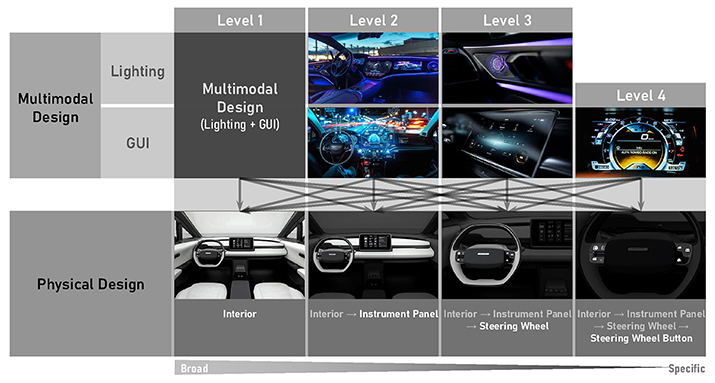
Figure 7. Coupling between physical and multimodal design elements from Level 1 to Level 4.
Step 4: Defining Design Class & Subclass
The fourth step then refined the taxonomy of design patents across multiple levels, assigning designer-friendly labels to classes and sub-classes while ensuring clarity and consistency in classification. To future-proof the system, a “99” sub-class was introduced as a placeholder for new or unforeseen designs. This addition ensures that the classification system remains adaptable and expandable to accommodate design innovation in the rapidly evolving automotive industry.
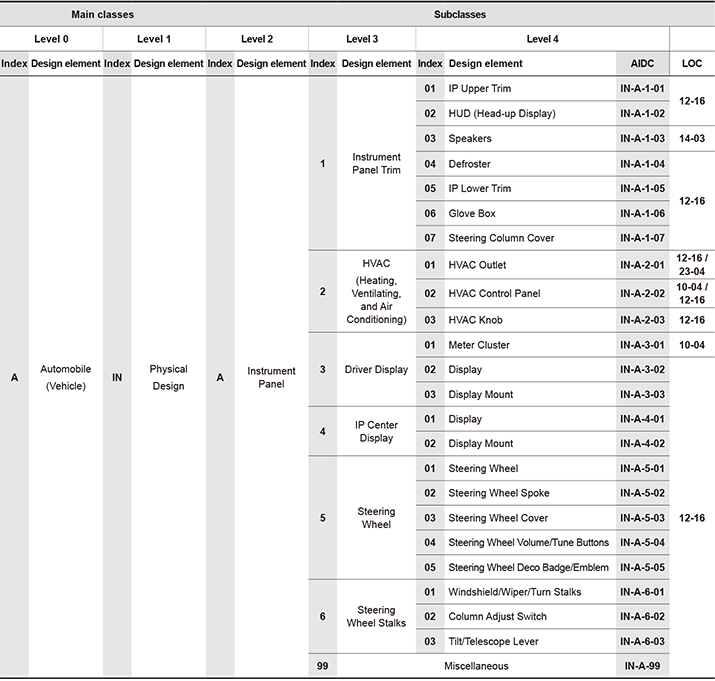
The AIDC adopts a matrix structure from Level 1, encompassing both physical and multimodal design elements for automotive interiors, and extends to Level 4, which offers finer subdivisions of these elements. Physical design elements are subdivided into six design categories at Level 2, 23 at Level 3, and 86 at Level 4. At Level 2, the interior is split into six key design elements: instrument panel, door, console, seat, overhead, and floor. Level 3 further breaks these elements down into 23 subcategories, which include design elements such as instrument trim, climate control, driver display, IP center display, and steering wheel. These categories provide more detail for understanding and classifying complex interior designs. Finally, Level 4 encompasses 86 highly detailed interior design elements. For example, the instrument panel under Level 2 includes 24 distinct design elements at Level 4; the overhead includes 18; the seat includes 16; the door includes 13; the console is divided into 10 elements; and the floor includes 5. Table 2 is an example of the AIDC Table for the instrument panel. This comprehensive structure ensures that automotive interior design components are classified at each level.
Table 2. Sample of automotive interior design classification (AIDC): Instrument panel.
The multimodal design of Level 1 extends to a sublayer of Level 2, which consists of the GUI and lighting. Level 3 of the GUI consists of usability categories: Controls, Monitoring, Infotainment, and Navigation. Level 4, a subclass of Level 3, consists of 17 GUIs, including climate control, seat adjustment, speedometer, and battery state of charge. Lighting from Level 2 is distributed to Level 3, which consists of functional and decorative lighting, such as ambient lighting. Multimodal design, which is a classification category for the converged design elements, cannot be used alone and is combined with physical design elements such as ‘interior’ or ‘exterior’ to fit the characteristics of the design across Level 1 to Level 4 to have a classification code for specific designs related to convergence.
Within the AIDC system, Level 1, consisting of interior design and multimodal design, was indexed as “IN” and “MM,” respectively, considering user-friendliness. In the next sublevel, Level 2, each area was assigned a unique alphabetical code to facilitate user identification. The instrument panel was indexed as “A,” the console as “B,” the doors as “C,” the seats as “D,” the trim and overheads as “E,” the floor as “F,” the GUI as “G,” and the lighting as “H.”
Level 3, a sublevel of Level 2, assigns an index to each interior design element and further subdivides it within the eight major design areas. The design elements of Level 2 are assigned a specific numerical code in sequence. For example, the number “5” in Level 3, a subhierarchy of Level 2, the instrument panel, means “Steering Wheel.”
Level 4, a sub-hierarchy of Level 3, assigned design element indices that further refined the categories established in Level 3 and was indexed in the same manner as Level 3. However, instead of the single digit assigned in Level 3, we applied dual digits to account for future expandability. For example, in Figure 8, at Level 4, ‘Steering Wheel’ is defined as a ‘01’ code within the ‘Steering Wheel’ category of physical design elements at Level 3, providing a precise classification that helps identify specific components. The full classification framework is available online (Kim, 2024).
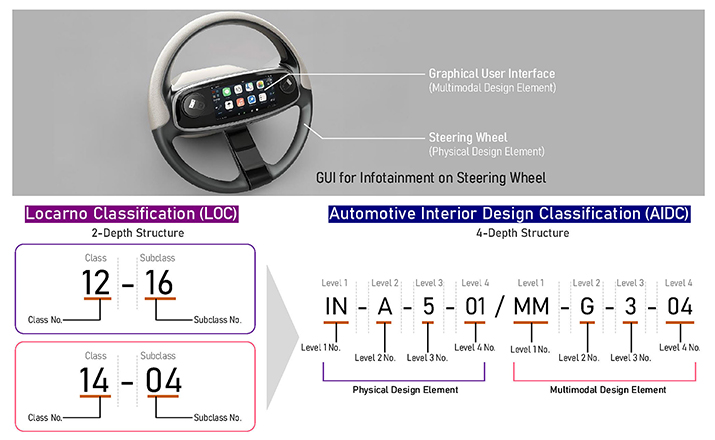
Figure 8. Example of indexing the AIDC: GUI for infotainment on steering wheel.
Step 5: Assigning Index
Assigning indexes in Step 5 involves creating and specifying an index for each class and subclass, the final step in the design classification development process. The indexing work for the design classification that reflects automotive interior design elements was performed jointly by automotive interior designers and design patent experts. It is designed to describe each level of more specific design elements and even to reflect a matrix structure for multimodal design elements. For example, as shown in Figure 8, it would be possible to generate a design classification index for “GUI for Infotainment on Steering Wheel” using the AIDC.
Step 6: Validating Classification
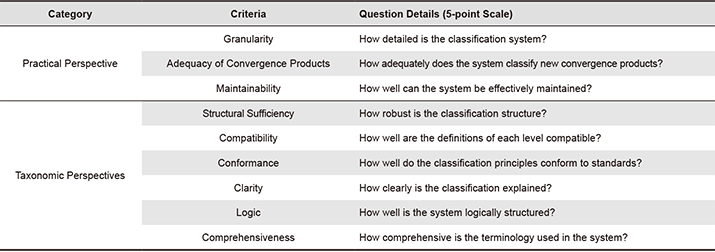
In the final step, the current LOC and the proposed AIDC system were validated from practical and taxonomic perspectives. Practical perspectives concern the system’s usability in real-world applications, such as aiding designers and analysts in trend forecasting and patent searches. In contrast, taxonomic perspectives focus on the system’s structural logic, clarity, and ability to accurately classify complex and evolving design elements (Yoon & Kim, 2019). Based on previous studies on user requirements for developing new design patent classification systems (Yoon & Kim, 2019), Table 3 lists nine criteria and their corresponding questions. The practical perspective assesses how usable each classification system is, including three criteria: granularity, adequacy of convergence products, and maintainability. In comparison, the taxonomic perspective focuses on the structure and logic of the classification, covering six criteria: structural sufficiency, compatibility, conformance, clarity, logic, and comprehensiveness.
Table 3. Validation criteria: Practical and taxonomic perspectives.
This validation process also examined how effectively the AIDC addresses the key challenges initially identified as classification ‘gaps.’ Specifically, core user groups assessed whether the system improves clarity and granularity in categorization (reducing ambiguity in existing structures) and whether it adequately captures emerging design elements that traditional systems fail to represent. These outcomes collectively demonstrate that the AIDC responds to both the practical and taxonomic challenges of design classification.
Based on the nine criteria, participants completed a self-reporting questionnaire using a five-point scale, followed by in-depth interviews to explain the rationale behind their ratings. Respondents were selected using purposive sampling (Rai & Bikash, 2015), comprising 12 core user groups: 3 automotive interior designers, 3 IP data analysts, 3 design patent examiners from the Korea Intellectual Property Office (KIPO), and 3 patent attorneys.
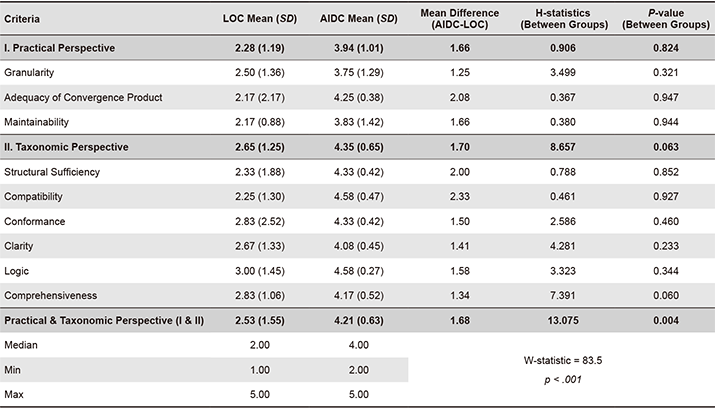
Table 4 presents the results of the comparative validation between the LOC and the AIDC. The AIDC was rated significantly higher than the current LOC across all criteria (M = 4.21 vs. 2.53, W = .000, p < .001). Wilcoxon signed-rank test results (W-statistic = 83.5, p < .001) also indicate that almost all participants rated AIDC higher, with very few ties or reversals. From a practical perspective, the LOC received a mean rating of 2.28 (SD = 1.19). In contrast, the AIDC received a significantly higher mean rating of 3.94 (SD = 1.01), reflecting a mean difference of 1.66 between the two classifications. Similarly, from a taxonomic perspective, the LOC received a mean rating of 2.65, whereas the AIDC achieved a higher mean rating of 4.35, with a mean difference of 1.70. These results highlight AIDC’s potential as a practical tool and a robust taxonomic framework compared to the existing LOC.
Table 4. Comparative evaluation of LOC and AIDC in practical and taxonomic criteria.
All core user groups rated the proposed AIDC system favorably (M = 4.21, SD = 0.63). However, there is a borderline difference among them in their ratings from a taxonomic perspective (H-statistic = 8.657, p = 0.063), particularly in comprehensiveness, clarity, and logic. Analysis revealed two distinct perspectives: automotive interior designers and IP data analysts provided higher ratings, while patent attorneys and design patent examiners were more conservative in their assessment (see Figure 9).
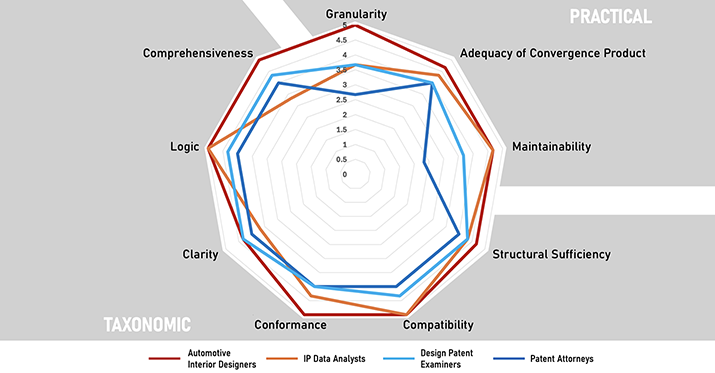
Figure 9. Comparative ratings of the AIDC system by core user groups.
From a practical perspective, automotive interior designers and IP data analysts particularly appreciated the system’s granularity (M = 4.34), adequacy of convergence products (M = 4.50), and maintainability (M = 4.67). In contrast, patent attorneys and design patent examiners, while rating AIDC higher than LOC, expressed concerns about over-segmentation and increased complexity, reflected in lower scores for granularity (M = 3.17) and maintainability (M = 3.00).
From a taxonomic perspective, the AIDC received strong support from automotive interior designers (M = 4.83), followed by design patent examiners and IP data analysts (M = 4.28) and patent attorneys (M = 4.00). IP data analysts notably gave high marks for compatibility (M = 5.00) and maintainability (M = 4.67), though rating clarity (M = 3.67) and comprehensiveness (M = 3.33) lower.
Case Study
The case study demonstrates the practical applicability of AIDC in automotive interior design, focusing on its ability to identify design trends and assess competitors’ strategies. For comparison, the LOC was also applied. The dataset consists of 296 interior design patents from ten global car companies, previously collected in the classification development process.
Insights from Design Patent Portfolios of Ten Car Companies: AIDC
The treemap analysis of automotive interior design patents from 10 car companies illustrates a clear contrast between the granularity provided by the LOC and the AIDC.
Unlike Figure 3, which shows that design patents are concentrated in only three categories (LOC 12-16: Vehicle parts, equipment, and accessories at 56.8%; LOC 14-04: GUI at 16.6%; and LOC 06-01: Seats at 13.9%), the AIDC treemap presents a more diverse landscape (see Figure 10). IN-D-1-01 (front seat) and IN-A-5-01 (steering wheel) account for 15.2% and 14.9%, respectively. The increased granularity allows clear categorization of physical design elements, such as IN-A-1-01 (IP upper) at 10.1% and IN-B-1-01 (console trim) at 7.4%. Additionally, multimodal design elements such as IN-A-3-02/MM-G-2-01 (GUI for speedometer on driver display) and IN-A-4-01/MM-G-1-01 (GUI for HVAC control on IP center display), which are merged or less visible in the LOC, are clearly categorized.
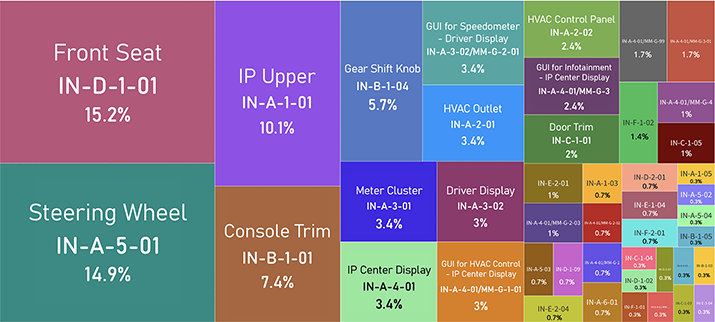
Figure 10. AIDC proportions of automotive interior design patent portfolio of 10 car companies (2005 ~ 2022).
The granularity of the AIDC further aids designers by clearly delineating components, enabling a precise understanding of individual design contributions. From a designer’s perspective, this level of detail enables targeted trend analysis and the detection of emerging innovation clusters that may remain hidden within LOC’s broader categories. This finer structure enables more accurate tracking of innovation trajectories, more precise identification of competitor strategies, and improved portfolio management and R&D planning. The ability of AIDC to highlight such distinctions demonstrates that it is a more detailed taxonomy and a system that produces earlier, clearer, and strategically actionable insights. In this way, AIDC supports designers and IP professionals in navigating the increasing complexity of modern automotive interiors and leveraging both physical and multimodal elements to meet customer demands and anticipate industry trends.
Insights from Design Patent Portfolios of Traditional and Emerging Car Companies: LOC vs. AIDC
This section examines how different classification systems, the LOC and AIDC, shape the insights that can be drawn from design patent grants. The traditional car companies represented in the group include BMW, GM, Mercedes-Benz, Hyundai, and Volkswagen, while the emerging group consists of BYD, Geely, Lucid, Rivian, and Tesla. Rather than directly comparing the interior design strategies of these firms, the focus is on demonstrating how the use of LOC versus AIDC highlights distinct trends and patterns within the design patent portfolios of traditional and emerging car companies.
Under the LOC, design patents from traditional car companies are grouped into broad categories, as shown in Figure 11, with 63% of patents falling under LOC 12-16 (vehicle parts, equipment, and accessories), followed by 14% in LOC 06-01 (seats) and 5% in LOC 14-04 (GUI). This concentration in broad categories suggests an ongoing emphasis on physical components. However, the lack of granularity in the LOC oversimplifies the diverse and sophisticated design elements, failing to reflect specific technological advancements within these categories.
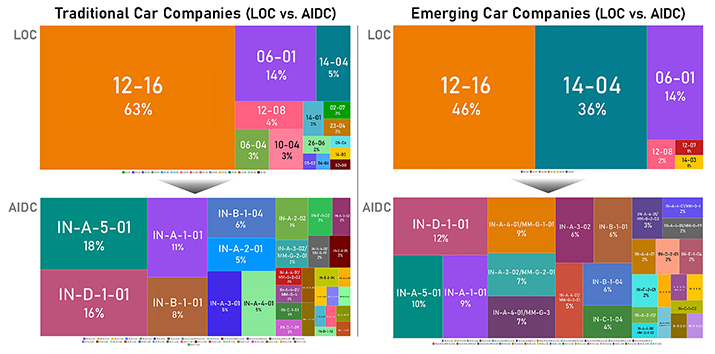
Figure 11. Classification proportions of automotive interior design patent portfolios:
Traditional and emerging car companies (LOC vs. AIDC).
In contrast, the AIDC provides a more precise classification, dividing design patents into 30 specific categories. Key categories include IN-A-5-01 (steering wheel) at 18%, IN-D-1-01 (front seat) at 16%, and IN-A-1-01 (IP upper) at 11%, showing that traditional car companies tend to focus on physical design elements that primarily interact with the driver. In addition, IN-B-1-01 (console trim) at 8% and IN-B-1-04 (Gear Shift Knob) at 6% demonstrate aesthetic harmonization between the instrument panel and console trim. Identified multimodal design elements under the AIDC are more focused on primary functions rather than entertainment, such as the speedometer and system check.
In a detailed case study of emerging car companies such as BYD, Geely, Lucid, Rivian, and Tesla, the analysis of automotive interior design patents highlights significant contrasts between the LOC and AIDC. Under the LOC, emerging car companies’ design patents are primarily concentrated in two broad categories: LOC 12-16 (vehicle parts, equipment, and accessories) and LOC 14-04 (GUI), accounting for 46% and 36%, respectively. Although LOC 12-16 is the largest, a significant portion of GUI-related patents is noticeably larger than that of traditional car companies. LOC 06-01 (seats) accounts for 14%, while minor categories, such as LOC 12-08 (motor cars, buses, and lorries), account for 2%. LOC 12-07 and LOC 14-03 each account for 1% (see Figure 11). However, oversimplified categories within the LOC framework fail to provide detailed insights into these companies’ technological and design innovations, particularly in the integration of physical and multimodal design elements.
Under the AIDC, the 6 categories have been expanded to 27, effectively capturing the intricacies of interior design not covered under the LOC. Notable categories include IN-D-1-01 (front seat) at 12% and IN-A-5-01 (steering wheel) at 10%, with IN-A-1-01 (IP upper) and IN-A-4-01/MM-G-1-01 (GUI for HVAC control) each representing 9%. Additional categories, such as IN-A-3-02/MM-G-2-01 (GUI for speedometer) and IN-A-4-01/MM-G-3 (GUI for infotainment), each account for 7%, with other physical elements like IN-B-1-01 (console trim) and IN-B-1-04 (gear shift knob) making up 5% each.
The AIDC provides a clearer view of how traditional and emerging car companies strategically focus on both physical and multimodal design. Unlike traditional car companies, emerging car companies show a more balanced approach between physical and multimodal design elements, with significant representation in GUIs. This shift highlights their focus on enhancing the user experience through multimodal design elements, indicating a more dynamic approach to interior design trends than the more driver-centric focus of traditional companies.
Chronological Changes in Design Patent Portfolios: LOC vs. AIDC
Analysis of traditional car companies’ design trends from 2005-2022 reveals gradual changes in automotive interior design (see Figure 12). For traditional car companies, LOC 12-16 (vehicle parts, equipment, and accessories) dominated, especially in 2005, 2011, and 2014, indicating a strong emphasis on traditional physical design elements. However, as digital technology advanced, a shift occurred around 2015. LOC 14-04 (GUI) and LOC 14-01 (multimedia equipment) gained importance, reflecting the industry’s growing focus on improving user interaction through digital interfaces. By 2022, a broader range of categories, including LOC 06-01 (seats) and LOC 10-04 (measuring instruments), began to appear, suggesting a more comprehensive approach that integrates both physical and multimodal design elements.
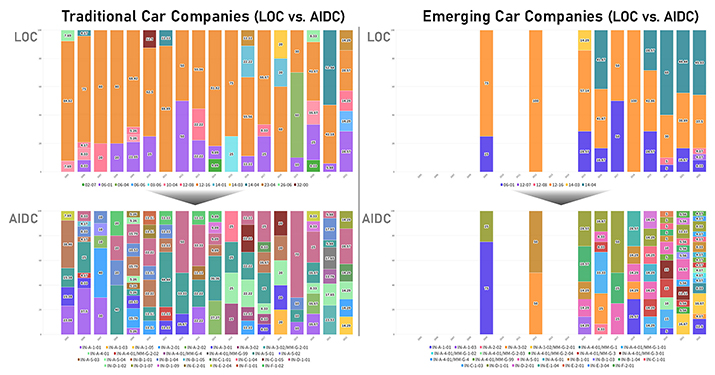
Figure 12. Chronological Changes in Automotive Interior Design Patent Portfolios:
Traditional and Emerging Car Companies (LOC vs. AIDC).
The AIDC provides a more detailed look at these evolving trends. In the early years, the focus was on physical design elements such as IN-A-1-01 (IP upper) and IN-A-5-03 (steering wheel). However, from 2015 onwards, a broader range of categories related to digital interfaces, such as IN-A-4-01 (IP center display) and multimodal design elements, such as IN-A-4-01/MM-G-2-02 (GUI for system check, battery, and voltage), gained prominence. This reflects the increasing integration of digital technologies in automotive interiors by traditional car companies. By 2022, the focus was balanced between physical design elements, such as IN-D-1-07 (front seat headrest), and digital interfaces, such as IN-A-4-01 (IP center display).
Based on the chronological analysis using the LOC, emerging car companies consistently focused on LOC 12-16 (vehicle parts, equipment, and accessories) from 2015 to 2022, with a significant shift toward LOC 14-04 (GUI) starting in 2016. By 2020, LOC 14-04 surpassed LOC 12-16, highlighting the industry’s increasing focus on GUIs and digital integration in automotive design. However, it is challenging to track chronological changes in specific parts within each LOC category due to the LOC’s broad scope.
The AIDC provides deeper insights into this trend. It reveals a shift from physical design elements, such as IN-A-1-01 (IP upper), which dropped from 75% in 2009 to 12.5% in 2022, towards multimodal design elements, especially those related to GUIs. By 2022, multimodal design elements accounted for nearly half of design patents, reflecting their growing importance in the automotive industry. The AIDC captures chronological changes for specific parts more effectively than the LOC, demonstrating how emerging car companies are leading the integration of advanced technologies into automotive interiors.
Discussion
Automotive interior design undergoes a significant transformation as technological advancements and evolving user expectations redefine the in-car experience. To address the challenges posed by evolving design trends, this study examines the research question: “What would a better classification system for automotive interior design look like?” The findings indicate that the proposed Automotive Interior Design Classification (AIDC) offers significant advantages over traditional classification systems, such as the Locarno Classification (LOC), particularly in supporting modern design practices and patent analysis.
Enabling Design Trend Analysis
The AIDC enhances design trend analysis by providing a granular, four-depth matrix that allows designers to identify emerging patterns with greater precision than traditional systems. Unlike the LOC, which uses a broad, two-level categorization, the AIDC’s advanced framework captures the complexity of modern automotive interiors. The LOC often merges distinct elements into single categories, limiting its ability to differentiate between physical components and multimodal features (Gao et al., 2018; Gritzbach et al., 2023; Kim et al., 2021; Yoon, 2025; Yoon & Kim, 2023). In contrast, the AIDC allows designers to systematically analyze both physical elements (e.g., steering wheels, console trims) and multimodal elements (e.g., graphical user interfaces, ambient lighting) separately.
This distinction is critical as technology reshapes the in-car experience (Arquilla & Ballabio, 2024). For example, GUIs for infotainment, HVAC control, and digital driver displays are now central to in-car interactions, offering users personalized and seamless experiences (Grobelna et al., 2025; Wang & Zhu, 2024). By categorizing GUI for infotainment and digital displays independently, the AIDC enables designers to isolate trends in digital integration across different models and brands. This detailed classification also supports superior competitor analysis, enabling designers to track shifts in design priorities, pinpoint market gaps, and anticipate emerging industry trends, such as the growing emphasis on center displays or ambient lighting systems. Such insights inform creative decisions and align design strategies with evolving user expectations for technology-driven interiors.
Bridging the Gap Between Evolving Design Practice and the Patent System
Practitioners confirmed that AIDC’s strength lies not only in its granularity but also in its alignment with real-world innovation. Automotive interior designers noted that its categories mirror how they conceptualize and integrate multimodal features, while data analysts praised its ability to enable cleaner datasets for more reliable trend mapping. Patent attorneys and examiners agreed that its domain-specific distinctions could improve prior art searches and legal clarity, though they raised concerns that the growing number of subclasses might introduce complexity.
To address this, the AIDC is designed to be adaptable. A key feature is a “99” sub-class, a temporary placeholder for emerging or hybrid elements that do not fit existing categories. This prevents forced or premature categorization, ensuring innovation is documented without compromising the system’s integrity. Over time, recurring elements in this placeholder can evolve into new, permanent sub-classes. To balance this adaptability with usability, periodic expert reviews will be essential for managing subclass growth and maintaining efficiency. This approach makes the AIDC a precise, forward-compatible framework that bridges immediate needs with future uncertainties.
Supporting Data-driven Design Strategic Decision-Making
By structuring design information at high granularity, the AIDC generates a rich, detailed dataset, unlocking significant potential for quantitative analysis and data-driven strategic decision-making. This structured data is compelling for distinguishing between the design philosophies of traditional and emerging car companies. Traditional automakers like Mercedes-Benz and Volkswagen have historically focused on physical design elements, such as steering wheels and seats, emphasizing three-dimensional forms. While they now integrate more multimodal features, their portfolios reflect this legacy (Gomez et al., 2024; Shen, 2025). In contrast, emerging companies like Lucid and Geely prioritize minimalist, technology-centric interiors, consolidating functions into large displays and GUIs (Yoon, 2025; Yoon & Kim, 2024).
The AIDC captures these nuanced strategic differences with a precision the LOC cannot match, as the LOC groups complex digital innovations into vague categories such as “Multimedia Equipment.” By breaking down elements into multiple levels, such as specific GUIs for HVAC or infotainment, the AIDC provides the raw data for deep competitive analytics. This unlocks numerous possibilities: companies can quantify the adoption rate of specific features, benchmark UI/UX approaches across the industry, or map the evolution of a competitor’s design language over time. This data-driven analysis supports strategic foresight, enabling companies to transform raw design information into actionable intelligence, anticipate market trends, and maintain a competitive edge (Kim & Kim, 2019; 2021).
Conclusions
This study proposes the development of a new design classification system tailored specifically for automotive interior designers to (1) make it easier to sort things into the right categories; (2) make the categories more granular and more commensurate in size; and (3) enable people to use the classification data to identify industry trends and derive insights about their competitors’ next moves. The evolution of automotive interior design, characterized by the convergence of physical and multimodal design elements, necessitated the development of the Automotive Interior Design Classification (AIDC). Empirical studies validate that the AIDC provides significant advantages to diverse stakeholders in the design patent system from both practical and taxonomic perspectives. A comparative analysis of collected design patent data using both the AIDC and the Locarno Classification (LOC) demonstrated AIDC’s enhanced ability to capture rapidly changing design trends and identify convergence. It also revealed its ability to yield more precise and valuable insights into the differing patenting strategies of traditional and emerging car companies, which LOC fails to provide due to its limited granularity.
In conclusion, the development of the AIDC marks a significant step forward in addressing the limitations of the LOC by bridging the gap between evolving design practice and the patent system. Its ability to incorporate multimodal innovations makes it an invaluable tool for diverse stakeholders, fostering both stronger design protection and more informed innovation strategies. To further strengthen its applicability, this study will conduct additional validation, such as applying AIDC retrospectively to well-known design disputes to test whether it yields clearer distinctions than the LOC, and gathering feedback from patent attorneys and examiners on whether the granularity of AIDC improves the accuracy and efficiency of prior art searches. Lastly, international validation is essential to ensure its effectiveness and harmonization with the LOC, since the AIDC is intended to function as a complementary framework rather than as a replacement for the existing classification system.
References
- Albasoos, H., & Al-Musallami, N. (2020). The conflict between Apple and Samsung over patents and copyrights. Bussecon Review of Social Sciences, 2(3), 1-17. https://doi.org/10.36096/brss.v3i3.206
- Arquilla, V., & Ballabio, G. (2024). Shaping the future of automotive design: The automotive experience design lab. In Proceedings of the 4th international conference on environmental design (pp. 549-560). Palermo University Press.
- Berman, B. (2024, December 3). A surprising upswing of design patent activity among some auto and tire makers. IP CloseUp. https://ipcloseup.com/2024/12/03/a-surprising-upswing-of-design-patent-activity-among-some-auto-and-tire-makers/
- Digital Theater System. (2023). Consumer survey 2023: From in-vehicle entertainment to integrated in-cabin experience. Retrieved from https://dts.com/wp-content/uploads/2024/01/From-In-Vehicle-Entertainment-to-Integrated-In-Cabin-Experience-2024-final.pdf
- Dulken, S. (2002). Searching for European registered designs. World Patent Information, 24(4), 273-276. https://doi.org/10.1016/S0172-2190(02)00040-6
- Farhana, M., & Bimenyimana, E. (2015). Design driven innovation as a differentiation strategy: In the context of automotive industry. Journal of Technology Management & Innovation, 10(2), 24-38. http://doi.org/10.4067/S0718-27242015000200003
- Fernandes, S. C. (2020). Challenges to automotive interior design: The future is much more than technology–It’s about people! In D. Raposo, J. Neves, & J. Silva (Eds.), Perspective on design: Research, education and practice (pp. 385-402). Springer. https://doi.org/10.1007/978-3-030-32415-5_29
- Filitz, R., Henkel, J., & Tether, B. S. (2015). Protecting aesthetic innovations? An exploration of the use of registered community designs. Research Policy, 44(6), 1192-1206. https://doi.org/10.1016/j.respol.2015.02.004
- Gao, Y., Zhu, Z., & Riccaboni, M. (2018). Consistency and trends of technological innovations: A network approach to the international patent classification data. In Proceedings of the international conference on complex networks and their applications (pp. 744-756). Springer. https://doi.org/10.1007/978-3-319-72150-7_60
- Gomez, R., Swann, L., Florentzos, P., & Singleton, A. (2024). Automotive interior design in the age of electric vehicles: User interface expectations, perceptions and preferences. In Adjunct proceedings of the 16th international conference on automotive user interfaces and interactive vehicular applications (pp. 82-87). ACM. https://doi.org/10.1145/3641308.3685028
- Gritzbach, J., Kern, F., Pomiersky, P., Remlinger, W., & Maier, T. (2023). Identification of design elements in vehicle interiors for creating an appearance associated with sustainability. In Y.-G. Ghim & C. S. Shin (Eds.), Interdisciplinary practice in industrial design (pp. 100-108). AHFE. https://doi.org/10.54941/ahfe1002976
- Grobelna, I., Mailland, D., & Horwat, M. (2025). Design of automotive HMI: New challenges in enhancing user experience, safety, and security. Applied Sciences, 15(10), Article 5572. https://doi.org/10.3390/app15105572
- Gu, F., Zhao, D., & Zhao, J. (2018). Trendiness and emotion, two key factors for predicting aesthetic preference on automotive interior form design among Chinese consumers. In Proceedings of the international conference on cross-cultural design (pp. 412-422). Springer. https://doi.org/10.1007/978-3-319-92141-9_32
- Hirz, M., Stadler, S., Kreis, A., & Fragner, A. (2021). Combined approach of interior concept development for automated driving cars. In Proceedings of the FISITA world congress (pp. 13-17). ACM. https://doi.org/10.46720/F2021-ACM-127
- Hong, J., Park, N., & Kim, J. (2020). Reshaping electric vehicle face - Effects of design freedom and brand recognition. Journal of the HCI Society of Korea, 15(1), 45-51. https://doi.org/10.17210/jhsk.2020.03.15.1.45
- Japan Patent Office. (2018). Study report on the design classification project (ID5 Annual Meeting 2017). Retrieved from https://www.id-five.org/wp-content/uploads/2018/02/1-2.JPO_ClassificationPJ_StudyReport_ID5AnnualMeeting2017rev._20180206....pdf
- Karjalainen, T. M. (2007). It looks like a Toyota: Educational approaches to designing for visual brand recognition. International Journal of Design, 1(1), 67-81. https://doi.org/10.57698/v1i1.07
- Kim, D., & Kim, J. (2019). Measure of design M&As: Exploratory investigations of IP analysis in design. Strategic Design Research Journal, 12(1), 43-61. https://doi.org/10.4013/sdrj.2019.121.04
- Kim, D., & Kim, J. (2021). Is innovation design-or technology-driven? Citation as a measure of innovation pollination. World Patent Information, 64, Article 102010. https://doi.org/10.1016/j.wpi.2020.102010
- Kim, J., Jeong, B., & Kim, D. (2021). Patent analytics. Springer Singapore. https://doi.org/10.1007/978-981-16-2930-3
- Kim, J. (2024). When design meets technology: Navigating design paradigm shifts and classification challenge. Imagine X Lab Patent Analytics. https://imagine.hanyang.ac.kr/patentanalytics-resource
- Liu, H., Dai, Q., Li, Y., Zhang, C., Yi, S., & Yuan, T. (2020). The design patent images classification based on image caption model. In Proceedings of the international conference on brain inspired cognitive systems (pp. 353-362). Springer. https://doi.org/10.1007/978-3-030-39431-8_34
- Lopez-Vega, H., & Moodysson, J. (2023). Digital transformation of the automotive industry: An integrating framework to analyse technological novelty and breadth. Industry and Innovation, 30(1), 67-102. https://doi.org/10.1080/13662716.2022.2151873
- Möller, T., Schneiderbauer, T., Garms, F., Gläfke, A., Köster, N., Stegmüller, S., ... & Bobka, K. (2021, November 12). The future of interior in automotive. McKinsey. https://www.mckinsey.com/industries/automotive-and-assembly/our-insights/the-future-of-interior-in-automotive
- Neuworth, A. J., Anderson, S. D., & Brunnquell, C. K. (2022, Dec. 8). Design patent protection remains a valuable tool for automotive manufacturers. The National Law Review. https://natlawreview.com/article/design-patent-protection-remains-valuable-tool-automotive-manufacturers
- Onem, M., & Hasirci, D. (2020, December). Designing brand experience in interior space. IOP Conference Series: Materials Science and Engineering, 960(2), Article 022005. https://doi.org/10.1088/1757-899X/960/2/022005
- Pettersson, I. (2017). Traveling from fascination to new meanings: Understanding user expectations through a case study of autonomous cars. International Journal of Design, 11(2), 1-11. https://doi.org/10.57698/v11i2.01
- Rademaker, C. A. (2000). The classification of ornamental designs in the United States patent classification system. World Patent Information, 22(3), 123-133. https://doi.org/10.1016/S0172-2190(00)00047-8
- Rai, N., & Thapa, B. (2015). A study on purposive sampling method in research. Kathmandu: Kathmandu School of Law, 5(1), 8-15.
- Saardchom, N. (2014). Design patent war: Apple versus Samsung. South Asian Journal of Business and Management Cases, 3(2), 221-228. https://doi.org/10.1177/2277977914548341
- Shen, K. S. (2025). Exploring the appeal of electric vehicle interior design from the perspective of innovation. World Electric Vehicle Journal, 16(9), Article 527. https://doi.org/10.3390/wevj16090527
- United States Patent and Trademark Office. (2024). Design patent application guide. Retrieved April 10, 2026, from https://www.uspto.gov/patents/basics/apply/design-patent
- Van Pelt, B. J., Keenan, K. C., & Jungles, S. J. (2016). Apple and Samsung at the supreme court: Case proves need for design patents in overall IP strategy. Retrieved from https://bannerwitcoff.com/wp-content/uploads/2016/06/Apple-and-Samsung-at-the-Supreme-Court-SS-2016.pdf
- Wagner, A. S., Kilincsoy, Ü., Reitmeir, M., & Vink, P. (2016). Functional customization: Value creation by individual storage elements in the car interior. Work, 54(4), 873-885. https://doi.org/10.3233/WOR-162360
- Wang, M., & Zhu, Z. (2024). Research and analysis of in-vehicle interaction design based on user experience. In Proceedings of the 5th international seminar on artificial intelligence, networking and information technology (pp. 1-5). IEEE. https://doi.org/10.1109/AINIT61980.2024.10581524
- Wellbrock, W., Ludin, D., Röhrle, L., & Gerstlberger, W. (2020). Sustainability in the automotive industry, importance of and impact on automobile interior–insights from an empirical survey. International Journal of Corporate Social Responsibility, 5, Article 10. https://doi.org/10.1186/s40991-020-00057-z
- World Intellectual Property Organization. (1994). Locarno agreement establishing an international classification for industrial designs. Retrieved from https://www.wipo.int/edocs/pubdocs/en/wipo_pub_271.pdf
- WIPO. (2008). The study on the improvement of the designs classification (LO/WG/1/CZ proposal). Retrieved from https://www.wipo.int/edocs/mdocs/classifications/en/lo_wg_1/lo_wg_1_cz_proposal.pdf
- WIPO. (2024). IP facts and figures 2024. Industrial designs. Retrieved April 10, 2026, from https://www.wipo.int/web-publications/ip-facts-and-figures-2024/en/industrial-designs.html
- Xie, X., Wu, J., Xiang, M., Tang, J., & Sheng, Y. (2025). Enhancing the efficiency of patent classification: A multimodal classification approach for design patents. Journal of King Saud University Computer and Information Sciences, 37, Article 183. https://doi.org/10.1007/s44443-025-00185-1
- Yardım, S., & Pedgley, O. (2023). Targeting a luxury driver experience: Design considerations for automotive HMI and interiors. International Journal of Design, 17(2), 45-66. https://doi.org/10.57698/v17i2.03
- Yoon, S., & Kim, T. (2019). User requirements analysis for the development of a new design classification system. Journal of Industrial Design Studies, 13(1), 83-93. https://doi.org/10.37254/ids.2019.03.47.08.93
- Yoon, W. (2025). Reclassifying automotive interior design patents: A comparative investigation of Locarno standards and beyond [Unpublished doctoral dissertation]. Hanyang University, Seoul, South Korea.
- Yoon, W., & Kim, J. (2023). Changes in automobile interior design based on design patent classification. Journal of Industrial Design Studies, 17(1), 63-70. https://doi.org/10.37254/ids.2023.03.63.06.63
- Yoon, W., & Kim, J. (2024). Design patent classification for changes in automotive interior design paradigm. Journal of Intellectual Property, 19(2),161-182. https://doi.org/10.34122/jip.2024.19.2.161
- Yoshioka-Kobayashi, T., Fujimoto, T., & Akiike, A. (2018). The validity of industrial design registrations and design patents as a measurement of “good” product design: A comparative empirical analysis. World Patent Information, 53, 14-23. https://doi.org/10.1016/j.wpi.2018.04.001
- Zapata, C., & Nieuwenhuis, P. (2010). Exploring innovation in the automotive industry: New technologies for cleaner cars. Journal of Cleaner Production, 18(1), 14-20. https://doi.org/10.1016/j.jclepro.2009.09.009
- Zheng, Y., & Ren, X. (2022). Developing a multimodal HMI design framework for automotive wellness in autonomous vehicles. Multimodal Technologies and Interaction, 6(9), Article 84. https://doi.org/10.3390/mti6090084
