
Designing for Caregivers: Toward a Caregiver Experience Framework and Design Cards for Inclusive Playgrounds
Xinzhe Zhao, Jiayi Zou, Zi Yang, Ines Ziyou Yin, and Kin Wai Michael Siu*
School of Design, The Hong Kong Polytechnic University, Hong Kong, China
Designing inclusive public playgrounds requires considering all users, including children and caregivers. Previous studies have focused primarily on children’s needs and experiences, but caregivers’ perspectives are often overlooked. This study aimed to identify key experience design considerations for caregivers in public playgrounds. To this end, it developed a set of Caregivers Experience Design for Inclusive Playground (CED-IP) cards. The findings contribute to a better understanding of caregiver experiences in the design of public spaces. Semi-structured interviews were conducted with caregivers randomly in Hong Kong playgrounds. Through grounded theory data coding, an evaluation dataset of caregiver experiences with inclusive public children’s playgrounds was created. The CED-IP card is generated entirely based on the caregiver’s interview data. The results were distilled into the CED-IP cards, which include 9 design consideration headings: safety, comfort, interactivity, playability, inclusivity, service, convenience, supportive, purpose. The results provide discussion on the content and priorities of experience design for playground facilities and environments. The CED-IP cards are worded carefully so that they can be used or adapted for other play sectors. This study further explored and developed a caregiving experience design framework comprising four interrelated experiential elements: Meaning construction, Affective comfort, Perceived ease, and Autonomous control.
Keywords – Inclusive Design, Caregiver Experience, Public Playground.
Relevance to Design Practice – Despite the growth of inclusive design, experience equity for caregivers remains underexplored in practice. This study examines caregivers’ experiential needs in public playgrounds and proposes a framework and a set of design cards. These tools support designers in implementing inclusive experience design in a structured way within caregiving contexts.
Citation: Zhao, X., Zou, J., Yang, Z., Yin, I. Z., & Siu, K. W. M. (2026). Designing for caregivers: Toward a caregiver experience framework and design cards for inclusive playgrounds. International Journal of Design, 20(2), 31-54. https://doi.org/10.57698/v20i2.03
Received December 6, 2024; Accepted April 10, 2026; Published August 31, 2026.
Copyright: © 2026 Zhao, Zou, Yang, Yin, & Siu. Copyright for this article is retained by the authors, with first publication rights granted to the International Journal of Design. All journal content is open-access and allowed to be shared and adapted in accordance with the Creative Commons Attribution 4.0 International (CC BY 4.0) License.
*Corresponding Author: m.siu@polyu.edu.hk
Xinzhe Zhao is a Ph.D. candidate at the Public Design Lab, School of Design, The Hong Kong Polytechnic University. Her research focuses on design for wellbeing, inclusive design, and interdisciplinary design. Recently, she has been involved in two Hong Kong Research Grants Council—funded projects on inclusive design and sustainable environments and inclusive public play spaces for children and caregivers, as well as a National Natural Science Foundation of China (NSFC)—funded project on big data-driven creative design education. Her current Ph.D. research explores interdisciplinary co-design of AI-enabled self-help behavioral activation applications to support mental health, aiming to advance more inclusive and human-centered intelligent health design through interdisciplinary design approaches.
Jiayi Zou is a Ph.D. candidate in Design at The Hong Kong Polytechnic University and a visiting Ph.D. research student at Nanyang Technological University. Her research focuses on design education, intelligent design, and inclusive design. She investigates how artificial intelligence can support design learning, creative thinking, reflective practice, and human–AI collaboration. Her work also examines inclusive interaction and multisensory design for people with diverse sensory and cognitive needs. By integrating design research, educational experimentation, and human–computer interaction methods, she aims to develop theoretically informed and practically applicable approaches that foster more personalized, reflective, accessible, and inclusive design practices across educational and real-world research contexts.
Zi Yang is a research associate at the School of Design, The Hong Kong Polytechnic University, where she received her Ph.D. in Design. Her research interests include inclusive design, public design, social design, and resilient public spaces. She is particularly interested in participatory approaches, stakeholder engagement, and the role of design in addressing complex social and environmental challenges. Using mixed-method research, she examines public environments, community participation, service design, and multi-stakeholder collaboration. Her broader academic interests center on socially responsive and context-sensitive design practices that recognize diverse experiences, support shared use, and improve the inclusiveness of public and community settings.
Ines Ziyou Yin is a Ph.D. candidate at the School of Design, The Hong Kong Polytechnic University. She received an MA in User Experience Design from the University of the Arts London and a bachelor’s degree in communication (Media, Arts and Design) from Beijing Normal–Hong Kong Baptist University United International College. Her research focuses on participatory design, co-design, speculative design, and human communication, with particular interests in family connectedness, human–AI relationships, and techno-social transformation. During her doctoral studies, she has been involved in a Hong Kong Research Grants Council project on inclusive public play spaces for children and caregivers. Her research employs qualitative, mixed-method, and research-through-design approaches to explore how design can foster more inclusive, collaborative, and socially sustainable futures.
Kin Wai Michael Siu is Chair Professor of Public Design and Eric C. Yim Professor of Inclusive Design of the School of Design, The Hong Kong Polytechnic University. He is Leader of Public Design Lab. Professor Siu is a fellow of numerous professional engineering and design organizations. He has been invited as a visiting professor and scholar by several prestigious universities, including the Massachusetts Institute of Technology (Fulbright Scholar), the National University of Singapore (ASIA Fellow), the University of Cambridge, and UC Berkeley (Visiting Scholar). His research interests include public design, design policy and management, user reception, inclusive design, and FlexiDesign. He holds more than 50 US and international patents and design registrations, as well as over 50 major international invention and design awards. He has published more than 500 refereed journal papers. As chief supervisor, he has successfully supervised over 100 Ph.D. and MPhil students.
Introduction
Inclusive design was initially referred to as accessible design. It aimed to remove environmental barriers that hinder people with disabilities, to prevent discrimination and ensure equal access (Coleman et al., 2003; Persson et al., 2015). However, this definition limited its scope and potential. The concept of universal design, proposed in 1985, expanded this view by advocating for products, environments, and services that accommodate users of different ages and abilities (Clarkson et al., 2013; Coleman et al., 2003; Heylighen et al., 2017). Luck (2018) argued that users’ lived experiences in the material world should be placed at the center of the design process. Demirel and Erkılıç (2025) suggested that inclusivity is grounded in diversity and dynamism and should address both embodied and social experiences. Similarly, Moore et al. (2020, 2023) argued that inclusive public playgrounds should support equality and dignity in children’s play. Overall, the concept of inclusive design has shifted from a focus on physical accessibility to broader concerns with experience and social participation. Nevertheless, in practice, the focus still largely remains on accessibility and usability (Demirel & Erkılıç, 2025).
Designers often rely on accessibility regulations or compliance checklists to ensure that products can be used by people with different abilities (Demirel & Erkılıç, 2025). However, a product may be technically usable yet still generate negative experiential outcomes. For example, it may increase cognitive and psychological load for some users (Lazar et al., 2015) and create feelings of stigmatization among older adults (Li et al., 2020). The same applies to public spaces. Even when playground equipment meets formal accessibility standards, children with disabilities may experience lowered self-esteem due to biased gazes and may feel marginalized because of limited social interaction opportunities (Moore et al., 2020, 2023). These cases suggest that design driven only by technical compliance is insufficient to achieve inclusive product experiences.
Inclusive research has increasingly focused on user groups whose needs are often overlooked yet play a critical role in use contexts (Corsini et al., 2022; Pirinen et al., 2022). With population aging and changes in family structures, much caregiving work is undertaken by informal caregivers, such as family members. In public transport systems, caregivers must manage spatial safety, time coordination, and behavioral support for the person they care for (Kim, 2025). In healthcare or social service settings, they often act as information mediators and communication bridges (Row et al., 2020). In public playgrounds or community contexts, caregivers function not only as safety supervisors but also as emotional regulators and facilitators of social interaction (Yang et al., 2026; Zhao et al., 2025). These examples show that caregiving extends beyond physical assistance. It involves continuous and dynamic emotional regulation, social interaction, and risk assessment.
Current research on caregivers primarily focuses on caregiving practices in hospital and home settings, with limited attention to their experiential needs in public spaces (Dlamini et al., 2023; Lee & Li, 2022; Moore et al., 2023; Yang et al., 2026). Playgrounds are a common form of public space, bringing together multiple user groups for shared activities. They have a dual character. On the one hand, they support children’s physical development, creativity, and social interaction (Moore et al., 2023; Cohen et al., 2023). On the other hand, they are key settings where caregivers perform supervision, support, and companionship roles (Yang et al., 2026). Caregivers’ experiences concern not only their physical and psychological well-being. They may also influence children’s length of stay, the quality of interaction, and overall play experiences. Studies on caregivers’ experiential design elements and related design tools remain limited (Siu et al., 2022; Yang et al., 2026).
Experience Design
Experience design is a central topic in contemporary design research—Dewey (1980) conceptualized experience as arising from continuous interaction between individuals and their environment. Experience is therefore understood as a dynamic process of construction. Crilly et al. (2004) extended its structure in design contexts and identified three response types: aesthetic impression, semantic interpretation, and symbolic association. Early user experience research moved beyond usability and foregrounded affective and meaning-related dimensions, establishing the foundation for experience-oriented design (Norman, 2004). Hassenzahl (2007) further argued that experience is not determined solely by product functionality. It emerges when products support psychological needs, including autonomy, competence, and relatedness, thereby eliciting positive affect. Desmet and Hekkert (2007) systematized product experience theory and proposed a framework comprising aesthetic pleasure, meaning construction, and emotional response. An aesthetic experience involves sensory pleasure and novelty. Meaning experience involves symbolic associations and value construction. Emotional experience concerns affective responses triggered by evaluative processes. Wright and McCarthy (2010) emphasized the processual and situated nature of experience. Accordingly, design should focus on the ongoing construction of meaning in interaction, rather than isolated moments of use.
Building on this theoretical foundation, experience design research has gradually developed in multiple applied domains. In tourism, experience refers primarily to processes of meaning construction in specific contexts. Research in this field emphasizes strategic positioning, value propositions, opportunities for meaning, contextual foundations, and storytelling (Tussyadiah, 2014). In education, learner experience is understood as subjective, contextual, and dynamic. It emerges from the interaction between individuals’ internal states, technological characteristics, and the contexts in which these interactions occur (Schmidt & Huang, 2022). In healthcare, patient experience refers to the quality of interactions and relationships during service encounters. Research focuses on emotional experience, participation and co-creation processes, and the doctor–patient relationship (Bate & Robert, 2023; Jones, 2013). These studies demonstrate that experience is interpreted differently across contexts. Each field highlights distinct dimensions. Therefore, this study integrates interview data and relevant literature further to identify an experience design framework for caregiving contexts.
Design Tools
Experience design research has proposed a range of tools to support more structured design processes. These include personas, customer journey maps, user stories, and the value proposition canvas. Personas help design teams build a shared understanding of users and identify the characteristics of different user groups (Miaskiewicz & Kozar, 2011; Pruitt & Adlin, 2010). Customer journey maps visualize touchpoints and pain points across an entire task process, showing how users interact with a product or service at different stages (Endmann & Keßner, 2016; Howard, 2014; Walter, 2022). User stories are widely used in agile development to clarify user needs and to support early ideation and rapid iteration (Celikoglu et al., 2017; Gruen et al., 2002). The Five Elements of User Experience provide a comprehensive framework that links abstract concepts to concrete design decisions (Garrett, 2011; Sauer et al., 2020). The value proposition canvas aligns user needs with product value and supports the exploration of market demands and value refinement (Osterwalder et al., 2015). These tools are effective in task-oriented settings. However, caregiving contexts involve dynamic interactions among people, products, and environments. These interactions are unstructured, goal-directed, and often spontaneous. As a result, existing experience design frameworks and tools do not fully address the needs of such contexts.
Design projects that involve dynamic and interactive contexts require flexible, reconfigurable design media. In response to this need, this study adopts design cards as the primary medium. Compared with structure- or process-oriented design tools, cards present design knowledge in modular units. This allows ideas to be combined, compared, and reconfigured across different contexts (Casais et al., 2016; Lucero & Arrasvuori, 2010). Physical cards can translate abstract concepts into tangible form. They also support flexible combination and prioritization of design elements. This format helps clarify ideas and expand creative exploration. It can further establish a shared language among team members and external stakeholders, thereby improving collaboration (Beck et al., 2008). Cards provide practical support for the evaluation and selection of ideas (Lucero et al., 2016). For these reasons, this study selected design cards as the design medium.
This study focuses on inclusive caregiving experiences in public playgrounds, defined as caregivers’ user needs and experiences when interacting with care recipients, facilities, and the surrounding environment in public spaces, encompassing both embodied and social dimensions. This research aims to develop a set of design cards to enhance caregivers’ experiences in inclusive playgrounds (CED-IP) and to identify experience design elements that address caregivers’ needs. The study is guided by the following three research questions: (1) What key characteristics of facilities and spatial features shape playground experiences? (2) What are the experiences and needs of caregivers? Moreover, (3) What are the elements of inclusive experience in caregiving contexts?
Methodology
This study employed a semi-structured interview approach. Field surveys were conducted in real-life settings to capture authentic user experiences better. The research focused particularly on caregivers, who serve both as direct users of playgrounds and as observers of children’s behaviors. This decision was informed by ethical and practical considerations concerning children’s consent, attention, and comprehension (Christensen & James, 2017; Huser et al., 2022). Although children were not directly consulted, caregivers’ accounts provide valuable proxy insights into children’s play behaviors, comfort levels, and engagement patterns. Previous research (e.g., Arts et al., 2022; Varni et al., 2007; Wengrovius et al., 2022) has shown that caregivers’ observations are a valid and informative proxy when direct participation of children is constrained.
Three researchers conducted field observations and assessed the inclusiveness of 40 playgrounds designated as inclusive by the Hong Kong government. Six playgrounds—Tuen Mun Park, Quarry Bay Park, Kowloon Park, Tiu Keng Leng Sports Centre, Wan Chai Park, and Yuet Wah Street Park—were selected as interview sites. These playgrounds represented different geographic areas of Hong Kong and covered a wide range of inclusiveness scores (from below 20% to above 80%). Interviews were conducted randomly across these six sites.
This study received ethical approval, and all participants provided informed consent. Conducting semi-structured interviews in playground settings helped participants accurately recall past experiences (Adeoye-Olatunde & Olenik, 2021). The semi-structured format allowed researchers to ask flexible questions based on the interview guide, enabling the collection of richer data (Kvale & Brinkmann, 2009). Researchers also observed interactions between caregivers and children to enhance the depth and contextual validity of the interview data.
Interview Plan
Interactions and experiences were documented through photographs and audio recordings. Participants were randomly selected on the playground. The interview has three focused stages:
- Children’s play experience: Caregivers described children’s play behaviors, preferences, and activities, highlighting both positive and negative experiences. They explained what made certain play encounters enjoyable or unsatisfactory, including experiences involving caregiver participation.
- Caregiving Experience: This phase examined caregivers’ personal feelings, challenges, and rewarding moments while supervising children. Participants reflected on how playground equipment and environmental features either supported or hindered their caregiving role.
- Suggestions for Improvement: Caregivers evaluated existing physical facilities and environmental conditions, identifying strengths and limitations. They provided specific recommendations for enhancing both play value and caregiving experience.
Selection of Participants
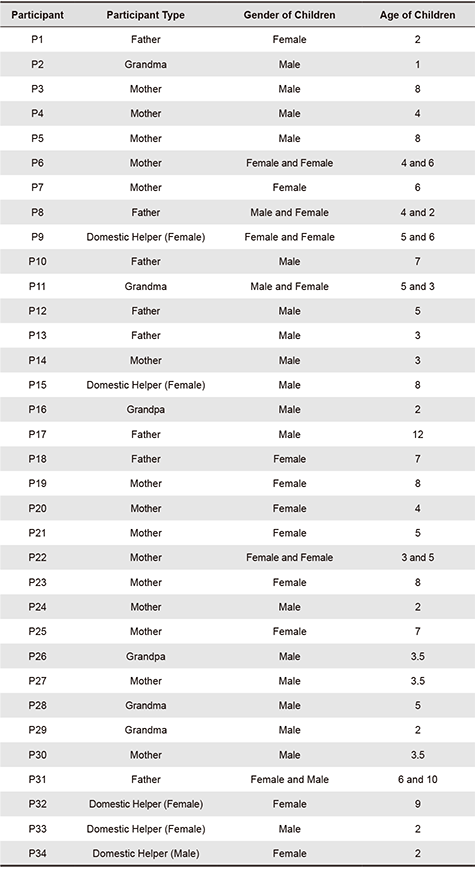
A total of 35 participants were randomly recruited from six playgrounds. Their demographic characteristics are summarized in Table 1. All participants were regular caregivers at public playgrounds. The caregiver group comprised parents, grandparents, and domestic workers who cared for children in two common age groups: 0-6 years and 7-12 years.
Table 1. Interview participants.
Cards Development
This study derived the components of cluster, heading, concern, and code through systematic coding and analysis of the original interview transcripts. Examples and explanations were then developed by integrating the interview and observational data. The examples and explanations provide detailed insights that help designers better understand user experiences and needs.
These cards fall under the category of Human Insight Cards, capturing caregivers’ perspectives and offering insights into their behaviors and emotions. Such cards can support practitioners in developing better user experiences (Hsieh et al., 2023), enhancing caregivers’ experiences in playgrounds and promoting more inclusive environments that foster caregivers’ well-being.
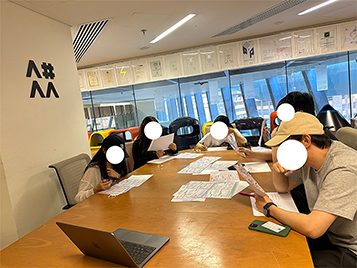
Each card includes key insights along with selected detailed data, as the cards are intended to be used across two stages (Hsieh et al., 2023). In the research stage, the examples and explanations sections provide information and conceptual foundations to guide design decisions. The card sets used at this stage tend to be more fact-based and data-driven. In the Evaluation stage, the heading and code sections summarize the key points, helping design decision-makers reflect on whether their design proposals align with user needs. After the initial development of the cards, a workshop was conducted involving six designers (see Figure 1 and Table 2). Through a specific design task, participants used the cards and provided feedback regarding their effectiveness, strengths, and areas for improvement. Based on this feedback, the researchers refined the cards, and the updated version is presented in Appendix 3.
Table 2. Workshop participants.
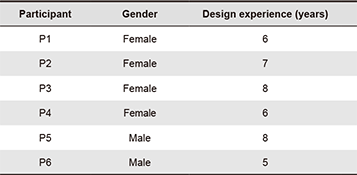
Figure 1. Workshop to evaluate cards. |
Data Preparation and Analysis
Participants’ responses were transcribed from audio recordings and compiled into a document that was subsequently imported into NVivo 14 for analysis. This process enabled collaborative and iterative coding, helping to minimize researcher bias (Zamawe, 2015). Participants’ reflections on relevant themes were documented, identifying key issues and suggestions related to their playground experiences.
The recorded data were hierarchically categorized and analyzed. Analysis was conducted using content analysis (Krippendorff, 2019) and emergent open coding (Saldaña, 2021) within the general framework of grounded theory. Applying grounded theory in user experience research facilitates the uncovering of users’ authentic perspectives while minimizing researcher bias.
Caregiver interview data analysis was conducted in four iterative phases (results are presented in Appendix 1 and Appendix 2).
Analysis Level 1: Raw Transcript to Codes
During Level 1 of analysis, coding was conducted by repeatedly reading, labeling, and coding individual participant transcripts in accordance with grounded theory. This process continued until a set of internally consistent codes was established. For instance, provisional codes focused solely on readability and integration were removed and replaced with codes that reflect interactivity, experience, meaningfulness, and physicality. These were designated as the initial first-level subcodes (n = 77).
Analysis Level 2: Codes to Core Points
At Level 2, the initial codes were synthesized and refined to distill the most critical and noteworthy ones. This process involved identifying key dimensions of playground play and caregiving experiences within each participant’s dataset. By extracting overarching concepts from these grouped codes, we developed the second-level codes. This entire level of analysis was built upon the foundational codes that emerged from Level 1 (n = 26).
Analysis Level 3: Codes to Headings
Level 3 coding involves categorizing, summarizing, and condensing the codes generated in Level 2 to identify overarching themes within the data. This iterative process ultimately produces headings applicable across the entire dataset. Level 3 coding is conducted within a framework of terminology commonly used in product, interaction, service, and experience design. These headings primarily provide a design-oriented structure for organizing data and reporting results, focusing on the overall playground experience rather than on novel aspects or specific experiences of play or caregiving.
The frequency of headings is an important consideration in the analysis process. However, the total number of occurrences of a heading within a single participant’s data is not a valid measure of frequency, as it does not account for individual differences in response style. To address this, a special assignment frequency indicator (f) was calculated for each heading, based on the number of participants who mentioned a specific heading rather than the total number of times it was coded. Using this indicator, draft headings with less than 10% assignment were removed, and subcodes were reassigned.
Analysis Level 4: Headings to Clusters
Level 4 organized conceptually related headings into clusters (n = 4) to communicate the results in an organized manner. Three specification-oriented clusters are defined using design terms, namely: infrastructure support (including safety and comfort), Interactive engagement (including interactivity, playability, and inclusivity), and basic experience (including supportive, convenience, and service). A separate cluster, experiential goals (purpose), was defined.
Dataset Overviews
Figure 2 provides statistics for the analyzed data, including headings, coding frequency indicators, and allocation frequencies within each participant’s data set (columns P1-P34), caregiver needs frequency and child needs frequency under each heading, expressed as total number of participants (f #) and percentage of participants (f %). Headings are color-coded by the cluster they belong to. The overall mean (M) of the allocation frequency indicator is 77%; the difference between f % and M is indicated for each heading. Figure 3 illustrates the title allocation for each card.
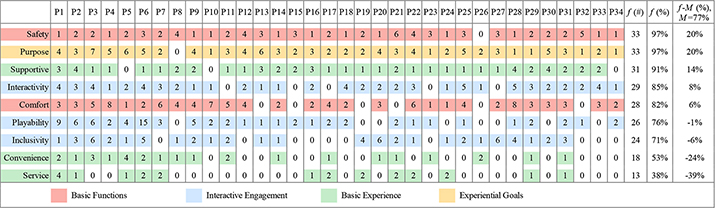
Figure 2. Assignment of headings across the full dataset.
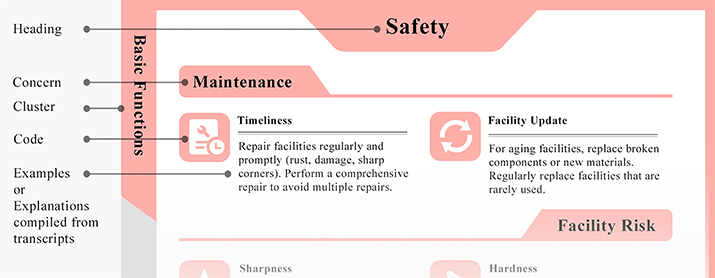
Figure 3. Assignment of headings across the full dataset.
Results
Basic Functions Cluster
The basic functions cluster contains a most coded heading (Safety, f = 97%, M + 20%) and an average heading (Comfort, f = 82%, M + 6%). Safety and comfort are caregivers’ main concerns in a playground. Participants associated safety with interactive behaviors and comfort with the experience of the physical facility.
Safety
Figure 4 provides an CED-IP card for safety. The goals of playground safety are to reduce the probability of children getting hurt and the probability of caregivers stopping quarrels and fights. Playground safety refers to a dynamic state of low risk achieved through deliberate design, maintenance, and supervision within a controlled environment (Little & Wyver, 2008). It seeks to minimize the likelihood of severe or irreversible physical injuries while simultaneously supporting children’s development through opportunities for risk-taking, exploration, and trial-and-error play. Safety needs refer to factors that caregivers, based on prior experience, perceive as potentially harmful to children, and therefore expend excessive physical and mental effort to prevent, ultimately leading to a decline in their own well-being.
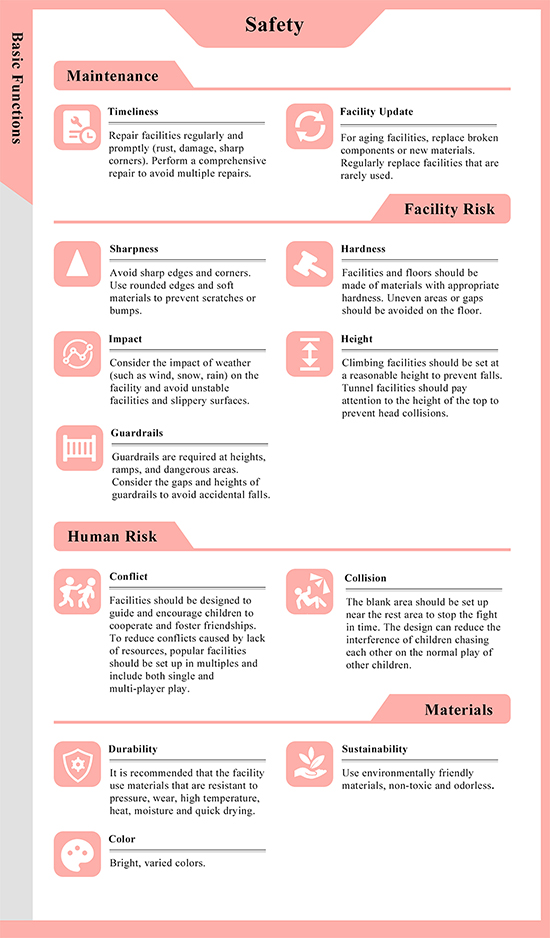
Figure 4. CED-IP cards: Safety.
Playground safety encompasses risks associated with equipment, potential human-related hazards, and the level of effort required from caregivers to ensure children’s safety. Caregivers perceive interpersonal conflict as the primary safety threat. The design process should aim to promote positive social interactions through spatial arrangements and functional integration, thereby reducing resource-related conflicts and aggressive behaviors while encouraging cooperative skills among children (59%). As one caregiver remarked, “I tell you, the danger comes from the children... Last time I saw a child pinching that little white girl” (P5). Another caregiver concern, “I am afraid that some boys will hit others. Some kids are more domineering and think this is their territory” (P22).
In assessing playground safety, material quality, ground safety, and the predictability of risks are also critical considerations. Such risks include abrasions (6%), falls caused by loss of balance (15%), physical collisions (12%), and falls from height (15%). One caregiver shared, “She herself fell once on this kind of ground, and the cracks would get her feet stuck when she ran” (P21). Maintenance should go beyond dealing with rust, physical damage, and timeliness issues (8%) to include the systematic replacement of aging components and targeted upkeep of rarely used play equipment (15%). For instance, as one interviewee noted, “It will rust, because sometimes children will be scratched, and if they are injured, will they be more likely to get tetanus?” (P21).
Caregivers report that both facility maintenance conditions and playground scale influence safety. Safety risks can be effectively reduced through facility redesign and updates. Specifically, play equipment should be designed to support both individual use and group participation. Interactive and cooperative play facilities should be introduced to foster children’s emotional engagement and reduce risks associated with insufficient supervision. Caregivers also recommend using non-toxic, odorless, and environmentally sustainable materials, along with bright and vivid colors to enhance visual appeal (9%).
Comfort
Figure 5 provides a CED-IP card for comfort. Comfort is a pleasant state or a feeling of relaxation in an environment. People who lack comfort feel uncomfortable or unwell (Vink & Hallbeck, 2012). Comfort is a subjective experience that is influenced by physiological, physical, and psychological factors (De Looze et al., 2003; Yardım & Pedgley, 2023). The goal of playground comfort is for children and caregivers to feel physically comfortable, and for caregivers not to expend extra energy or effort to keep children safe.
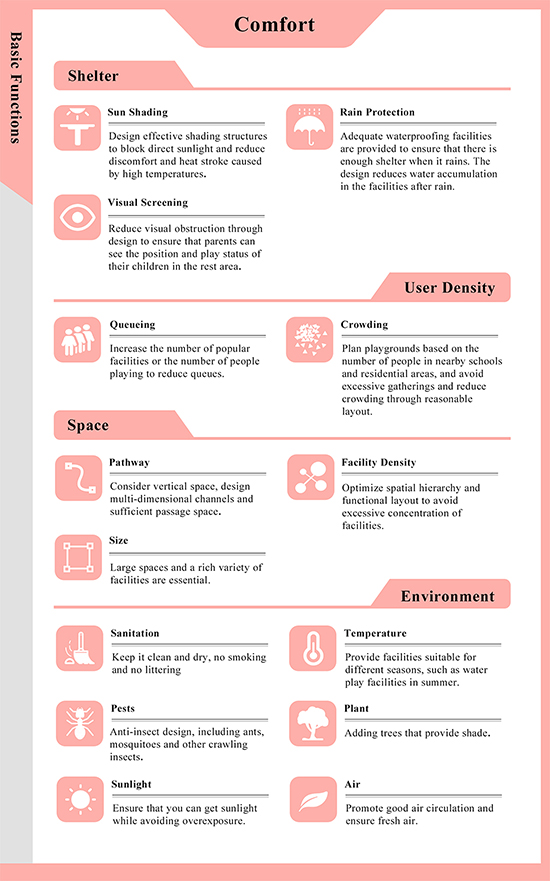
Figure 5. CED-IP cards: Comfort.
Caregivers’ sense of comfort depends not only on physical amenities and environmental hygiene, but also on spatial layout and visibility that support ease of supervision. Unfavorable environmental conditions negatively affect the comfort of both children and caregivers (82%). Hot weather intensifies discomfort during waiting periods, particularly in rest areas without adequate shading (45%). As one caregiver explained, “In the hot weather, children easily suffer from heatstroke or catch a cold after playing” (P28). Maintaining cleanliness across the playground is essential for ensuring comfort and positive experiences (24%). Caregivers mentioned, “Sometimes it’s too wet and dirty to play” (P9), and “Any water must be wiped away before use” (P34). Mosquito bites require caregivers to put in additional effort to prepare and apply medication for their children (21%). As some participants noted, “We are afraid of bringing home ants” (P3), and “So many mosquitoes” (P4). Wet and unclean facilities will evoke negative emotions and increase housework for caregivers. In addition, most caregivers need children to be always within their sight, and overly dense facilities will block their sight, forcing caregivers to change positions frequently. Therefore, when designing a children’s playground, to ensure comfort, an appropriate number of parasols, rain shelters, and mosquito repellents should be installed. It is also necessary to reduce visual obstruction through appropriate facility density and layout design.
Interactive Engagement Cluster
The interactive engagement cluster includes Interactivity (f = 85%, M + 8%), occurring at a higher frequency than average. It also includes playability (f = 76%, M - 1%) and inclusivity (f = 71%, M - 6%), both with lower frequencies than the average. The interactive experience under this cluster includes not only interactions between children but also between children and caregivers.
Interactivity
The CED-IP card for interactivity is shown in Figure 6. In the field of design, embodied interaction has been proposed as a relatively new concept. Embodied interaction refers to people creating, manipulating, and changing meanings as they experience objects or environments (Dourish, 2001; Höök & Löwgren, 2021). The goal of playground interactivity is to provide diverse, comprehensive, and fun interactions.
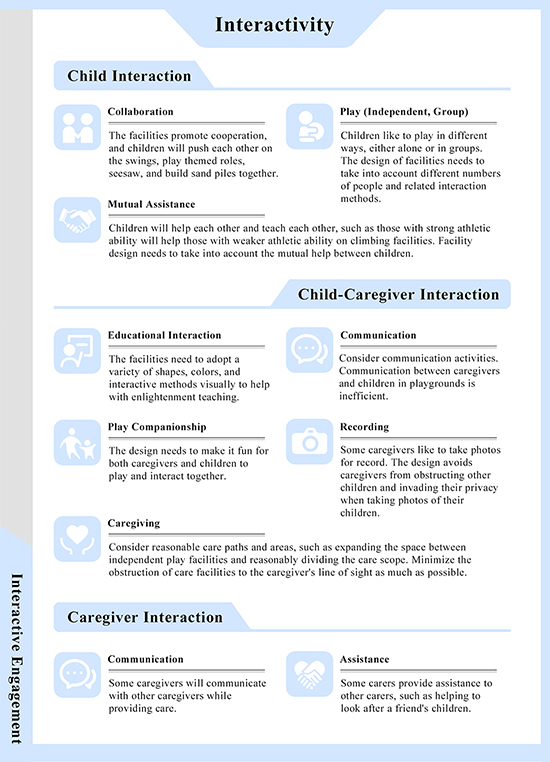
Figure 6. CED-IP cards: Interactivity.
When designing facilities, designers should consider all types of interactions, including individual children, individual caregivers, children and facilities, caregivers and facilities, and caregivers and children. Designing diverse forms of interaction can foster both cooperation and competition during group play. Designers should consider the specific needs associated with the caregiver’s role, including education (18%), assistance (15%), and companionship (59%). For example, caregivers stated: “I teach him what a sailboat is to inspire him” (P16); “I tell her how to climb up and then slide down” (P20); “When he is on the swing, I help by giving him a push” (P25); and “I enjoy playing ball with him” (P4). However, some facilities restrict shared participation—“I don’t play with him because the slide is too short” (P14). As one parent reflected, “If we, as parents, can play together with them, it will certainly help strengthen family relationships” (P6). Incorporating multiple sensory modalities can further enrich the diversity and enjoyment of interaction. Setting appropriate upper and lower limits on the number of participants in each facility is also essential. Playgrounds should support both solitary play (9%) and group interaction (15%). As some caregivers mentioned, “He doesn’t like playing with other children” (P29), while others observed, “She will actively look for other children to play with” (P21). These interactions should be meaningful and fun for both caregivers and children, rather than wasting time or being uninteresting.
Inclusivity
The inclusive CED-IP card is shown in Figure 7. Inclusive design emphasizes design or practice that allows as many people as possible, especially those who have been traditionally marginalized or excluded, to equally participate, access, or benefit (Clarkson et al., 2013).
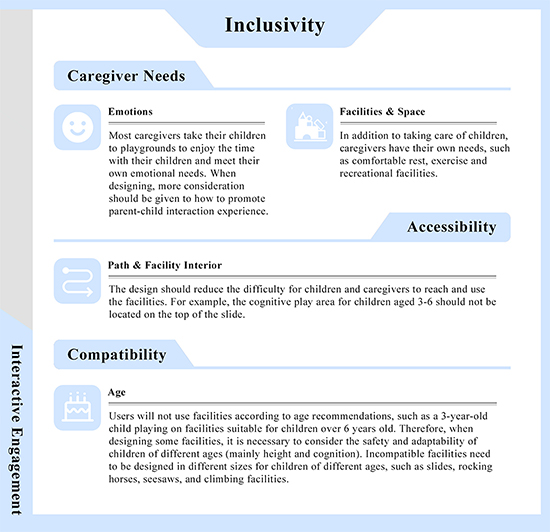
Figure 7. CED-IP cards: Inclusivity.
The inclusivity of a playground depends on meeting caregivers’ participation needs, ensuring accessible facilities, and providing age-appropriate equipment for all children. When designing an inclusive children’s playground, designers can consider the following dimensions—accessibility and playability for children with limited physical functions. Path and facility design needs to consider children with disabilities. Color design needs to consider color-blind children. Designers should consider situations in which caregivers play with children (36%) or use the facility for exercise or rest (18%). As one participant mentioned, “It would be wonderful if there were more facilities where we could easily play with our kids” (P4). Another noted the lack of proximity, saying, “I can’t play with them near the equipment” (P6). Although some playgrounds are divided by age groups, children aged 0-6 are still often observed playing on facilities designed for older children aged 7-12 (18%). Such mismatches can increase safety risks and lead to negative play experiences, which should be carefully considered and avoided in design. As one caregiver noted, “When the facilities are not age-appropriate, younger children may not be able to recognize the risks, as they might act unconsciously” (P21). In addition, some caregivers expressed the desire to document their children’s growth (6%), for instance, “I took a photo of him” (P31).
Playability
The CED-IP card for playability is shown in Figure 8. The design goal of playability is for users to enjoy playing and to immerse themselves in the experience. Playability is viewed from the caregiver’s perspective, mainly determining the interactive play they want to engage in, their feelings about the current play style, and their observations of the child’s play.
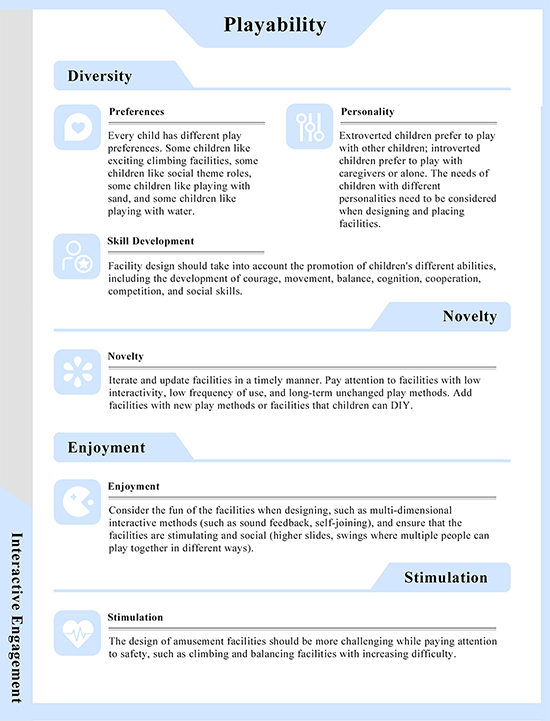
Figure 8. CED-IP cards: Playability.
Caregivers’ comments illustrate that the modular, flexible, and suitably challenging playground facilities shape children’s engagement and enjoyment, supporting the theme of playability. Enhancing the overall playability of playgrounds requires the inclusion of diverse types of equipment, varied play forms, and interactive experiences (36%). As participants noted, “It’s fun because there are many different types of equipment” (P3), and “Seesaws and spinners—those are found in other playgrounds, not here” (P12). Playgrounds with infrequently updated or monotonous equipment tend to make children feel tired and bored (21%). As one caregiver commented, “Except for some special designs, most of them are quite similar” (P6). Similarly, “It hasn’t changed for 20 years, and neither have the facilities” (P31). These findings highlight the importance of modularity and flexibility in playground design, suggesting that facilities with lower usage frequency should be periodically replaced or reconfigured. Moreover, introducing an appropriate level of challenge can help children stay more engaged and joyful during play (18%). As participants expressed, “The slide isn’t high enough, so it’s not very fun” (P6), and “I think it’s dangerous, but children always love that kind of thing” (P15). This situation may be because ability and challenge are closely related in the flow experience.
Basic Experience Cluster
The basic experience cluster contains the lowest frequency of all headings, service (f = 41%, M - 36%), and the second lowest frequency heading, convenience (f = 53%, M - 24%). It also includes supportive (f = 91%, M + 14%), which is above the average frequency. The headings under this cluster tend to be service systems, which are more physical facility requirements.
Service
The service CED-IP card is shown in Figure 9. The concerns and codes (in parentheses) pertain to supporting facilities (restrooms, sinks, water fountains, lockers, seating, mosquito-repellent devices, shelter).
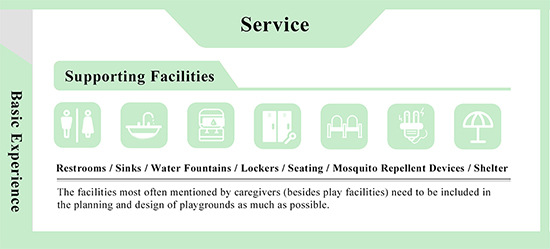
Figure 9. CED-IP cards: Service.
Caregivers report that supporting facilities impact the convenience and comfort of playgrounds. The construction of well-serviced playgrounds requires essential supporting facilities, including toilets (18%), water points (18%), seating (9%), handwashing sinks (3%), and storage lockers (3%). These facilities should be near play areas for convenient access. Toilets and water points primarily address children’s needs, for instance, “Every time we come to the playground, my daughter has to go to the toilet” (P24), while seating and storage lockers cater mainly to caregivers, as one participant noted, “There’s nowhere to hang my clothes” (P19). In addition, context-specific facilities may also be necessary depending on the surrounding environment. For example, several caregivers highlighted the need for mosquito-control devices (6%): “Mosquitoes! I think we need mosquito lamps” (P6).
Convenience
The convenience CED-IP card is shown in Figure 10. The concerns and codes (in parentheses) are location (school, home).
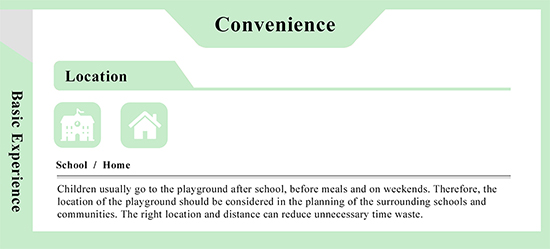
Figure 10. CED-IP cards: Convenience.
Caregivers’ comments illustrate the importance of playground location, showing that nearby and easily accessible sites support frequent use and positive experiences. Conveniently located public playgrounds are typically close to home (45%). Caregivers often reported that distant playgrounds pose accessibility challenges: “It takes a long walk to get to the playground” (P5); “This park is large, but not convenient” (P29). Playgrounds situated near schools (12%) were also considered acceptable, as many children visit them after school or upon completing homework. One participant explained, “My son’s elementary school is nearby, so we only came here after he finished classes today” (P3).
Supportive
The support CED-IP card is shown in Figure 11. The support goal is to facilitate caregivers in caring for children more easily and to enable children to play more safely and easily. Supportive needs primarily concern caregivers’ need to conserve energy and physical strength when caring for children.
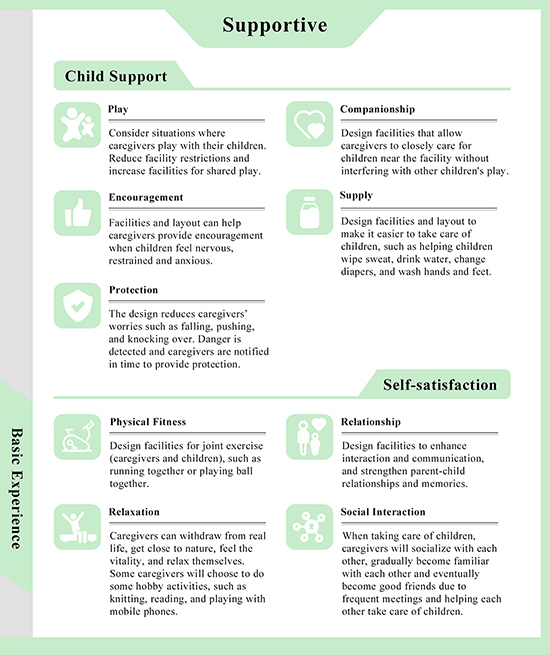
Figure 11. CED-IP cards: Supportive.
Designers need to consider not only support for children’s play and care, but also support for caregivers to rest and relax. Key design focuses on playgrounds include promoting children’s development through play, physical activity, and exposure to nature, while simultaneously supporting caregivers in roles such as supervision, companionship, and the management of children’s needs (76%). Caregivers highlighted the physical effort required to monitor and assist children: “As a mother, I can’t just sit while she plays; I need to help her climb up, so it’s exhausting” (P20). Facilities that encourage joint activities, such as playing and exercising together, can strengthen parent-child bonds (24%). One caregiver noted, “I really cherish this time…I enjoy interacting with my son” (P13). At the same time, playground designs should provide caregivers with opportunities for rest (6%), as reflected in the comment: “I play with my phone” (P1).
Experiential Goals Cluster
The experiential goals cluster contains only purpose (f = 97%, M + 20%) as the highest-frequency heading. This cluster does not provide specific design considerations for the design of the internal facilities and environment of the playground. Instead, it aims to promote designers’ awareness of the playground’s experiential goals. It also provides designers with creative directions for future playground designs, rather than just improving existing facilities.
Purpose
The purpose of the CED-IP card is shown in Figure 12. The goals of children coming to the playground are mainly to have fun, relieve stress, and make friends. For caregivers, the goals of coming to the playground are to promote children’s health and developmental abilities, cultivate parent-child relationships, and relax.
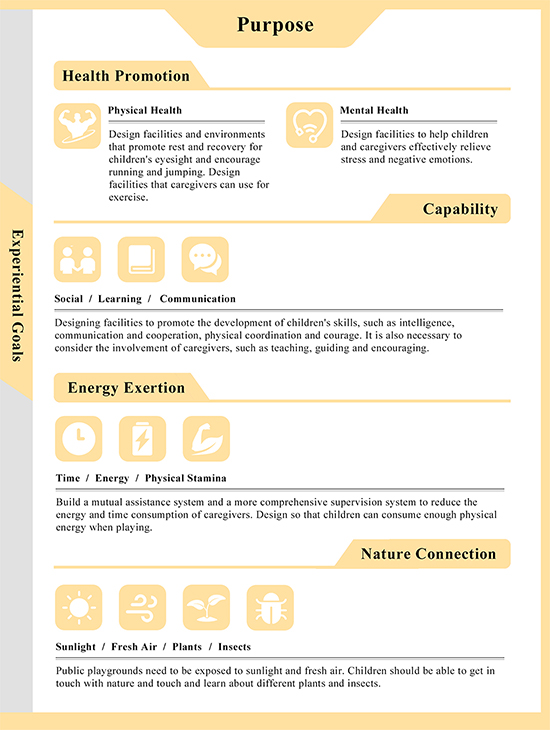
Figure 12. CED-IP cards: Purpose.
Playgrounds serve multiple purposes, including promoting health, fostering a range of skills, supporting physical activity, and connecting children with nature, thereby shaping comprehensive play experiences. Designers can support the recovery or enhancement of children’s physical functions through the design of playground facilities and environments (50%). Participants noted, “Looking at distant objects is also good for eyesight” (P12) and “Children need sufficient exercise and physical activity” (P6). Play can also foster the development of multiple abilities, including social skills (24%), cognition (6%), learning (6%), communication (6%), balance (3%), and courage (3%). Caregivers described, “I want him to go out and run for a while to take a break” (P3); “It helps establish social interactions with others” (P12). Environmental design can enhance children’s exposure to sunlight, fresh air, and plants (30%), as participants remarked, “It’s best to go out and get some sunshine” (P2) and “There is fresh air there” (P10). Positive interactions and engaging play experiences can further enhance children’s positive emotions and reduce negative emotions (15%), for example, “It helps release some of the pressure from school” (P15). In addition, play can continuously engage children’s time, energy, and effort (15%), which caregivers also valued: “The most important thing is that he expends his energy, then goes home and sleeps—this is better for me” (P14).
Evaluation and Development of CED-IP Cards
Three overarching themes emerged from the designers’ reflections on the design toolkit. Based on the designers’ feedback, the CED-IP cards were subsequently redesigned (see Figure 13). First, design elements were categorized by facility type, and priorities were assigned based on coding, retaining only the core needs to indicate their relative importance. Second, links to national standards and materials references were incorporated to enhance practical applicability.
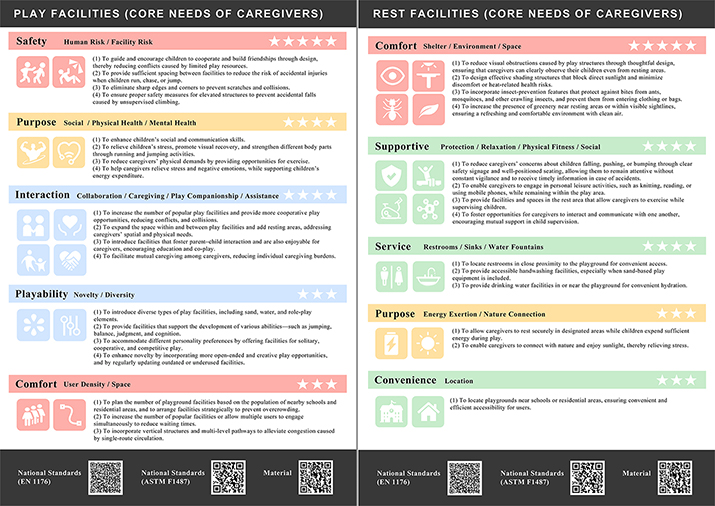
Figure 13. Redesigned CED-IP cards. A high-resolution version could be downloaded from the authors' repository.
Provides Clear and Comprehensive Design Considerations
Designers generally acknowledged the toolkit’s capacity to offer a clear and comprehensive overview of design considerations. It allowed them to reflect on previously overlooked issues and encouraged a more systematic approach to design. “There were several aspects that I realized I had previously overlooked” (P2). “The concerns addressed by the toolkit differ from those I typically focus on as a designer” (P6).
Lack of Professional Guidance
Participants emphasized that the lack of professional guidance limited the toolkit’s usability in practical design processes. Specifically, they pointed out insufficient references to relevant materials and structural solutions, as well as the absence of suggestions for incorporating emerging technologies. For example, “regarding slip resistance, what are the available material options on the market? You could list them all” (P1); “If you want to address the issue of not being able to see children, you need to provide structural references” (P4); “There is no technical guidance at all… For instance, computer vision could be applied to detect children entering hazardous areas” (P5). In addition, designers emphasized the need to include relevant national standards in the toolkit. “There should also be industry standards” (P2); “It’s absolutely necessary—when we start working in a company, the first thing we do is study the national standards” (P1).
However, the large volume of data made it challenging to incorporate such detailed content directly, reflecting a tension between conceptual comprehensiveness and technical depth. Some designers suggested that this limitation could be addressed through dynamic presentation or the inclusion of external links: “There is a path simulation technique… if this could be dynamic, for example, clicking on an item could expand and show a simulation tool” (P5); “You could also just add links to other relevant websites, such as material databases” (P1).
Lack of Practicality
Participants noted that the toolkit demonstrated limited practicality and adaptability across different design contexts. They suggested introducing a hierarchical structure of design priorities and categorizing needs by user groups, facility types, or design objectives to enhance clarity and usability. “Establishing clear priorities would make it easier to understand” (P1); “Perhaps these needs could be broken down and reorganized” (P3). In addition, participants proposed developing tailored versions of the toolkit for different user types—such as students, professional designers, and policymakers. “Designers could have one version, while policymakers or developers could have another” (P6).
Discussion
The findings indicate that caregivers’ experiences in design practice include a sense of safety, interactive engagement, facility support, and environmental comfort. These needs reflect not only caregivers’ actual behaviors in public playgrounds, but also how they allocate attention, invest emotion, and engage in social interaction during caregiving activities. Recent studies similarly characterize caregiving as a highly contextual and relational practice, in which experience emerges through ongoing interaction (Kim, 2025; Row et al., 2020; Yang et al., 2026; Zhao et al., 2025). These findings suggest that a focus solely on physical accessibility and functional usability is often insufficient to address the complexity of real-world use contexts in inclusive design. Existing experience design theories provide a valuable entry point for understanding caregivers’ experiences in inclusive playgrounds. When these theoretical perspectives are combined with empirical insights from participants, they can support the development of new theoretical configurations and offer stronger conceptual grounding (Dubois & Gadde, 2002). This research approach has also been widely adopted in design studies (e.g., Goodwill et al., 2021).
Four Elements of the Caregiving Experience
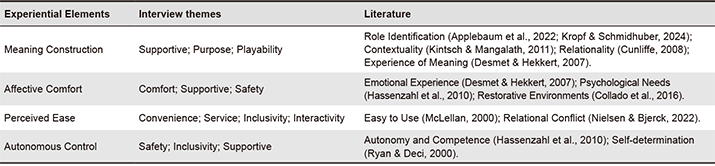
Based on our interviews and existing experience design frameworks, this section outlines four experiential elements manifested in caregiving contexts. We identify these four elements as: sense of meaning and belonging, emotional response, ease and reduced burden, and autonomy and control (see Table 3). They are discussed in the following order.
Table 3. Four elements of the caregiving experience in relation to literature and interview results.
Meaning Construction
Meaning construction refers to the process through which caregiving actions are assigned value, purpose, and personal identity. It concerns not only whether caregiving produces immediate functional outcomes but also how caregivers understand their roles and how these roles relate to their personal values, family responsibilities, and social identities. In the interviews, some caregivers stated that taking children to public playgrounds is not merely an act of accompaniment. Rather, they described it as an important activity aimed at supporting children’s physical and psychological development, promoting well-being, and strengthening parent–child relationships. Meaning construction arises not only from individual psychological identification, but also from the support and quality of interaction provided by the environment and its facilities. Meaning generation is context-dependent (Kintsch & Mangalath, 2011) and inherently relational (Cunliffe, 2008).
Caregivers’ meaning construction is shaped by spatial design and social norms (Ehrlich et al., 2017; Yang et al., 2026). For example, Applebaum et al. (2022) found that through meaning construction and psychological support, caregivers of cancer patients strengthened their role identity and improved their psychological well-being. Similarly, the “moral identity” of family caregivers carries important ethical implications in caregiving practice. It strongly shapes caregivers’ understanding of their responsibilities and the value of their roles (Kropf & Schmidhuber, 2024). Therefore, when design solutions strengthen the value of interactions between caregivers and care recipients, and support caregivers in achieving personal goals and forming role identity, they can enhance a sense of meaning.
Affective Comfort
Affective comfort refers to a sustained positive psychological state during caregiving that helps prevent caregivers from remaining in prolonged tension. It includes not only positive emotions such as joy and satisfaction (Desmet & Hekkert, 2007), but also ongoing emotional support structures, such as relaxation, reassurance, and opportunities for psychological respite. As Hassenzahl et al. (2010) noted, experience does not arise solely from functional performance. It also depends on the continuous fulfillment of emotional and psychological needs. Similarly, interviewed caregivers reported that green plants in caregiving environments helped them feel relaxed. This aligns with research on restorative environments (Collado et al., 2016; Ulrich et al., 1991). The interview data also showed that sharing caregiving tasks with peers or observing children’s play while resting on seating increased caregivers’ sense of safety and reduced psychological stress.
Specifically, improved crowd flow and optimized spatial guidance can increase facility capacity, reduce physical congestion, and shorten waiting times. Such measures can effectively reduce negative emotions and enhance experience (Norman, 2013). Public space should ensure accessibility and usability and include comprehensive supportive facilities. These design strategies can foster positive caregiving experiences (Zhao et al., 2025). Finally, when care recipients use facilities, adequate safety buffers, health safeguards, tolerance for error, and timely feedback mechanisms are essential. These measures can prevent caregivers from remaining constantly alert and anxious about safety concerns (Lindeman et al., 2020). By supporting emotional relief, design can promote a more positive and sustainable caregiving experience.
Perceived Ease
Perceived ease refers to a low-burden, highly fluent experience of caregiving across physical, cognitive, and relational dimensions. It includes not only ease of use, but also smooth interaction between individuals and environments, as well as among individuals. Together, these aspects create an overall sense of effortlessness. In the interviews, some older caregivers reported that limited physical strength made it difficult to carry out certain playground-related caregiving activities. Some younger caregivers also stated that taking a restless child to the playground could be more exhausting than doing housework. Facilities should not only be easy to use, but also support effective interaction and communication between caregivers and care recipients. This helps create a more relaxed and seamless caregiving experience.
At the physical level, products should be designed according to ergonomic principles to enable comfortable, effortless operation. Examples include one-handed operation, appropriate height settings, and facilities that are easy to use and interact with. This concept is closely related to usability and can help reduce physical effort and activity load in caregiving (McLellan, 2000). At the cognitive level, clear spatial organization and predictable use logic are essential. In such conditions, caregivers can continuously monitor care recipients and anticipate potential risks. This reduces decision-making pressure and the burden of constant vigilance. At the relational level, design should minimize friction between people and facilities, as well as between people, to reduce antagonistic interactions. Effective design can encourage cooperation from care recipients, thereby reducing the need for repeated instructions or persuasion. Such friction occurs not only between individuals but also between individuals and tasks (Lee et al., 2015; Nielsen & Bjerck, 2022). Therefore, Perceived Ease involves not only improving functional usability and efficiency, but also reducing cognitive load and relational conflict.
Autonomous Control
Autonomous control refers to caregivers’ perceived sense of autonomy and control over the caregiving process and its outcomes. It includes the agency and decision space caregivers have when interacting with products, environments, and care recipients. This sense of control is reflected in caregivers’ ability to choose their level of involvement. It aligns with the concepts of autonomy and competence in self-determination theory (Hassenzahl et al., 2010; Ryan & Deci, 2000). Interview data show that some children prefer to play alone. However, certain facilities require cooperation, which leads to frequent requests for help. These requests can limit caregivers’ opportunities to rest. At the same time, some caregivers reported that they enjoy interacting with children, as it strengthens parent–child relationships. This suggests that Autonomous Control concerns not only whether to participate, but also how to participate. Participation may be voluntary or imposed. Design should ensure that when caregivers choose not to participate, care recipients can still use facilities safely. When caregivers choose to participate, such involvement should create value and meaning for both parties.
Perceived control also depends on whether facilities and environments provide inclusive support for caregivers with diverse abilities. Differences in physical strength, age, and mobility directly influence how caregivers interact and how much control they perceive. For example, some older caregivers may be unable to assist with activities such as climbing due to physical limitations, leading to passive withdrawal from interaction. Therefore, design should offer diverse modes of caregiving support. These may include low-intensity interaction options, assistive structures, or alternative ways of engagement. When design supports both the choice to participate and the feasibility of participation, caregivers are more likely to maintain a sense of autonomy and control during interaction.
Interrelationships among the Four Experiential Elements
It is important to note that the four experiential elements are not independent in actual use contexts (see Figure 14). Rather, each element directly contributes to the overall caregiving experience while simultaneously interacting with the others, forming a dynamic and interdependent structure. These elements permeate the entire caregiving process, but their relative salience shifts across situations. For example, when children are younger, and accompaniment plays a greater role in their development and in strengthening parent–child relationships, Meaning Construction tends to become more salient, framing caregiving as a purposeful and meaningful practice. In contrast, in contexts characterized by intensive activities, environmental complexity, or heightened challenges, Affective Comfort becomes more critical, as emotional regulation directly affects caregivers’ ability to sustain a relaxed and manageable experience.
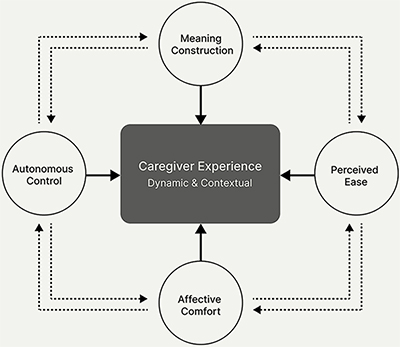
Figure 14. Caregiver experience design framework.
At the same time, the elements are mutually reinforcing. Higher perceived ease can reduce physical and cognitive burden, thereby supporting affective comfort. Autonomous control enhances caregivers’ sense of safety and agency, providing a foundation for emotional stability. Meaning construction, in turn, motivates caregivers to invest time and effort, further strengthening the other experiential elements. Overall, rather than operating in isolation, these four elements jointly shape caregiving experience through both direct contributions and ongoing interactions, enabling sustained participation and engagement in public playground contexts.
Reflexivity: Attending to Experiential Equity in Inclusive Design
Differences in individuals’ physical abilities, psychological states, and social roles lead to varied experiences of the same environment. Inclusivity is not only about whether an environment is “accessible,” but also about the experiential relationships that continuously emerge among people, contexts, and material settings (Demirel & Erkılıç, 2025). It should therefore be understood as a dynamic concept that is experiential, relational, and evolving within specific contexts. Similarly, Bianchin and Heylighen (2018) argue that inclusive design should not only ensure equal access to products and environments, but also enable individuals to participate equally in both the design and use processes. Designers thus need to adopt a reflective perspective, continuously considering accessibility, usability, and the evolving experiential needs of diverse users throughout the design process. This shift in perspective foregrounds both experience and participation in inclusive design.
Through reflective practice, designers can identify potential differences in user experiences at an early stage, thereby avoiding decisions that may unintentionally diminish the experiences of marginalized groups. For designers, this requires recognizing their own positionality in framing problems and making decisions. In contexts involving multiple user groups, design should not focus solely on primary users. Designers also need to shift perspectives to consider marginalized users, such as caregivers, cleaners, and managers. As Haraway (1988) argues through the concept of “situated knowledge,” all knowledge is positioned, and no perspective is fully neutral.
Designers need to continuously reflect on how their design choices shape the evolving experiences of different user groups. As Schön (2017) notes, design is a process of “reflection-in-action,” requiring ongoing examination of underlying assumptions during practice. Inclusive design, therefore, is not only about addressing diverse user needs, but also about critically examining the design process and the situated experiences of different user groups.
Limitations
The factors identified in this study may be influenced by the specific environmental conditions of playgrounds in Hong Kong as well as the broader Asian cultural context. Therefore, when applying this card, designers should consider differences in urban density, climate, cultural norms, and regulatory frameworks. At the same time, this study focused on caregivers’ experiences; children and other marginalized groups were not included in the interviews, which may limit a comprehensive understanding of inclusive experiences in public spaces.
Conclusions
This study advances inclusive design theory and practice by centering experience equity in caregiving contexts. Drawing on empirical insights from public playgrounds and integrating experience design theory, we propose a Caregiver Experience Design Framework comprising four interrelated elements: meaning construction, affective comfort, perceived ease, and autonomous control. The framework reconceptualizes caregiving as dynamic and contextual.
This study developed a highly operational set of experience design cards grounded in interview data. These cards offer practical support for designers and decision-makers seeking to enhance caregiving experiences in public contexts. These cards can also serve as a reference for designing inclusive experiences in other caregiving contexts. Moreover, this research calls for a reflexive and experience-oriented shift in inclusive design.
Acknowledgments
The authors would like to thank the Hong Kong General Research Fund (Ref. 15219021), issued by The Research Grants Council (RGC) of the Hong Kong Special Administrative Region, and research postgraduate studentships from The Hong Kong Polytechnic University. The authors would also like to acknowledge research support from the Eric C. Yim Endowed Professorship in Inclusive Design and the PolyU-HIT Joint Research Center for Inclusive Environment. The authors also thank the student helpers for their voluntary help with data collection and all the interviewees for their generous participation.
References
- Adeoye-Olatunde, O. A., & Olenik, N. L. (2021). Research and scholarly methods: Semi-structured interviews. Journal of the American College of Clinical Pharmacy, 4(10), 1358-1367. https://doi.org/10.1002/jac5.1441
- Applebaum, A. J., Roberts, K. E., Lynch, K., Gebert, R., Loschiavo, M., Behrens, M., Walsh, L. E., Polacek, L. C., Diamond, E. L., & Breitbart, W. S. (2022). A qualitative exploration of the feasibility and acceptability of meaning-centered psychotherapy for cancer caregivers. Palliative and Supportive Care, 20(5), 623-629. https://doi.org/10.1017/s1478951521002030
- Arts, J., Gubbels, J. S., Verhoeff, A. P., Chinapaw, M. J., Lettink, A., & Altenburg, T. M. (2022). A systematic review of proxy-report questionnaires assessing physical activity, sedentary behavior and/or sleep in young children (aged 0-5 years). International Journal of Behavioral Nutrition and Physical Activity, 19(1), Article 18. https://doi.org/10.1186/s12966-022-01251-x
- Bate, P., & Robert, G. (2023). Bringing user experience to healthcare improvement: The concepts, methods and practices of experience-based design. CRC.
- Beck, E., Obrist, M., Bernhaupt, R., & Tscheligi, M. (2008). Instant card technique: How and why to apply in user-centered design. In Proceedings of the 10th anniversary conference on participatory design (pp. 162-165). ACM. https://dl.acm.org/doi/10.5555/1795234.1795261
- Bianchin, M., & Heylighen, A. (2018). Just design. Design Studies, 54, 1-22. https://doi.org/10.1016/j.destud.2017.10.001
- Casais, M., Mugge, R., & Desmet, P. M. A. (2016). Using symbolic meaning as a means to design for happiness: The development of a card set for designers. In Proceedings of the DRS conference on future-focused thinking (pp. 1553-1570). Design Research Society. https://doi.org/10.21606/drs.2016.424
- Celikoglu, O. M., Ogut, S. T., & Krippendorff, K. (2017). How do user stories inspire design? A study of cultural probes. Design Issues, 33(2), 84-98. https://doi.org/10.1162/DESI_a_00441
- Christensen, P., & James, A. (2017). Research with children. Routledge.
- Clarkson, P. J., Coleman, R., Keates, S., & Lebbon, C. (2013). Inclusive design: Design for the whole population. Springer. https://doi.org/10.1007/978-1-4471-0001-0
- Cohen, D. A., Talarowski, M. R., Han, B., Williamson, S. L., Galfond, E. C., Young, D. R., Eng, S., & McKenzie, T. L. (2023). Playground design and physical activity. American Journal of Preventive Medicine, 64(3), 326-333. https://doi.org/10.1016/j.amepre.2022.10.012
- Coleman, R., Lebbon, C., Clarkson, J., & Keates, S. (2003). From margins to mainstream. In J. Clarkson, S. Keates, R. Coleman, & C. Lebbon (Eds), Inclusive design: Design for the whole population (pp. 1-25). Springer. https://doi.org/10.1007/978-1-4471-0001-0_1
- Collado, S., Staats, H., Corraliza, J. A., & Hartig, T. (2016). Restorative environments and health. In G. Fleury-Bahi, E. Pol, & O. Navarro (Eds.), Handbook of environmental psychology and quality of life research (pp. 127-148). Springer. https://doi.org/10.1007/978-3-319-31416-7_7
- Corsini, L., Jagtap, S., & Moultrie, J. (2022). Design with and by marginalized people in humanitarian makerspaces. International Journal of Design, 16(2), 91-105. https://doi.org/10.57698/v16i2.07
- Crilly, N., Moultrie, J., & Clarkson, P. J. (2004). Seeing things: Consumer response to the visual domain in product design. Design Studies, 25(6), 547-577. https://doi.org/10.1016/j.destud.2004.03.001
- Cunliffe, A. L. (2008). Orientations to social constructionism: Relationally responsive social constructionism and its implications for knowledge and learning. Management Learning, 39(2), 123-139. https://doi.org/10.1177/1350507607087578
- De Looze, M. P., Kuijt-Evers, L. F., & van Dieën, J. (2003). Sitting comfort and discomfort and the relationships with objective measures. Ergonomics, 46(10), 985-997. https://doi.org/10.1080/0014013031000121977
- Demirel, A. E., & Erkılıç, M. (2025). Mapping the inclusive design literature in the built environment: Towards an expanded experiential definition of inclusivity. Design Studies, 101, Article 101354. https://doi.org/10.1016/j.destud.2025.101354
- Desmet, P., & Hekkert, P. (2007). Framework of product experience. International Journal of Design, 1(1), 57-66. https://doi.org/10.57698/v1i1.05
- Dewey, J. (1980). Art as experience. G. P. Putnam’s Sons.
- Dlamini, M. D., Chang, Y. J., & Nguyen, T. T. B. (2023). Caregivers’ experiences of having a child with cerebral palsy. A meta-synthesis. Journal of Pediatric Nursing, 73, 157-168. https://doi.org/10.1016/j.pedn.2023.08.026
- Dourish, P. (2001). Where the action is. MIT Press.
- Dubois, A., & Gadde, L. (2002). Systematic combining: An abductive approach to case research. Journal of Business Research, 55(7), 553-560. https://doi.org/10.1016/S0148-2963(00)00195-8
- Ehrlich, K., Emami, A., & Heikkilä, K. (2017). The relationship between geographical and social space and approaches to care among rural and urban caregivers caring for a family member with Dementia: A qualitative study. International Journal of Qualitative Studies on Health and Well-Being, 12(1), Article 1275107. https://doi.org/10.1080/17482631.2016.1275107
- Endmann, A., & Keßner, D. (2016). User journey mapping–A method in user experience design. i-com, 15(1), 105-110. https://doi.org/10.1515/icom-2016-0010
- Garrett, J. J. (2011). The elements of user experience: User-centered design for the web and beyond. New Riders.
- Goodwill, M., Bendor, R., & van der Bijl-Brouwer, M. (2021). Beyond good intentions: Towards a power literacy framework for service designers. International Journal of Design, 15(3), 45-59. https://doi.org/10.57698/v15i3.03
- Gruen, D., Rauch, T., Redpath, S., & Ruettinger, S. (2002). The use of stories in user experience design. International Journal of Human-Computer Interaction, 14(3-4), 503-534. https://doi.org/10.1080/10447318.2002.9669132
- Haraway, D. (1988). Situated knowledges: The science question in feminism and the privilege of partial perspective. Feminist Studies.
- Hassenzahl, M., Diefenbach, S., & Göritz, A. (2010). Needs, affect, and interactive products–Facets of user experience. Interacting with Computers, 22(5), 353-362. https://doi.org/10.1016/j.intcom.2010.04.002
- Hassenzahl, M. (2007). Aesthetics in interactive products: Correlates and consequences of beauty. In H. N. J. Schifferstein & P. Hekkert (Eds.), Product experience (pp. 287-302). Elsevier. https://doi.org/10.1016/b978-008045089-6.50014-9
- Heylighen, A., Van der Linden, V., & Van Steenwinkel, I. (2017). Ten questions concerning inclusive design of the built environment. Building and Environment, 114, 507-517. https://doi.org/10.1016/j.buildenv.2016.12.008
- Höök, K., & Löwgren, J. (2021). Characterizing interaction design by its ideals: A discipline in transition. She Ji: The Journal of Design, Economics, and Innovation, 7(1), 24-40. https://doi.org/10.1016/j.sheji.2020.12.001
- Howard, T. (2014). Journey mapping: A brief overview. Communication Design Quarterly Review, 2(3), 10-13. https://doi.org/10.1145/2644448.2644451
- Hsieh, G., Halperin, B. A., Schmitz, E., Chew, Y. N., & Tseng, Y. C. (2023). What is in the cards: Exploring uses, patterns, and trends in design cards. In Proceedings of the SIGCHI conference on human factors in computing systems (Article No. 765). ACM. https://doi.org/10.1145/3544548.3580712
- Huser, C., Dockett, S., & Perry, B. (2022). Young children’s assent and dissent in research: Agency, privacy and relationships within ethical research spaces. European Early Childhood Education Research Journal, 30(1), 48-62. https://doi.org/10.1080/1350293X.2022.2026432
- Jones, P. (2013). Design for care: Innovating healthcare experience. Rosenfeld Media.
- Kim, S. O. (2025). Mobility of care and time poverty: The travel burdens of family caregivers in an aging America. Transportation. https://doi.org/10.1007/s11116-025-10630-9
- Kintsch, W., & Mangalath, P. (2011). The construction of meaning. Topics in Cognitive Science, 3(2), 346-370. https://doi.org/10.1111/j.1756-8765.2010.01107.x
- Krippendorff, K. (2019). Content analysis: An introduction to its methodology. SAGE.
- Kropf, M., & Schmidhuber, M. (2024). Family caregivers and the ethical relevance of moral identity. Nursing Inquiry, 31(4), Article e12670. https://doi.org/10.1111/nin.12670
- Kvale, S., & Brinkmann, S. (2009). Interviews: Learning the craft of qualitative research interviewing. SAGE.
- Lazar, J., Goldstein, D. F., & Taylor, A. (2015). Ensuring digital accessibility through process and policy. Morgan Kaufmann.
- Lee, E. K., Hong, W., & Avgar, A. C. (2015). Containing conflict: A relational approach to the study of high-involvement work practices in the health-care setting. The International Journal of Human Resource Management, 26(1), 100-122. https://doi.org/10.1080/09585192.2014.938680
- Lee, Y., & Li, L. (2022). Evaluating the positive experience of caregiving: A systematic review of the positive aspects of caregiving scale. The Gerontologist, 62(9), e493-e507. https://doi.org/10.1093/geront/gnab092
- Li, C., Lee, C. F., & Xu, S. (2020). Stigma threat in design for older adults: Exploring design factors that induce stigma perception. International Journal of Design, 14(1), 51-64. https://doi.org/10.57698/v14i1.04
- Lindeman, D. A., Kim, K. K., Gladstone, C., & Apesoa-Varano, E. C. (2020). Technology and caregiving: Emerging interventions and directions for research. The Gerontologist, 60(1), S41-S49. https://doi.org/10.1093/geront/gnz178
- Little, H., & Wyver, S. (2008). Outdoor play: Does avoiding the risks reduce the benefits? Australasian Journal of Early Childhood, 33(2), 33-40. https://doi.org/10.1177/183693910803300206
- Lucero, A., & Arrasvuori, J. (2010). PLEX cards: A source of inspiration when designing for playfulness. In Proceedings of the 3rd international conference on fun and games (pp. 28-37). ACM. https://doi.org/10.1145/1823818.1823821
- Lucero, A., Dalsgaard, P., Halskov, K., & Buur, J. (2016). Designing with cards. In P. Markopoulos, J.-B. Martens, J. Malins, K. Coninx, & A. Liapis (Eds.), Collaboration in creative design: Methods and tools (pp. 75-95). Springer.
- Luck, R. (2018). Inclusive design and making in practice: Bringing bodily experience into closer contact with making. Design Studies, 54, 96-119. https://doi.org/10.1016/j.destud.2017.11.003
- McLellan, H. (2000). Experience design. Cyberpsychology & Behavior, 3(1), 59-69. https://doi.org/10.1089/109493100316238
- Miaskiewicz, T., & Kozar, K. A. (2011). Personas and user-centered design: How can personas benefit product design processes? Design Studies, 32(5), 417-430. https://doi.org/10.1016/j.destud.2011.03.003
- Moore, A., Lynch, H., & Boyle, B. (2020). Can universal design support outdoor play, social participation, and inclusion in public playgrounds? A scoping review. Disability and Rehabilitation, 44(13), 3304-3325. https://doi.org/10.1080/09638288.2020.1858353
- Moore, A., Boyle, B., & Lynch, H. (2023). Designing public playgrounds for inclusion: A scoping review of grey literature guidelines for universal design. Children’s Geographies, 21(3), 422-441. https://doi.org/10.1080/14733285.2022.2073197
- Nielsen, B. F., & Bjerck, M. (2022). Relational design. Proceedings of the Design Society, 2, 1061-1070. https://doi.org/10.1017/pds.2022.108
- Norman, D. A. (2004). Emotional design: Why we love (or hate) everyday things. Basic Books.
- Norman, D. A. (2013). The design of everyday things (Rev. and Exp. ed.) Basic Books.
- Osterwalder, A., Pigneur, Y., Bernarda, G., & Smith, A. (2015). Value proposition design: How to create products and services customers want. John Wiley & Sons.
- Persson, H., Åhman, H., Yngling, A. A., & Gulliksen, J. (2015). Universal design, inclusive design, accessible design, design for all: Different concepts‒one goal? On the concept of accessibility‒historical, methodological and philosophical aspects. Universal Access in the Information Society, 14(4), 505-526. https://doi.org/10.1007/s10209-014-0358-z
- Pirinen, A., Savolainen, K., Hyysalo, S., & Mattelmäki, T. (2022). Design enters the city: Requisites and points of friction in deepening public sector design. International Journal of Design, 16(3), 1-19. https://doi.org/10.57698/v16i3.01
- Pruitt, J., & Adlin, T. (2010). The persona lifecycle: Keeping people in mind throughout product design. Elsevier.
- Row, Y.-K., Kim, S.-Y., & Nam, T.-J. (2020). Using pet-dog behavior traits to enhance the emotional experience of in-car interaction. International Journal of Design, 14(1), 19-34. https://doi.org/10.57698/v14i1.02
- Ryan, R. M., & Deci, E. L. (2000). Self-determination theory and the facilitation of intrinsic motivation, social development, and well-being. American Psychologist, 55(1), 68-78. https://doi.org/10.1037/0003-066X.55.1.68
- Saldaña, J. (2021). The coding manual for qualitative researchers. Sage.
- Sauer, J., Sonderegger, A., & Schmutz, S. (2020). Usability, user experience and accessibility: Towards an integrative model. Ergonomics, 63(10), 1207-1220. https://doi.org/10.1080/00140139.2020.1774080
- Schmidt, M., & Huang, R. (2022). Defining learning experience design: Voices from the field of learning design & technology. TechTrends, 66(2), 141-158. https://doi.org/10.1007/s11528-021-00656-y
- Schön, D. A. (2017). The reflective practitioner: How professionals think in action. Routledge.
- Siu, K. W. M., Jian, I. Y., & Caterina, D. I. I. Y. J. (2022). What we talk about when we talk about inclusive play-space: A children-caregiver perspective. In Proceedings of the international conference on nature for an inclusive and innovative urban regeneration (pp. 134-143). Atlantis Press. https://doi.org/10.2991/978-94-6463-469-3_11
- Tussyadiah, I. P. (2014). Toward a theoretical foundation for experience design in tourism. Journal of Travel Research, 53(5), 543-564. https://doi.org/10.1177/0047287513513172
- Ulrich, R. S., Simons, R. F., Losito, B. D., Fiorito, E., Miles, M. A., & Zelson, M. (1991). Stress recovery during exposure to natural and urban environments. Journal of Environmental Psychology, 11(3), 201-230. https://doi.org/10.1016/S0272-4944(05)80184-7
- Varni, J. W., Limbers, C. A., & Burwinkle, T. M. (2007). Parent proxy-report of their children’s health-related quality of life: An analysis of 13,878 parents’ reliability and validity across age subgroups using the PedsQL 4.0 generic core scales. Health and Quality of Life Outcomes, 5(1), Article 2. https://doi.org/10.1186/1477-7525-5-2
- Vink, P., & Hallbeck, S. (2012). Editorial: Comfort and discomfort studies demonstrate the need for a new model. Applied Ergonomics, 43(2), 271-276. https://doi.org/10.1016/j.apergo.2011.06.001
- Walter, S. (2022). User journey mapping. SitePoint Pty.
- Wenger, I., Schulze, C., Lundström, U., & Prellwitz, M. (2021). Children’s perceptions of playing on inclusive playgrounds: A qualitative study. Scandinavian Journal of Occupational Therapy, 28(2), 136-146. https://doi.org/10.1080/11038128.2020.1810768
- Wengrovius, C., Zick, S., Beltz, A. M., Wentz, E. E., Ulrich, D. A., & Robinson, L. E. (2022). Relations among parent-reported physical activity and interoception in children. Physiology & Behavior, 254, Article 113895. https://doi.org/10.1016/j.physbeh.2022.113895
- Wright, P., & McCarthy, J. (2010). Experience-centered design: Designers, users, and communities in dialogue (Vol. 9). Springer.
- Yang, Z., Zhou, R., Zhao, X., Yin, I. Z., Zou, J., & Siu, K. W. M. (2026). Enhancing caregiver engagement in public playgrounds: Inclusive design strategies for intergenerational play. Humanities and Social Sciences Communications, 12(1), Article 1927. https://doi.org/10.1057/s41599-025-06200-0
- Yardım, S., & Pedgley, O. (2023). Targeting a luxury driver experience: Design considerations for automotive HMI and interiors. International Journal of Design, 17(2), 45-66. https://doi.org/10.57698/v17i2.03
- Zamawe, F. C. (2015). The implication of using NVivo software in qualitative data analysis: Evidence-based reflections. Malawi Medical Journal, 27(1), 13-15. https://doi.org/10.4314/mmj.v27i1.4
- Zhao, X., Yang, Z., Zou, J., Yin, I. Z., Jian, I. Y., & Siu, K. W. M. (2025). Exploring the well-being of caregivers in public playgrounds: Developing the care demands-resources model. Applied Research in Quality of Life, 20(5), 1943-1973. https://doi.org/10.1007/s11482-025-10501-6
Appendix
Appendix 1. Coding of interview data, including Clusters, Themes, Core Points, and Codes.
| Level 1 Codes | Level 2 Core Points | Level 3 Headings | Level 4 Clusters |
| Timeliness, Facility Update | Maintenance | Safety | Basic Functions |
| Sharpness, Hardness, Impact, Height, Guardrails | Facility Risk | ||
| Conflict, Collision | Human Risk | ||
| Durability, Sustainability, Color | Materials | ||
| Sun Shading, Rain Protection, Visual Screening | Shelter | Comfort | |
| Queueing, Crowding | User Density | ||
| Pathway, Size, Facility Density | Space | ||
| Sanitation, Temperature, Pests, Plant, Sunlight, Air | Environment | ||
| Collaboration, Play (Independent, Group), Mutual Assistance | Child Interaction | Interactivity | Interactive Engagement |
| Educational Interaction, Recording, Play Companionship, Communication, Caregiving | Child-Caregiver Interaction | ||
| Communication, Assistance | Caregiver Interaction | ||
| Personality, Preferences, Skill Development | Diversity | Playability | |
| Novelty | Novelty | ||
| Enjoyment | Enjoyment | ||
| Stimulation | Stimulation | ||
| Age | Compatibility | Inclusivity | |
| Path, Facility Interior | Accessibility | ||
| Facilities, Space, Emotions | Caregiver Needs | ||
| School, Home | Location | Convenience | Basic Experience |
| Play, Supply, Protection, Companionship, Encouragement | Child Support | Supportive | |
| Physical Fitness, Relationship, Relaxation, Social Interaction | Self-satisfaction | ||
| Restrooms, Sinks, Water Fountains, Lockers, Seating, Mosquito Repellent Devices, Shelter | Supporting Facilities | Service | |
| Sunlight, Fresh Air, Plants, Insects | Nature Connection | Purpose | Experiential Goals |
| Physical Health, Mental Health | Health Promotion | ||
| Social, Learning, Communication | Capability | ||
| Time, Energy, Physical Stamina | Energy Exertion |
Appendix 2. Themes, descriptions, and illustrative quotes from interview data.
| Theme | Description | Supporting quotes / examples | |
| Safety | Maintenance | Caregivers consider the maintenance of facilities (timely repairs, durable materials, and regular updates) to be a key indicator of playground management. | “It will rust, because sometimes children will be scratched, and if they are injured, will they be more likely to get tetanus?” (P21) |
| Facility Risk | Caregivers consider basic safety design (such as protective flooring and rounded corners) to be the core, and then assess the risks based on the condition and maintenance of the facilities and adjust the level of intervention in monitoring accordingly. | “There is a slope, and some children may fall down if they are not careful.” (P25) “She herself fell once on this kind of ground, and the cracks would get her feet stuck when she ran.” (P21) |
|
| Human Risk | Caregivers perceive human risks‒namely, the dangerous behaviors of other children and potential conflicts‒as more concerning safety hazards than the facility itself. This constant vigilance regarding the uncontrollable factors in a dynamic social environment significantly exacerbates their guardianship stress and anxiety. | “I tell you; the danger comes from the children... Last time I saw a child pinching that little white girl.” (P5) “I am afraid that some boys will hit others. Some kids are more domineering and think this is their territory.” (P22) |
|
| Materials | Caregivers expect materials to not only ensure safety and durability and provide a comfortable feel, but also to inspire children’s play and creativity through vibrant colors and friendly shapes. | “The floor is covered with protective materials to prevent children from falling.” (P10) | |
| Comfort | Shelter | Caregivers consider effective sunshade a key facility to ensure the usability of playgrounds in hot or rainy weather, as it relates to children and their comfort and directly affects the actual frequency and duration of playground use. | “In the hot weather, children easily suffer from heatstroke or catch a cold after playing.” (P28) “Any water must be wiped away before use.” (P34) |
| User Density | Caregivers believe that appropriate crowd density is key to ensuring a good playground experience. Overcrowding not only causes safety issues and significantly reduces the quality of play, but also multiplies their supervision burden. | “There were too many people, and most of the children were pushing and shoving each other.” (P18) | |
| Space | Caregivers expect an open environment that is large enough for children to run freely, and that can effectively disperse crowds and reduce waiting and conflict through scientific layout. | “The sidewalks could be narrower so that people have more than one passageway.” (P7) “There also needs to be plenty of space between facilities.” (P10) |
|
| Environment | Caregivers expect to maintain and design a comfortable and hygienic environment through good management. | “Sometimes it’s too wet and dirty to play.” (P9) “We are afraid of bringing home ants.” (P3) |
|
| Interactivity | Child Interaction | Caregivers who value and encourage friendly interactions between children can foster social skills and enjoy playing together. | “He doesn’t like playing with other children.” (P29) “She will actively look for other children to play with.” (P21) |
| Child–Caregiver Interaction | Caregivers hope to build emotional connections through shared play and wish to flexibly adjust the manner and extent of their participation according to their own energy levels. | “I tell her how to climb up and then slide down.” (P20) “When he is on the swing, I help by giving him a push.” (P25) “I enjoy playing ball with him.” (P4) |
|
| Caregiver Interaction | Interactions between caregivers are social interactions centered around the child, providing practical parenting information and brief assistance, thus alleviating individual caregiving stress. | “If there are other parents, I might chat with them or help each other take care of the children.” (P3) | |
| Playability | Diversity | Caregivers expect play facilities to avoid monotony and repetition and need to provide a variety of play facilities to continuously stimulate children's interest in play. | “It’s fun because there are many different types of equipment.” (P3) “Seesaws and spinners‒those are found in other playgrounds, not here.” (P12) |
| Novelty | Caregivers hope that playground equipment can be dynamically updated and rotated to prevent children from getting bored due to familiarity. | “Except for some special designs, most of them are quite similar.” (P6) “It hasn’t changed for 20 years, and neither have the facilities.” (P31) |
|
| Enjoyment | Caregivers eagerly anticipate that playground equipment will offer interactive and creative play elements that will keep children entertained. | “He’s more familiar with the playground downstairs, so after playing for a while, he wants to go back.” (P21) | |
| Stimulation | Caregivers believe that overly safe and unchallenging designs stifle the core fun and developmental value of the game. | “The facilities should be more challenging.” (P31) “The slide isn’t high enough, so it’s not very fun.” (P6) |
|
| Inclusivity | Compatibility | The facilities are not compatible with the needs of older children or the abilities of young children, and the design style is not compatible with the cognitive characteristics of children. | “It would be wonderful if there were more facilities where we could easily play with our kids.” (P4) “When the facilities are not age-appropriate, younger children may not be able to recognize the risks, as they might act unconsciously.” (P21) |
| Accessibility | Caregivers may find it difficult to look after children in high or cramped facilities and may need to expend effort to help under-resourced children use the facilities. | “But she can't rock climb. So it’s difficult for her to get there…It's too tiring for me to help her up every time.” (P20) | |
| Caregiver Needs | Caregivers need a space that not only caters to children of different abilities but also supports their own rest, reduces physical exertion, and promotes parent-child interaction | “I took a photo of him.” (P31) “It would be wonderful if there were more facilities where we could easily play with our kids.” (P4) |
|
| Convenience | Location | Caregivers expect the playground to be integrated into their daily routines centered around home and school. | “It takes a long walk to get to the playground.” (P5) “My son’s elementary school is nearby, so we only came here after he finished classes today.” (P3) |
| Supportive | Child Support | Caregivers need to easily ensure the child's safety and physical needs and be deeply involved in the child's play. | “As a mother, I can’t just sit while she plays; I need to help her climb up, so it’s exhausting.” (P20) “It’s very hot, but I have no choice…he runs here, I run, he runs there, I have to run again.” (P28) |
| Self-satisfaction | Caregivers need to derive joy from parent-child interactions and enjoy leisure time during breaks in supervision. | “I really cherish this time…I enjoy interacting with my son.” (P13) “I play with my phone.” (P1) |
|
| Service | Supporting Facilities | Caregivers expect facilities to support sustained, comfortable play activities and ensure that children's physiological needs are met quickly. | “Mosquitoes! I think we need mosquito lamps.” (P6) “There’s nowhere to hang my clothes.” (P19) |
| Purpose | Nature Connection | Caregivers consider sunlight, fresh air, and outdoor spaces with greenery to be key elements of an outdoor playground. | “It’s best to go out and get some sunshine.” (P2) “There is fresh air there.” (P10) |
| Health Promotion | Caregivers hope that outdoor play can ensure children's healthy development, mainly through its positive effects on relaxation and eye protection. | “Looking at distant objects is also good for eyesight.” (P12) “It helps release some of the pressure from school.” (P15) |
|
| Capability | Caregivers expect that outdoor play activities will help children develop social communication skills, improve physical fitness, cognitive abilities, and the courage to overcome difficulties. | “It helps establish social interactions with others.” (P12) “Children need sufficient exercise and physical activity.” (P6) |
|
| Energy Exertion | Caregivers need an environment where children can fully release their energy in exchange for quiet rest so that they can have their own rest time. | “The most important thing is that he expends his energy, then goes home and sleeps‒this is better for me.” (P14) |
