
Mood as a Means Versus an End: Unraveling How Experienced Practitioners Address Mood in Experience Design
Zhuochao Peng 1,*, Haian Xue 2, Antony William Joseph 3, Virpi Roto 3, and Pieter M. A. Desmet 1
1 Faculty of Industrial Design Engineering, Delft University of Technology, Delft, The Netherlands
2 College of Design and Innovation, Tongji University, Shanghai, China
3 School of Arts, Design and Architecture, Aalto University, Espoo, Finland
This article presents a study exploring how designers consider and approach user or customer mood in real-world projects. Because explicit mood-focused practice is difficult to identify and often masked by overlapping terminology, we conducted retrospective interviews with twenty experienced practitioners across the field of experience design. While participants tended to conflate mood with other affective constructs, many had nevertheless incorporated it—directly or indirectly—into their work. From their accounts, we identified five approaches to addressing mood in design: treating it as (1) an end in itself, (2) a means to enhance engagement, (3) a means to enrich experience, (4) a means to create differentiation or advantage, and (5) a means to facilitate user research. These findings advance understanding of mood-focused design by highlighting practitioners’ implicit engagement with mood and their pragmatic considerations, which extend beyond intrinsic well-being goals to instrumental, outcome-oriented goals. At the same time, we identified four categories of challenges practitioners face, three types of knowledge they regard as essential, and four obstacles that discourage them from bringing mood into practice or organizational contexts. Building on these insights, we outline research and educational opportunities to better support future mood-focused design practice.
Keywords – Design for Health and Well-being, Design for Mood Regulation, Experience Design, Human-Centered Design, Mood-Focused Design, Positive Design.
Relevance to Design Practice – Designers interested in human mood can use our overview of approaches to addressing mood to inform their mood-focused design activities, such as pinpointing mood’s role in their work, articulating mood-related design intentions, selecting better-suited design strategies, and engaging the right expertise.
Citation: Peng, Z., Xue, H., Joseph, A. W., Roto, V., & Desmet, P. M. A. (2026). Mood as a means versus an end: Unraveling how experienced practitioners address mood in experience design. International Journal of Design, 20(1), 1-17. https://doi.org/10.57698/v20i1.01
Received November 1, 2024; Accepted March 8, 2026; Published April 30, 2026.
Copyright: © 2026 Peng, Xue, Joseph, Roto, & Desmet. Copyright for this article is retained by the authors, with first publication rights granted to the International Journal of Design. All journal content is open-accessed and allowed to be shared and adapted in accordance with the Creative Commons Attribution 4.0 International (CC BY 4.0) License.
*Corresponding Author: z.peng@tudelft.nl
Zhuochao Peng received his PhD from Delft University of Technology (TU Delft), where his doctoral research focused on developing a comprehensive understanding of mood-focused design. He is currently a postdoctoral researcher at Eindhoven University of Technology, where he studies socio-emotional processes underlying team learning in challenge-based engineering education.
Haian Xue is a professor at the College of Design and Innovation, Tongji University, Shanghai. His research centers on wellbeing-focused experience design, emotion and mood, spirituality, harmony, and alternative design epistemologies and methods. He earned a Doctor of Arts (PhD in Design) from Aalto University and has worked at leading design schools in the Netherlands, Finland, the UK, and the USA.
Antony William Joseph is a design educator and researcher with more than 15 years of teaching experience. He is currently working as a postdoctoral researcher in the Department of Design at Aalto University, Finland. Before moving to Finland, he worked as a design educator at the National Institute of Design Bengaluru Campus, India. His areas of interest include human-centered design, user experience, employee well-being, usability, and design for the elderly.
Virpi Roto is a senior university lecturer and vice dean of Impact at the School of Arts, Design and Architecture, Aalto University, Finland. She is known for her user experience research, including publications on the definition, evaluation, and design of user experiences.
Pieter M. A. Desmet is a professor of Design for Experience at the Faculty of Industrial Design Engineering, TU Delft. His main research interests are in design, emotion, mood, and subjective well-being. He is the head of the Department of Human-Centered Design at TU Delft, partner of Emotion Studio, and founder of the Delft Institute of Positive Design.
Introduction
We might find ourselves somewhat grumpy one day, yet calm the next. Similarly, there are days when we feel full of energy, contrasted with days when lethargy seems to prevail. These shifting inner states are what we commonly describe as our “moods.”
Moods are low-intensity, diffuse feeling states that typically last for hours or days (Morris, 1989). Distinct from fleeting emotions, moods are more enduring and gradually evolving, often below our conscious awareness (Parkinson, 1996). A mood builds up through cumulative circumstances rather than a single incident, making its origins often elusive (Ekman, 1994). Moreover, unlike focused emotions, moods are not directed toward a particular object, person, or event, but toward the surroundings in general, reflecting more global and diffuse conditions (Frijda, 1994). For example, while we might feel a surge of anger (an emotion) directed at someone or their behavior, we can remain irritable (a mood state) toward ourselves, others, and our environment for an entire day without knowing exactly why.
Despite their subtlety, moods are always present and constantly shape our daily experiences, providing a fertile ground for experience design (research). There are at least three reasons why addressing mood in design is meaningful. First, everyday mood fluctuations are closely tied to health and well-being (Morris, 1999; Peeters et al., 2006), inspiring design initiatives that seek to alleviate negative moods and enhance positive ones (Desmet, 2015). Second, the mood of a user or customer significantly affects their attitudes and behaviors, their subjective evaluations, and ultimately, their level of satisfaction with a product or service (Gardner, 1985; Westbrook, 1980). This has encouraged design researchers to incorporate mood considerations into their work, aiming to enhance user experience and satisfaction across various domains, such as retail (e.g., Quartier et al., 2008), social media (e.g., Rao, 2008), and airline services (e.g., Lin, 2015). Third, moods, as temporary dispositions, provide insights into how individuals are likely to behave or react (Siemer, 2009). They can thus serve as resources for profiling users’ or customers’ dynamic characteristics, guiding more informed and effective design decisions (Desmet et al., 2019). For instance, Zhao et al. (2019) leveraged mood in a dynamic profiling model to deepen understanding of smartphone users and identify opportunities to enhance mobile applications and services.
Within the experience design community, the significance of mood is increasingly recognized, fueling a growing body of mood-focused research and practice (Desmet, 2015). However, compared to more established areas like emotion-driven design (Desmet et al., 2021) or design for meaning (Mekler & Hornbæk, 2019), mood-focused design remains largely ambiguous. Its defining features, archetypes, methodological approaches, and effective strategies for implementation are still unclear. As a result, current research and practice often rely on implicit or intuitive conceptions of mood-focused design, which have negative consequences. In research, this ambiguity can hinder researchers from articulating mood-focused contributions and misguide the identification of future directions. In practice, it can lead designers to default to strategies more appropriate for emotional design or conventional user experience (UX) design, resulting in less effective outcomes. To overcome these challenges and advance the field, a deeper and more explicit understanding of mood-focused design is needed.
Peng et al. (2023) recently offered a comprehensive overview of mood-focused design, synthesizing insights from a broad range of mood-related design studies. Their review showed that design researchers have recognized and explored various facets of mood, such as its long duration and its impacts on both individual and group performance. Design researchers have also developed interventions aimed at supporting mood monitoring, expression, and/or regulation, while navigating design challenges like ensuring privacy around mood-related data. Despite these insights, little is known about how design practitioners consider and approach mood in real-world projects and the specific challenges they face. To address this gap, we conducted an empirical study into practitioners’ experiences, aiming to provide new perspectives on mood-focused design. Our research focused on three questions: (1) In what ways have design practitioners considered and approached user or customer mood? (2) What challenges have designers encountered or perceived when focusing on mood in their work? (3) What knowledge do designers consider essential for undertaking mood-focused design activities?
Method
A central methodological challenge for our study was identifying actual mood-focused design practice and, consequently, mood-focused design practitioners. This challenge arose for two main reasons. First, the terms “mood,” “emotion,” and “feeling” are often used interchangeably in both everyday language and scientific research (Beedie et al., 2005). As a result, designers may describe their work as focusing on users’ emotions when they are in fact addressing users’ moods, and vice versa (Desmet, 2015). Second, mood is typically a subtle, continuous background experience that does not always enter conscious awareness (Xue et al., 2020). Designers may therefore take mood into account without explicitly identifying their efforts as mood-focused. For instance, they might consider users’ moods before, during, and after a service encounter—such as the sense of relaxation experienced while dining at a restaurant—but frame their work more generally as “experience-driven design” or “user-centered design” (for example, see Cai, 2015).
To address this challenge, we conducted in-depth, retrospective interviews with practitioners working broadly within the realm of experience design. This pragmatic approach allowed us to explore their experiences without being constrained by terminology or by the elusive nature of mood.
Participants
Participants were selected according to three criteria: (1) they have at least five years of professional experience in designing for user or customer experience in industry; (2) they have worked on a wide range of design projects, giving them opportunities to explore diverse aspects of human experience; and (3) they are able and willing to engage in reflective thinking, including recalling and analyzing, about design experiences related to mood.
Recruitment began with convenience sampling within our professional networks, including former collaborators and alumni. The pool was then expanded through snowball sampling, where our initial participants recommended other eligible designers. In total, 20 practitioners participated: 11 based in Finland and 9 in the Netherlands. Both countries have a strong tradition of human-centered design and play crucial roles in the domain of experience design and research (Roto et al., 2021). Table 1 provides an overview of participants, including their job titles, sectors, and years of industry work experience. Notably, while many participants did not hold the specific titles of “Experience Designer” or “UX Designer,” enhancing user or customer experience formed the core of their professional roles.
Table 1. Overview of participants.
| Participant code | Job title | Sector | Years of industry work experience a |
| P1 | Design Lead |
Banking company | 7+ |
| P2 | Design Director | Design consultancy | 5+ |
| P3 | Freelancer |
Diverse | 5+ |
| P4 | Design Lead | Elevator company | 8+ |
| P5 | Lead Designer | Design consultancy | 8+ |
| P6 | Freelancer | Diverse | 15+ |
| P7 | Senior UX Specialist | Elevator company | 7+ |
| P8 | Innovation Manager | Banking company | 13+ |
| P9 | Freelancer |
Diverse | 5+ |
| P10 | Senior Service Designer |
Crane company | 6+ |
| P11 | Design Research Lead | Design consultancy | 6+ |
| P12 | Designer | Retailing company | 5+ |
| P13 | Freelancer | Diverse | 5+ |
| P14 | CEO (Founder) | Design consultancy | 9+ |
| P15 | Senior Service Designer | Telecommunication company | 9+ |
| P16 | Freelancer | Diverse | 20+ |
| P17 | Product Expert | Broadcasting company | 6+ |
| P18 | CEO (Founder) |
Robotics company | 7+ |
| P19 | Innovation Lead | Design consultancy | 10+ |
| P20 | CEO (Founder) | Design consultancy | 10+ |
Note: a Participants’ years of experience were as of the date when they were interviewed.
Ethical approval for this study was obtained from the Human Research Ethics Committee of Delft University of Technology (TU Delft, the Netherlands), and all participants provided informed consent prior to the interviews.
Procedure and Research Materials
Each interview was structured into three main stages: sensitization, retrospection, and envisioning (see Appendix 1 for the interview guide).
The sensitization stage consisted of three steps. First, participants were asked to share their understanding of mood. During this, we paid particular attention to how they differentiated mood from other affective phenomena such as emotion—a distinction often considered challenging in design research (Desmet, 2015; Xue et al., 2020). Second, participants were shown a conceptual video presenting our definition of mood, including its features, manifestations, and impacts (Ekman & Davidson, 1994; Morris, 1989; Parkinson, 1996). Figure 1 shows selected stills; the full video is available at https://doi.org/10.6084/m9.figshare.30219013. Any confusion about the video content and questions about the concept of mood were addressed immediately through verbal explanation. Finally, participants were asked to reflect on the relevance of mood, as a distinctive phenomenon, in design.
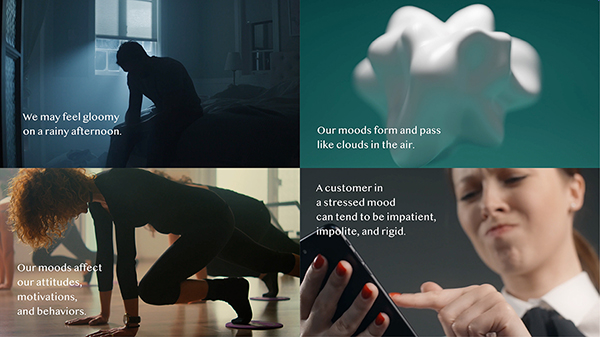
Figure 1. Stills from the conceptual video on mood.
The video was composed using clips obtained from copyright-free footage banks.
Once participants had an explicit understanding of mood as defined in this study, they were asked to reflect on whether they had considered or approached user or customer mood in any of their design projects. For those reporting relevant experiences, we probed further into project details, particularly how mood considerations influenced their design decisions and outcomes, and what mood-related challenges they encountered. Project briefs or reports were collected, when available, to support a more comprehensive understanding and accurate transcription. For participants who reported no relevant experiences, we asked about the difficulties they anticipated when incorporating mood into their experience-driven design practice. Because mood in design remains an ambiguous topic, all participants were asked what knowledge they deemed essential for enabling mood-focused design activities.
All interviews were conducted by the first author, either in person (n = 10) or online via Zoom (n = 10), according to participant preference. Interviews lasted an average of 75 minutes and were audio-recorded. Data collection took place over a two-month period.
Data Analysis
All interview recordings were transcribed, and thematic analysis was conducted following Braun and Clarke’s (2006) six-step framework: (1) familiarization, (2) coding, (3) generating initial themes, (4) reviewing and developing themes, (5) refining themes, and (6) reporting. Our analytic approach was primarily reflexive, involving iterative engagement with the data and an evolving coding process, rather than seeking reliability across coders (Braun & Clarke, 2021a, 2021b). At the same time, we incorporated selected practices from the codebook approach—particularly team-based coding discussions—within our reflexive analysis (Haan & Venema, 2025). This adaptation was intended to enhance analytic depth and rigor in a collaborative context, especially given the complexities of our research focus on mood and mood-focused design.
Familiarization began during data collection and continued throughout transcription. The first author then undertook coding and initial theme generation in ATLAS.ti, following Saldaña’s (2015) guidance to let themes naturally emerge from the data. During this phase, the research team met regularly to review the developing analysis, providing feedback and collaboratively improving candidate codes and themes. Once a preliminary set of codes and themes had been developed, the first author convened a four-hour discussion with two senior researchers. This session involved a detailed examination of codes, themes, and supporting data extracts, during which categories were debated and refined. The revised set was then reviewed once more by all authors during the reporting stage. Appendices 2 to 4 present the final set of codes and themes, along with illustrative quotes.
Results
In this section, we first share observations from the sensitization session on how designers understand mood and its relevance in design. We then present findings on how designers approach mood in their practice, the challenges they encounter or perceive, and the knowledge they deem essential for addressing mood in design. Finally, we report additional findings, focusing on obstacles to applying mood-focused design in practice.
Understanding of Mood and Its Relevance in Design
Before being introduced to our definition of mood, participants had varied interpretations. Nine equated mood with other affective phenomena, such as the emotional response to certain stimuli, the overall impression of a brand or product, the atmosphere an environment creates, or the temperament of a person or product. The rest showed an understanding closer to our definition, with most recognizing mood as a general state of mind. Four participants were able to identify specific qualities of mood, like its long duration, diffuseness, and dynamic nature. They also noted mood’s impact on aspects like perception, decision-making, and behavior.
After watching the conceptual video and gaining a better understanding of the mood phenomenon, participants shared diverse perspectives on mood’s relevance in design, informed by their professional experiences. Some suggested that understanding mood could provide insights into user contexts, dilemmas, or preferences. Others viewed mood as a source of innovation, mentioning that stimulating certain mood experiences, like mindfulness, could be valuable. Several participants highlighted mood’s potential monetary value, recognizing its impact on customer purchasing decisions, while others saw mood as a means of brand differentiation by enhancing customer centricity. Additionally, many emphasized the importance of catering to user or customer moods in communication. Others, instead, identified mood’s relevance beyond the user context, particularly in design teamwork, where understanding team members’ and clients’ moods was seen as crucial for effective collaboration.
Approaches to Addressing Mood in Design
After sensitization and acquiring a clear understanding of mood, twelve participants described project experiences in which mood played a role. Most noted that these projects were not explicitly framed as “mood-centric” or “mood-focused,” and mood was rarely an intentional consideration in their design process. An exception was participant P17, who explicitly used the term “mood-regulatory need” to guide their design goal. From these participants’ accounts, five main approaches to addressing mood emerged: treating mood as (1) an end in itself, (2) a means to enhance engagement, (3) a means to enrich experience, (4) a means to create differentiation or advantage, and (5) a means to facilitate user research (see Table 2 for an overview).
Table 2. Approaches to addressing mood in design.
| Approach | Description | Example |
| Mood as an end in itself | Mood is the ultimate design goal, pursued for its own sake rather than to serve other outcomes. | Mental healthcare environments designed to reduce anxiety and promote calm. |
| Mood as a means to enhance engagement | Mood is improved to strengthen user engagement with services or products. | Consulting services lifting moods to encourage open sharing; medical robots fostering upbeat moods to increase adherence. |
| Mood as a means to enrich experience | Mood is shaped to create memorable experiences and enhance overall satisfaction. | Streaming services curating content around specific moods; travel environments incorporating playful interactions. |
| Mood as a means to create differentiation or advantage |
Mood is positioned as a competitive differentiator, adding distinctive qualities that help a product or service stand out. | Lifestyle products using mood-boosting features; retail services appealing to seasonal moods. |
| Mood as a means to facilitate user research | Mood is used as a research tool, either to improve interactions with participants or to interpret user experiences. | Research sessions adapting communication to participants’ moods; mood check-ins before and after sessions to assess product experience. |
Mood as an End in Itself
Here, mood is the ultimate design goal: designs are created to induce positive mood experiences without being tied to other functional or experiential outcomes. For instance, P20 described a project in a mental healthcare facility where the aim was simply to help patients “feel better.” To achieve this, they incorporated aromatic wooden wall panels and artistic installations in entrances and elevators to reduce anxiety and promote calm. They also created a dedicated space featuring biophilic elements, allowing patients to withdraw socially and relax. Although only one participant shared such an example, it represents a distinct and valuable case in which mood is pursued as an end in itself rather than as a means to other design goals.
Mood as a Means to Enhance Engagement
In this approach, mood is improved to foster stronger user engagement with services or products. P5, for instance, redesigned a consulting service for out-of-school or unemployed youth by introducing multi-channel communication and training consultants in empathetic communication. These interventions aimed to improve participants’ often low moods, building trust in consultants and encouraging more open sharing. Similarly, P18 developed a dementia care robot with mood-lifting behaviors, such as giving compliments, to increase patients’ adherence to medical guidance. P6 applied this principle to an interactive learning space, embedding playful elements that improved children’s mood and, in turn, supported greater focus and absorption of educational content. In a comparable case, P3 designed a corporate workshop experience by aligning groups based on personality compatibility, delivering reassuring statements, and offering surprise snacks—measures that sustained positive moods and strengthened both collaboration and performance.
Mood as a Means to Enrich Experience
This approach treats mood as a pathway to create more unique, memorable experiences and boost overall user satisfaction. P17 exemplified this by embedding “mood-regulatory needs” directly into the design of their streaming platform experience. They curated TV dramas around goals such as “relaxing,” “getting cheered up,” or “feeling content,” complementing other desired experiences like self-fulfillment and social connection. In another case, P14 sought to enrich the train travel experience by integrating three playful interior features: a bouncing cushion, a shared water sofa, and a water floor simulating a surfing experience. These designs increased passengers’ cheerfulness and excitement, resulting in a more memorable and satisfying journey.
Mood as a Means to Create Differentiation or Advantage
In this approach, mood is leveraged as a competitive differentiator: designers incorporate mood-influencing features to make products or services stand out in crowded markets. For example, P12 worked on a food e-commerce platform targeting customers experiencing “winter gloom.” Their idea was to send notifications featuring curated gourmet foods as solutions for harsh weather, appealing to customers’ desire for comfort and increasing sales. Similarly, P16 embedded a conversational agent into a wireless charger that greets users with caring messages, aiming to differentiate the product through its mood-boosting qualities. Along the same lines, P7 and P6 designed lighting products—an adaptive dining room system that mimics candlelight and a lamp that adjusts brightness and color temperature throughout the day—both intended to create calming or intimate atmospheres and positioned as distinctive selling points to enhance product appeal.
Mood as a Means to Facilitate User Research
In this final approach, mood is employed as a methodological tool in user research, either to improve researchers’ interactions with participants or to interpret user experiences. Two participants described adapting their methods in response to users’ moods during interviews. P10 reported adjusting communication style and questioning depth based on interviewees’ moods, which led to more effective data collection. Similarly, P13 attuned their own mood to that of participants, particularly when negativity was present, which helped elicit deeper insights. In addition, P13 included simple mood-related questions at the beginning and end of usability testing sessions, providing a structured way to capture mood fluctuations and use them as an indicator of the product’s experiential impact.
Challenges Related to Addressing Mood in Design
Participants reported thirteen design challenges when addressing mood, which we grouped into four categories based on their relation to different design stages: (1) challenges related to understanding, (2) challenges related to goal setting, (3) challenges related to designing, and (4) challenges related to evaluation (see Table 3 for an overview).
Table 3. Challenges related to addressing mood in design.
| Design stage | Challenge | Description |
| Understanding | Difficulty of discussing moods |
Conversations about moods can be difficult for designers and users due to a limited vocabulary. |
| Difficulty of identifying moods | Pinpointing user moods is challenging due to their subtle and multifaceted nature. | |
| Difficulty of identifying mood causes |
Determining the exact causes of moods is difficult because they are diverse and often unclear. | |
| Difficulty of documenting moods | Integrating moods into user profiles is challenging because moods fluctuate over time. | |
| Difficulty of empathizing with moods | Without continuous access to users’ feelings, it is difficult to deeply empathize with their moods. | |
| Goal setting | Difficulty of determining mood effects | Users struggle to express desired moods, making it difficult to determine intended mood effects in design plans. |
| Difficulty of exclusively targeting a certain mood |
Focusing solely on a specific mood in design practice is difficult due to broader problem-solving goals. | |
| Designing | Difficulty of affecting moods | Influencing mood through design is challenging due to its complex causes and contextual dependency. |
| Difficulty of catering to various moods | Accommodating the dynamic moods of individual users and the diverse moods within a group is challenging. | |
| Difficulty of addressing diverse mood-regulation needs | Meeting the different mood-regulation needs within a target group is difficult. | |
| Evaluation | Difficulty of guaranteeing mood effects | Ensuring that mood-influencing designs achieve the intended outcomes is challenging. |
| Difficulty of measuring moods | Accurately measuring user moods, as opposed to emotions, is a challenge. | |
| Difficulty of validating mood effects | Isolating and verifying the unique impact of mood-influencing designs is difficult. |
Challenges Related to Understanding
Five challenges in understanding moods were identified: (1) difficulty of discussing moods, (2) difficulty of identifying moods, (3) difficulty of identifying mood causes, (4) difficulty of documenting moods, and (5) difficulty of empathizing with moods.
Discussing moods was seen as challenging for both designers and users. Designer often rely on a limited vocabulary, typically broad terms like “good” or “bad.” This makes it difficult for them to label nuanced mood states or articulate the intended mood of a design. Similarly, users struggle to describe their moods beyond simple words, hindering designers’ ability to fully grasp their (desired) experiences.
Accurately identifying moods was considered difficult for three reasons. First, users may be unaware of their moods, as these are often subtle or subconscious. Second, users may experience multiple, overlapping moods, which can obscure which one most influences them. Third, one participant observed that negative moods may reduce users’ willingness to share feelings, further complicating identification.
Participants emphasized that identifying the causes of moods is also challenging. Users often struggle to recall or explain what triggered their mood, and mood causes are typically diverse and interwoven, making them difficult to pinpoint.
Documenting moods within user research presents another difficulty. Mood cannot be readily integrated into established profiling tools like personas, as it is not a stable characteristic but varies with each interaction. Furthermore, the wide variety of moods that can be experienced within a target group makes it difficult to aggregate or generalize mood data.
Additionally, empathizing deeply with user moods was identified as a challenge. Participants noted that in practice, they rarely have continuous access to users’ lived experiences of mood, limiting their ability to build strong empathetic connections.
Challenges Related to Goal Setting
Two challenges in goal setting were identified: (1) difficulty of determining mood effects and (2) difficulty of exclusively targeting a certain mood.
Formulating mood-related design intentions is difficult because users often cannot clearly express their desired mood states, often due to limited knowledge or vocabulary. Participants also expressed uncertainty about accurately interpreting users’ mood-related needs from research data, given the complexity of mood experiences.
Another challenge lies in the difficulty of targeting a specific mood exclusively. One participant emphasized that even when mood is recognized as an important consideration, design work often centers around broader product or service issues. As a result, mood-related goals can be difficult to integrate seamlessly with overarching project objectives.
Challenges Related to Designing
Three challenges when designing were reported: (1) difficulty of affecting moods, (2) difficulty of catering to various moods, and (3) difficulty of addressing diverse mood-regulation needs.
Influencing mood through design was considered challenging for three reasons. First, the ambiguous and multifaceted causes of mood make it difficult to identify specific triggers. Second, users’ negative moods may stem from issues outside the scope of design solutions, such as personal or professional crises. Third, mood change often requires sustained exposure to an environment, which is rarely achievable when interaction with a design is brief. By contrast, environments with longer user engagement, such as restaurants, were seen as more conducive to affecting mood because designers could exert greater control over contextual factors.
Catering to dynamic user moods was reported as another difficulty. Participants noted that static, mood-specific designs may not remain effective as moods change over time. In addition, within-group diversity introduces further challenges: for instance, while hospital designs can target common moods like anxiety, such a focused approach would not work for travel-related designs, where moods vary widely depending on purpose (e.g., business versus leisure).
A third challenge is addressing diverse mood-regulation needs within a target group. Even with shared contexts like air travel, users may seek different mood experiences (e.g., relaxation versus stimulation). Designing solutions that effectively satisfy all of these needs was considered especially difficult.
Challenges Related to Evaluation
Three evaluation-related challenges were identified: (1) difficulty of guaranteeing mood effects, (2) difficulty of measuring moods, and (3) difficulty of validating mood effects.
Ensuring that mood-influencing designs achieve their intended effects was reported as a challenge. Two issues were highlighted: designs may induce unexpected moods, and different users may experience different moods from the same design, making it difficult to establish clear success criteria.
Accurately measuring user moods was considered challenging. One participant described using tools such as “Pick-A-Mood” (a visual mood scale, see Desmet et al., 2016) to assess moods before and after product use, but expressed reservations about accuracy. They noted that such evaluations are often brief and may capture transient emotions rather than more enduring moods.
Finally, validating mood effects was described as difficult. Because moods are influenced by many external factors, isolating the unique contribution of design is challenging. This makes it difficult to confirm whether observed effects stem directly from the design intervention.
Essential Knowledge for Addressing Mood in Design
Participants were asked to imagine engaging in a design activity focused on mood and identified various types of knowledge needed for this task. These were grouped into three categories based on their focus: (1) general knowledge, (2) general design-focused knowledge, and (3) design project-specific knowledge (see Table 4 for an overview).
Table 1. User research prototype to support the design of the co-creation interface (done by the first author).
| Focus | Knowledge | Description |
| General knowledge | The concept of mood |
What mood is, how it differs from emotion, and the relationships between the two. |
| The landscape of mood | The range and specific types of moods that individuals can experience. | |
| The causes of mood | The processes behind mood states and the internal and external factors that affect them. | |
| The manifestations of mood | What different moods mean or represent to individuals. | |
| The impacts of mood | The impacts of mood on various aspects of an individual’s life. | |
| General design-focused knowledge | Influencing mood through design | How design can influence and alter user moods, along with the conditions required for such changes. |
| Triggering mood’s impacts through design | How design can be purposefully used to create specific mood impacts on users. | |
| Utilizing mood in the design process | How designers can consider moods in user research to guide and inform design choices. | |
| Design project-specific knowledge | Tools for understanding | Tools that support understanding user moods by improving mood communication, identification, or empathy. |
| Tools for goal setting | Tools that support designers in analyzing ideal mood experiences or prioritizing mood-related needs. | |
| Tools for designing | Tools that enable designers to explore mood-focused design exemplars or collaborate by sharing design experiences. | |
| Tools for evaluation | Tools that assist in measuring user moods accurately or validating the mood effects of design. | |
| Tools for self-development | Tools that foster designers’ ability to be more sensitive to moods or enhance their mood regulation skills. |
General Knowledge
Participants expressed the need to understand five aspects of mood: (1) concept, (2) landscape, (3) causes, (4) manifestations, and (5) impacts.
Clarifying the concept of mood was mentioned frequently, especially in relation to emotion. While designers may sense that mood is broader and more enduring than emotion, they lack a precise understanding of their difference and relationship. Two participants, who are non-native English speakers, noted that their native terms—“Mieliala” versus “Tunne” in Finnish and “心情 (xīnqíng)” versus “情绪 (qíngxù)” in Chinese—capture these differences more clearly, suggesting that cultural and linguistic contexts can inform interpretation.
Participants were also interested in the landscape of moods, referring to the breadth and types of moods people experience. One participant proposed a “Wheel of Moods,” analogous to Plutchik’s “Wheel of Emotions,” to visualize how moods connect and differ from one another.
The causes of mood were mentioned as another area of interest. Participants wanted to understand the processes behind mood states and the internal (e.g., need satisfaction, personal health) and external (e.g., weather, time of day, social interactions) factors that shape them.
The manifestations of mood were noted as well. Beyond understanding the variety of moods, participants wanted to know what each mood represents to individuals, how they are likely to behave in different states, and what needs may emerge from them.
Additionally, participants expressed interest in understanding how mood impacts various aspects of life, including thoughts, behaviors, experiences, and interactions with others and the environment.
General Design-Focused Knowledge
Participants identified three areas of knowledge for incorporating mood into design: (1) influencing mood through design, (2) triggering mood’s impacts through design, and (3) utilizing mood in the design process.
First, participants asked for theoretical frameworks describing how products, services, or environments can affect mood states, and under what conditions such effects occur. They also mentioned principles for how specific design choices, such as product qualities or service interactions, can shape particular moods or guide users toward these states.
Second, participants wanted to know how design can trigger mood-related impacts. They noted that such knowledge could help refine design intentions and achieve more effective outcomes, such as deliberately inducing certain moods to encourage meaningful behavior changes.
Third, participants pointed to knowledge about how to use mood within the design process. They mentioned ways of integrating mood into user research, such as mood-sensitive interviews or mood diaries. They also noted the role of mood in shaping user preferences and behaviors, and how this information could inform design qualities and business strategies.
Design Project-Specific Knowledge
Participants expressed the need for tools to support different stages of a design project, grouped into five categories: (1) tools for understanding, (2) tools for goal setting, (3) tools for designing, (4) tools for evaluation, and (5) tools for self-development. These categories reflected the design challenges they described, making it natural for them to propose corresponding supports.
For understanding, participants wanted tools that facilitate communication about moods with users and team members, reducing misunderstandings. They also envisioned tools to help identify moods accurately, such as systematic guides for interpreting moods during interviews and self-report tools for users. Moreover, they sought tools that foster empathy, enabling designers to immerse themselves in users’ lived mood experiences.
For goal setting, participants mentioned tools that support determining or prioritizing mood-related aims. Some envisioned AI-driven systems capable of analyzing user data to suggest desirable mood experiences or to help navigate trade-offs when multiple mood-regulation needs exist.
In the designing stage, participants called for tools that enable exploration of various mood-focused design exemplars and provide inspiration from prior projects. They also saw value in tools for sharing mood-related design experiences within teams to encourage collective learning and foster creativity.
For evaluation, participants asked for tools to measure user moods before and after a design intervention, as well as tools to validate whether observed effects are due to the design intervention rather than external influences.
Finally, participants mentioned tools for self-development to become more mood-sensitive designers. These tools could allow them to experience and internalize a range of moods, improving their ability to capture, understand, and empathize with user moods. They also wanted tools to enhance mood-regulation skills to manage participant negativity, often present when working with vulnerable groups or sensitive topics.
Obstacles to Applying Mood-Focused Design in Practice
During the interviews, participants expressed mixed feelings about applying mood-focused design in real-world projects. On the one hand, they showed a positive attitude toward the idea and even discussed potential applications for future projects. On the other hand, their actual motivation to implement mood-focused design remained low due to four main obstacles.
First, a foundational gap in understanding mood and mood-focused design, and a lack of concrete methodological approaches were seen as major barriers. As one participant remarked:
As a designer, if I’m aware [that] there’s a certain [desired] mood or my user is in a certain mood, [but] it’s not operational, like how to influence it or deal with it, I think I still wouldn’t use it in the design process. (P18)
Second, collaborative efforts face hurdles, since design teams often consist of members with diverse educational and professional backgrounds. This diversity makes it difficult to build a shared understanding of the relevance of mood. A design team leader emphasized the difficulty of raising awareness:
I already have put a lot of effort into having people talk about emotions. … If you also put mood in the mix, I’ll only have a difficult time explaining the difference between emotion and mood and telling it’s important to focus on mood. (P19)
Third, participants pointed out that although designers increasingly recognize mood’s relevance, its societal and economic benefits remain unconvincing to clients and decision-makers. As one participant explained:
Since COVID, I think more people are aware that this is important, but still, there are a lot of people, clients or decision-makers, who are not. They think, “We can just make it [work], and it doesn’t matter how people want to feel.” For these people, [the topic] is still a bit too “fake.” (P20)
Lastly, some participants noted that their companies, still new to emotional design, remain anchored to conventional user experience (UX) design paradigms. Mood-focused design introduces additional complexities their teams are not yet prepared to handle. One participant stated:
In my current company, [we] wouldn’t do it right now. We’re just starting with the emotions; taking customer moods into account would be too much of a next layer. (P15)
Discussion
This study explored how design practitioners consider and approach user or customer mood in real-world projects, the challenges they encounter or perceive, and the areas of knowledge they regard as essential for mood-focused design. In this section, we first reflect on practitioners’ experiences in addressing mood and discuss the broader implications of these findings for advancing understanding of mood-focused design. We then turn to the challenges and knowledge gaps identified, highlighting research and educational opportunities that could better support future practice in this area.
Advanced Understanding of Mood-Focused Design
We found that many designers address mood implicitly, even when their projects are not explicitly framed as mood-focused. This implicit engagement took several forms. Some used expressions like “better feeling” or “well-being” instead of naming mood directly, while others folded mood into broader objectives such as enhancing customer experience or satisfaction. Because mood often operates as a background experience below conscious awareness, it was sometimes incorporated into user profiles as part of personality traits rather than treated as a distinct consideration. Designers also drew on past experiences influenced by mood, recognizing, for instance, that “happier users” achieve better outcomes, and striving to uplift them without explicitly framing it as a mood-related goal. In projects with vulnerable groups, inherent user negativity often prompted designers to respond to mood-related issues without consciously acknowledging mood as part of their approach. We reflect that such implicit engagement may be enabled by empathy developed through years of user-centered practice (Kouprie & Visser, 2009), the accumulation of tacit knowledge (Thoring et al., 2022), and the adoption of holistic approaches to experience design (e.g., Desmet & Hekkert, 2007; Hassenzahl, 2010; Norman, 2004), all of which appear to foster the natural integration of mood into design. By making these implicit efforts explicit, our study deepens understanding of how mood is embedded in design work and extends prior research that has documented more deliberate efforts to influence users’ or customers’ moods (Peng et al., 2023).
Our study identified five approaches that practitioners use to address mood in design, either valuing it as an end in itself or leveraging it as a means to enhance engagement, enrich experience, create differentiation or advantage, and facilitate user research. The first approach treats positive mood as intrinsically valuable—a legitimate design goal in itself, independent of external aims. This view resonates with perspectives in happiness and well-being studies (e.g., Fredrickson, 2003; Haybron, 2008), where the state of feeling good is regarded as a fundamental life goal. The other four approaches emphasize the instrumental value of mood, positioning mood improvement as a useful tool to achieve other desirable outcomes. This framing echoes perspectives on mood’s role in healthcare, where positive mood improves recovery and treatment adherence (e.g., Jamison et al., 1987); in marketing, where it influences consumers’ purchasing behavior (e.g., Spies et al., 1997); and in organizational management, where it shapes collaboration and performance (e.g., Totterdell, 2000). Notably, in our dataset, designers most often pursued mood’s instrumental value in real-world projects, especially when it was tied to commercial success, such as increasing adoption and boosting sales. Conversely, treating mood as an end in itself was less common and appeared more often in initiatives where individuals and teams sought to embed social good into their missions. This differs from design research, which shows a stronger and more explicit orientation toward mood’s intrinsic value, often framed as an indicator of well-being in its own right (Desmet, 2015). By highlighting the more pragmatic considerations of mood in design practice, in comparison with those in design research, our study enriches the understanding of mood-focused design across contexts.
To translate our findings into concrete insights for design practice, we propose a nuanced addition to Desmet’s (2015) conceptualization of mood-focused design. We suggest that designers can not only design for mood (DfM) but also design with mood (DwM). While DfM seeks to influence mood directly (e.g., easing anxiety or fostering relaxation), DwM leverages mood and its effects to achieve other outcomes (e.g., product adoption, user engagement, or satisfaction).
Distinguishing between DfM and DwM at the outset of a project can facilitate the design process and support more effective design outcomes. First, it helps set clear design goals and success metrics: DfM’s success is measured by the extent of mood improvement, whereas DwM’s success is measured by how well broader objectives are met. Second, it guides the choice of tailored design strategies. DfM targets specific moods, requiring strategies that directly link design features to desired moods, such as creating nature-inspired experiences for relaxation (Kim et al., 2022) or laughter cues to induce a playful mood (Lee et al., 2014). DwM, by contrast, seeks to foster an overall positive mood in a broader context, relying on strategies that improve moods from a general perspective, such as transforming customer negativity during service encounters (Esnaf-Uslu et al., 2022). Third, it informs collaboration with the right expertise. DfM is particularly relevant in healthcare and wellness, where psychologists and well-being specialists play a central role. In contrast, DwM is more applicable in corporate and educational settings, where business strategists and behavior experts are critical.
Although their primary goals differ, both DfM and DwM center on mood regulation: in DfM, mood regulation is the ultimate design goal, while in DwM, it is the key design method. This shared foundation makes them closely intertwined in practice. For instance, following DfM, a healthcare institution may design to maintain patient positivity (e.g., Hung et al., 2019; Yan et al., 2024), while also achieving DwM outcomes such as greater adherence to medical advice and healthier behaviors. Conversely, managing group mood to enhance collaboration exemplifies DwM (e.g., Ashoori et al., 2015; Benke et al., 2020), yet the resulting successful teamwork may also elevate group members’ moods, aligning with DfM goals. Recognizing the interplay between DfM and DwM—while maintaining their conceptual distinction—is therefore important. It allows designers to be explicit about intentions, select appropriate strategies, and better harness the synergies between the two. In doing so, mood-focused design can more effectively support both intrinsic well-being benefits and broader experiential or commercial outcomes.
Research and Educational Opportunities for Mood-Focused Design
Our study uncovered challenges at every stage of mood-focused design, ranging from the difficulty of precisely communicating about moods to the complexity of validating their effects. These findings underscore that mood-focused design remains a demanding and underdeveloped area in need of more deliberate inquiry. Confronting those challenges has also amplified designers’ need for deeper knowledge of mood, theories for integrating it into design, and practical tools to support the process. Each of these gaps represents a promising direction for advancing the field. In what follows, we highlight research and educational opportunities that we see as particularly relevant and actionable in the near term, with potential to strengthen mood-focused design practice.
One opportunity lies in developing mood typology-informed resources. Designers currently lack a shared vocabulary for describing mood, and a comprehensive typology could help address this gap. Although recent work has mapped both individual and group moods (e.g., Sönmez et al., 2022; Xue et al., 2020), these typologies remain difficult to apply directly in practice. Future research could build on them to create resources that support user expression and strengthen designers’ empathy and evaluation skills. For example, self-report tools could help users articulate their current and desired moods while also supporting subjective mood measurement. Beyond visual materials (e.g., Desmet et al., 2020), these tools might emphasize more embodied experiences, such as hand-held objects (e.g., Xue et al., 2023) or multimodal interactions. In parallel, self-cultivation tools could enable designers to experience and internalize different mood states themselves, thereby enhancing their mood sensitivity and empathy. Existing interventions, such as sensitizing movies (e.g., Sönmez, 2024) and role-playing games (e.g., Desmet et al., 2019), illustrate this potential, but more technology-driven approaches, such as mood-themed virtual environments, offer further possibilities.
Another opportunity is building a repository of mood-focused design exemplars. Such a repository could be assembled from literature, company reports, and student projects, much like existing Design Research Observatories (https://observatory.designresearch.works/) or curated collections of mood-sensitive design (https://www.trendhunter.com/slideshow/mood-sensitive-design). The repository would allow designers to reflect on their own implicit mood experiences and make these insights more explicit. Engaging with exemplars can deepen awareness of how mood manifests and how it can be addressed in design. Exemplars can also clarify intentions, strengthen communication within teams, and guide method selection by offering concrete references from prior work. Importantly, well-documented exemplars can broaden practitioners’ scope of design possibilities and inspire ideation and prototyping (Zimmerman et al., 2010).
A third opportunity lies in developing intermediate-level knowledge. The current lack of effective methods and strategies presents a key challenge to mood-focused design. Because this field is still evolving, it is premature to pursue a unified, systematic methodology. Instead, following Höök and Löwgren (2012), we propose that strong concepts—abstract yet practical design ideas distilled from successful projects—could be valuable at this stage. They bridge theory and practice by capturing essential qualities of interaction and making them transferable across contexts. Mood-focused design has few explicit strong concepts to date, though prior work on playful mood induction demonstrates the potential of this approach (Hobye & Löwgren, 2011). Research-through-design offers a way to develop and refine such concepts iteratively (Koskinen et al., 2011; Stappers & Giaccardi, 2017). We envision mood-focused, strong concepts serving as generative design strategies that support design rationales and decision-making while advancing both theoretical and practical understanding of mood in design.
Finally, there is a distinct opportunity to expand design education and training related to mood. The limited knowledge designers currently have for engaging with mood reflects its absence in most design education. Rather than proposing stand-alone courses at this early stage, we suggest weaving mood into existing curricula in three complementary ways. First, introductory courses on human-centered or experience-driven design could foreground mood as a crucial dimension of human experience, enabling students to develop sensitivity to users’ subtle and multifaceted lived experiences. Second, emotion-centric courses could incorporate mood as complementary content through lightweight workshops that invite students to reflect on their own and others’ moods. While emotions are already complex to teach, we believe that considering mood alongside them enriches rather than complicates understanding, as the two concepts offer fresh perspectives on one another. Third, mood regulation could be integrated into specialized courses on design for well-being or health, where examples of mood-regulating design illustrate intervention possibilities and provide a concrete, relatable context for students’ design exercises. Embedding mood in these courses could, in turn, strengthen undergraduate and graduate designers’ awareness and ability to engage with mood more effectively in future practice.
Limitations of This Study
This study has several limitations. First, we recruited twenty participants, but only twelve reported mood-related design experiences. While the diverse design projects described by these participants helped us identify five key approaches, these may not represent the full spectrum of current practice in mood-focused design. Further research with a larger sample is needed to confirm and extend these findings. Second, our participants were all designers working in the Netherlands and Finland. Because design practice varies across cultural and regional contexts, our findings may not be fully generalizable. Future studies involving designers from other regions with strong human-centered design traditions—such as the US, the UK, or Japan—could offer a more comprehensive picture of how mood is incorporated into practice. Third, our exploration focused on practitioners working broadly within experience design, where mood was often addressed indirectly or implicitly. Engaging designers who work with mood more explicitly—for example, developers of mood-tracking apps or mood-lighting products—could reveal additional pragmatic orientations to complement and refine our findings.
Conclusion
This article presents a study of how design practitioners consider and approach user or customer mood. Our findings show that mood, while not always explicitly acknowledged, is often implicitly integrated into designers’ work. We identified five recurring patterns in which designers treated mood as an end in itself or leveraged it to enhance engagement, enrich experience, create differentiation or advantage, and facilitate user research. These insights suggest that designers can not only design for mood but also design with mood, extending our understanding of what mood-focused design entails. We encourage practitioners to be explicit about this distinction at the outset of projects and use it to clarify design intentions, select appropriate strategies, and harness the synergies between the two. At the same time, our study surfaced a range of challenges and knowledge gaps that hinder practice. To address them, we identified opportunities for future work, including the development of mood typology-informed tools, a repository of design exemplars, and intermediate knowledge such as strong concepts, as well as the integration of mood as a crucial dimension into human-centered design education and training. Together, these opportunities outline a research and educational agenda that can strengthen the foundations of mood-focused design and support its practical application.
Acknowledgement
We thank the twenty designer participants for openly sharing their experiences and insightful perspectives. The first author would like to express special thanks to Jiaxin Xu for his support throughout this research. This work was supported by the China Scholarship Council (CSC), grant number 202106130007, and by the MaGW VICI grant (453-16-009) from the Netherlands Organization for Scientific Research (NWO), Division for the Social and Behavioral Sciences, awarded to P. M. A. Desmet. Haian Xue’s contribution was supported by the Fundamental Research Funds for the Central Universities. The authors used ChatGPT-5 to evaluate and improve the language and readability of the manuscript. After using this tool, the authors reviewed and edited the content as needed and take full responsibility for the content of this work.
References
- Ashoori, M., Bellamy, R. K. E., & Weisz, J. D. (2015). Creating the mood: Design for a cognitive meeting room. In Extended abstracts of the 33rd annual conference on human factors in computing systems (pp. 2001-2006). ACM. https://doi.org/10.1145/2702613.2732786
- Beedie, C., Terry, P., & Lane, A. (2005). Distinctions between emotion and mood. Cognition & Emotion, 19(6), 847-878. https://doi.org/10.1080/02699930541000057
- Benke, I., Knierim, M. T., & Maedche, A. (2020). Chatbot-based emotion management for distributed teams: A participatory design study. Proceedings of the ACM on Human-computer Interaction, 4(CSCW2), Article 118. https://doi.org/10.1145/3415189
- Braun, V., & Clarke, V. (2006). Using thematic analysis in psychology. Qualitative Research in Psychology, 3(2), 77-101. https://doi.org/10.1191/1478088706qp063oa
- Braun, V., & Clarke, V. (2021a). Can I use TA? Should I use TA? Should I not use TA? Comparing reflexive thematic analysis and other pattern-based qualitative analytic approaches. Counselling and Psychotherapy Research, 21(1), 37-47. https://doi.org/10.1002/capr.12360
- Braun, V., & Clarke, V. (2021b). One size fits all? What counts as quality practice in (reflexive) thematic analysis? Qualitative Research in Psychology, 18(3), 328-352. https://doi.org/10.1080/14780887.2020.1769238
- Cai, C. (2015, December 7). Hai Di Lao: Service beyond imaginations. Harvard Business School Digital Initiative. https://d3.harvard.edu/platform-rctom/submission/hai-di-lao-service-beyond-imaginations/
- Desmet, P. M. A. (2015). Design for mood: Twenty activity-based opportunities to design for mood regulation. International Journal of Design, 9(2), 1-19. https://doi.org/10.57698/v9i2.01
- Desmet, P. M. A., Fokkinga, S. F., Ozkaramanli, D., & Yoon, J. (2021). Emotion-driven product design. In H. L. Meiselman (Ed.), Emotion measurement (2nd ed., pp. 645-670). Woodhead Publishing. https://doi.org/10.1016/B978-0-12-821124-3.00020-X
- Desmet, P. M. A., Fokkinga, S. F., & Xue, H. (2020). Twenty moods: A holistic typology of human mood states. Delft University of Technology.
- Desmet, P. M. A., & Hekkert, P. P. M. (2007). Framework of product experience. International Journal of Design, 1(1), 57-66. https://doi.org/10.57698/v1i1.05
- Desmet, P. M. A., Vastenburg, M. H., & Romero, N. (2016). Mood measurement with Pick-A-Mood: Review of current methods and design of a pictorial self-report scale. Journal of Design Research, 14(3), 241-279. https://doi.org/10.1504/JDR.2016.079751
- Desmet, P. M. A., Xue, H., & Fokkinga, S. F. (2019). The same person is never the same: Introducing mood-stimulated thought/action tendencies for user-centered design. She Ji: The Journal of Design, Economics, and Innovation, 5(3), 167-187. https://doi.org/10.1016/j.sheji.2019.07.001
- Ekman, P. E. (1994). Moods, emotions, and traits. In P. E. Ekman & R. J. Davidson (Eds.), The nature of emotion: Fundamental questions (pp. 56-58). Oxford University Press.
- Ekman, P. E., & Davidson, R. J. (1994). The nature of emotion: Fundamental questions. Oxford University Press.
- Esnaf-Uslu, P., Desmet, P. M. A., & Schifferstein, H. N. J. (2022). The eye inward and the eye outward: Introducing a framework for mood-sensitive service encounters. She Ji: The Journal of Design, Economics, and Innovation, 8(1), 118-146. https://doi.org/10.1016/j.sheji.2021.12.002
- Fredrickson, B. L. (2003). The value of positive emotions: The emerging science of positive psychology is coming to understand why it’s good to feel good. American Scientist, 91(4), 330-335. https://www.jstor.org/stable/27858244
- Frijda, N. H. (1994). Varieties of affect: Emotions and episodes, moods, and sentiments. In P. E. Ekman & R. J. Davidson (Eds.), The nature of emotion: Fundamental questions (pp. 59-67). Oxford University Press.
- Gardner, M. P. (1985). Mood states and consumer behavior: A critical review. Journal of Consumer Research, 12(3), 281-300. https://doi.org/10.1086/208516
- Haan, M., & Venema, S. D. (2025). Using a blended approach to thematic analysis: A case study on fatherhood and imprisonment. Public Opinion Quarterly, 89(SI), 716-733. https://doi.org/10.1093/poq/nfaf033
- Hassenzahl, M. (2010). Experience design: Technology for all the right reasons. Morgan & Claypool. https://doi.org/10.2200/S00261ED1V01Y201003HCI008
- Haybron, D. M. (2008). The pursuit of unhappiness: The elusive psychology of well-being. Oxford University Press. https://doi.org/10.1093/oso/9780199545988.001.0001
- Hobye, M., & Löwgren, J. (2011). Touching a stranger: Designing for engaging experience in embodied interaction. International Journal of Design, 5(3), 31-48. https://doi.org/10.57698/v5i3.03
- Höök, K., & Löwgren, J. (2012). Strong concepts: Intermediate-level knowledge in interaction design research. ACM Transactions on Computer-Human Interaction, 19(3), Article 23. https://doi.org/10.1145/2362364.2362371
- Hung, L., Liu, C., Woldum, E., Au-Yeung, A., Berndt, A., Wallsworth, C., Horne, N., Gregorio, M., Mann, J., & Chaudhury, H. (2019). The benefits of and barriers to using a social robot Paro in care settings: A scoping review. BMC Geriatrics, 19, Article 232. https://doi.org/10.1186/s12877-019-1244-6
- Jamison, R. N., Parris, W. C. V., & Maxson, W. S. (1987). Psychological factors influencing recovery from outpatient surgery. Behaviour Research and Therapy, 25(1), 31-37. https://doi.org/10.1016/0005-7967(87)90112-4
- Kim, C. M., Van Rompay, T., & Ludden, G. (2022). “What makes you feel relaxed in nature?”: Exploring nature-based stimuli as inspiration for designing relaxing experiences. In Proceedings of the DRS conference (Article No. 138). Design Research Society. https://doi.org/10.21606/drs.2022.454
- Koskinen, I., Zimmerman, J., Binder, T., Redstrom, J., & Wensveen, S. (2011). Design research through practice: From the lab, field, and showroom. Morgan Kaufmann. https://doi.org/10.1016/C2010-0-65896-2
- Kouprie, M., & Visser, F. S. (2009). A framework for empathy in design: Stepping into and out of the user’s life. Journal of Engineering Design, 20(5), 437-448. https://doi.org/10.1080/09544820902875033
- Lee, S., Chung, W. Y., Ip, E., & Schiphorst, T. (2014). The laughing dress: Evoking prosocial interaction among strangers. In Extended abstracts of the SIGCHI conference on human factors in computing systems (pp. 2143-2148). ACM. https://doi.org/10.1145/2559206.2581360
- Lin, W. (2015). ‘Cabin pressure’: Designing affective atmospheres in airline travel. Transactions of the Institute of British Geographers, 40(2), 287-299. https://doi.org/10.1111/tran.12079
- Mekler, E. D., & Hornbæk, K. (2019). A framework for the experience of meaning in human-computer interaction. In Proceedings of the SIGCHI conference on human factors in computing systems (Article No. 225). ACM. https://doi.org/10.1145/3290605.3300455
- Morris, W. N. (1989). Mood: The frame of mind. Springer. https://doi.org/10.1007/978-1-4612-3648-1
- Morris, W. N. (1999). The mood system. In D. Kahneman, E. Diener, & N. Schwarz (Eds.), Well-being: Foundations of hedonic psychology (pp. 169-189). Russell Sage Foundation.
- Norman, D. A. (2004). Emotional design: Why we love (or hate) everyday things. Basic Books.
- Parkinson, B. (1996). Changing moods: The psychology of mood and mood regulation. Addison Wesley Longman.
- Peeters, F., Berkhof, J., Delespaul, P., Rottenberg, J., & Nicolson, N. A. (2006). Diurnal mood variation in major depressive disorder. Emotion, 6(3), 383-391. https://doi.org/10.1037/1528-3542.6.3.383
- Peng, Z., Desmet, P. M. A., & Xue, H. (2023). Mood in experience design: A scoping review. She Ji: The Journal of Design, Economics, and Innovation, 9(3), 330-378. https://doi.org/10.1016/j.sheji.2023.09.001
- Quartier, K., Christiaans, H., & Van Cleempoel, K. (2008). Retail design: Lighting as an atmospheric tool, creating experiences which influence consumers’ mood and behaviour in commercial spaces. In Proceedings of the DRS conference (Article No. 216). Design Research Society.
- Rao, V. (2008). Facebook applications and playful mood: The construction of Facebook as a “third place.” In Proceedings of the 12th international conference on entertainment and media in the ubiquitous era (pp. 8-12). ACM. https://doi.org/10.1145/1457199.1457202
- Roto, V., Bragge, J., Lu, Y., & Pacauskas, D. (2021). Mapping experience research across disciplines: Who, where, when. Quality and User Experience, 6, Article 7. https://doi.org/10.1007/s41233-021-00047-4
- Saldaña, J. (2015). The coding manual for qualitative researchers. SAGE.
- Siemer, M. (2009). Mood experience: Implications of a dispositional theory of moods. Emotion Review, 1(3), 256-263. https://doi.org/10.1177/1754073909103594
- Sönmez, A. (2024). Dancing the vibe: Designerly exploration of group mood in work settings [Doctoral dissertation, Delft University of Technology]. TU Delft Library Repository. https://doi.org/10.4233/uuid:03157213-52c9-4aad-bb30-9bca3c4eb37c
- Sönmez, A., Desmet, P. M. A., & Romero, N. (2022). Chill, fiery, slack, and five other vibes: A phenomenological inquiry into group mood. She Ji: The Journal of Design, Economics, and Innovation, 8(1), 93-117. https://doi.org/10.1016/j.sheji.2021.12.001
- Spies, K., Hesse, F., & Loesch, K. (1997). Store atmosphere, mood and purchasing behavior. International Journal of Research in Marketing, 14(1), 1-17. https://doi.org/10.1016/S0167-8116(96)00015-8
- Stappers, P. J., & Giaccardi, E. (2017). Research through design. In M. Soegaard & F. D. Rikke (Eds.), The encyclopedia of human-computer interaction (2nd ed., Ch. 41). Interaction Design Foundation.
- Thoring, K., Mueller, R. M., Desmet, P., & Badke-Schaub, P. (2022). Toward a unified model of design knowledge. Design Issues, 38(2), 17-32. https://doi.org/10.1162/desi_a_00679
- Totterdell, P. (2000). Catching moods and hitting runs: Mood linkage and subjective performance in professional sport teams. Journal of Applied Psychology, 85(6), 848-859. https://doi.org/10.1037/0021-9010.85.6.848
- Westbrook, R. A. (1980). Intrapersonal affective influences on consumer satisfaction with products. Journal of Consumer Research, 7(1), 49-54. https://doi.org/10.1086/208792
- Xue, H., Desmet, P. M. A., & Fokkinga, S. F. (2020). Mood granularity for design: Introducing a holistic typology of 20 mood states. International Journal of Design, 14(1), 1-18. https://doi.org/10.57698/v14i1.01
- Xue, H., Zheng, Q., & Desmet, P. M. A. (2023). Touchy-feely: A designerly exploration of haptic representations of three mood states. In Proceedings of the IASDR conference (Article No. 91). Design Research Society. https://doi.org/10.21606/iasdr.2023.325
- Yan, S., Azmi, A., Mansor, N., Wang, Z., & Wang, Y. (2024). Healing spaces as a design approach to optimize emotional regulation for patients with mood disorders. Buildings, 14(2), Article 472. https://doi.org/10.3390/buildings14020472
- Zhao, S., Li, S., Ramos, J., Luo, Z., Jiang, Z., Dey, A. K., & Pan, G. (2019). User profiling from their use of smartphone applications: A survey. Pervasive and Mobile Computing, 59, Article 101052. https://doi.org/10.1016/j.pmcj.2019.101052
- Zimmerman, J., Stolterman, E., & Forlizzi, J. (2010). An analysis and critique of research through design: Towards a formalization of a research approach. In Proceedings of the 8th conference on designing interactive systems (pp. 310-319). ACM. https://doi.org/10.1145/1858171.1858228
Appendix
Appendix 1. Interview guide.
| Stage | Focus | Question/Action | |
| Warm-up | Basic information | Can you briefly introduce yourself (including your current job, your education background, and your past work experience)? | |
| Sensitization | How designers themselves understand mood | From your personal experience, what is mood? How would you define or conceptualize mood? | |
| How we (authors) understand mood | Display a conceptual video explaining our definition of mood. | ||
| How designers see the relevance of mood in design | In your opinion, what is the role of user/customer mood in design? | ||
| Retrospection | Whether designers have addressed mood | Have your ever considered or approached user/customer mood in any of your design projects? | |
| If designers report yes | If designers report no | ||
| How designers have addressed mood | Can you describe an example of such design projects (including the target group, context, design intentions, and design outcomes)? | – | |
| How did you specifically consider or approach mood (or any aspects of mood) in your design process? Prompt 1: Did you determine a certain mood is appropriate for or should be considered in the project? If so, in what ways, and what factors influenced this decision? Prompt 2: Did you measure mood or gather information related to mood? If so, in what ways, and for what purposes? Prompt 3: Did you incorporate user or customer input or feedback into your design decisions related to mood? If so, in what ways, and how (well) did that work? |
|||
| Can you describe an example of a design decision related to mood, or a design outcome because of mood consideration? | |||
| What challenges designers have faced | What challenges did you encounter? How did you overcome them? | – | |
| Envisioning | What challenges designers perceive | What other challenges do you see about addressing mood in design? | What challenges do you see about addressing mood in design? |
| What knowledge designers consider essential | If you are going to work on a mood-focused design project, what knowledge do you think is necessary to have? | ||
| Wrap-up | Extra information | Would you like to share more about mood or addressing mood in design? | |
Appendix 2. Coding scheme of the category A: Approaches to addressing mood in design.
| Theme | Example quote |
| Mood as an end in itself | “It was for a mental healthcare institution. In the building, people were living with heavy mental health issues. … What, with this research, we wanted to find out is in which way we could create an entrance that makes people ‘feel better’. So, it’s really about the design for well-being, and how can you create a design that makes people feel really better.” (P20) |
| Mood as a means to enhance engagement | “I think we do have something, some product that is really relatable with taking into account of the mood. For instance, our robot. Before we tried to instruct, for instance, a person to take the medicine, or reminding them to take medicine, we try to first start setting up a good relationship that they feel good about it [the robot] by creating a series of interactions that hopefully put them in a more positive mood. … So, to increase acceptance and also increase [their] willingness to act on the good advice [that the robot gives].” (P18) |
| Mood as a means to enrich experience | “A good example of a project that was very much about customer mood was for the [company name] railways. And then they wanted to know if they could make their clients’ experience better based on interior. And then we made a water sofa … and we made a water floor, so you can stand on water and have more of a supportive, active traveling experience … and we made air pillows, so you can sit upon, also when you’re recovering your balance. … So, it was about creating a positive customer experience, or, like, to make people more satisfied by using a train.” (P14) |
| Mood as a means to create differentiation or advantage | “The idea was that when the phone gets on the wireless charging pad, it’s like, ‘Okay, I’m also relaxing like you are.’ And then it started talking to you. … So, the idea was to kind of create this more light-hearted scenario at home at the end of the day. … For this particular example, it was technology-led. It wasn’t something that we were just thinking, let’s do this [designing for a relaxed mood]. But from a design perspective or a product perspective, we were thinking about differentiation that in a crowded market of wireless chargers … so, if there are so many of these, how do you make a wireless charger which stands out from others?” (P16) |
| Mood as a means to facilitate user research | “When I enter an interview situation, I do try to read: what kind of state is this person I’m talking to in? Is the person energetic, or is the person outgoing? Is the person responding to my questions? Is the person talkative? Does the person get worried? Why do you say this? Why this example? But then, I’m looking at it from the interview context point of view. So, I’m looking at it from–can I get more information from this person or not? Is this person responding to the questions in the way that I think I can dig deeper?” (P10) |
Appendix 3. Coding scheme of the category B: Challenges related to addressing mood in design. .
| Theme | Code | Example quote |
| Challenges related to understanding | Difficulty of discussing moods | “What I found out is–it’s way more difficult for someone who does not have the complete comprehensive knowledge about moods and emotions to actually say granularly what exactly they were feeling.” (P11) |
| Difficulty of identifying moods | “I feel this is remarkably difficult for many people, like, what do they really feel? … There are layers of feelings: you can feel anxious, you can feel angry, but [for] the underlying feeling, you might not recognize it.” (P4) | |
| Difficulty of identifying mood causes | “Even myself sometimes, I also find it difficult to find out where that [mood came from and] why my mood is bad or not. So, it’s also really difficult to use that in an interview with people. … It’s even more difficult because sometimes the bad mood started three days ago. How do you remember exactly what happened three days ago and what makes you in a bad mood?” (P19) | |
| Difficulty of documenting moods | “I don’t think of mood because it’s quite difficult. Any customer could be in any mood. And if I do any personas or profiles, it would be need-based. … But mood is interesting because it can change. It’s not an inherent quality of somebody.” (P15) | |
| Difficulty of empathizing with moods | “Do you really have a chance to engage with people long enough to really understand their mood? Because, for example, if it’s an interview context, a person can ‘fake’ a mood for an hour … like, you don’t necessarily get to see a mood … especially when it, like, the research process has to be done very fast.” (P2) | |
| Challenges related to goal setting | Difficulty of determining mood effects | “… what would be the best mood that we are after? The user might not know it by themselves. It might be very difficult to describe what is the mood that you want to have. We can’t really ask, like, directly from the user that. But then, also designer might have a very limited view on that.” (P7) |
| Difficulty of exclusively targeting a certain mood | “I don’t know if that would make sense … to first tell how you feel, and then based on that, we redefine the experience for you. Unless, of course, the aim of the service or the product was to kind of uplift your mood, or help you change your mood in a certain way. But in your day-to-day product design work, you are trying to solve problems. And you’re trying to understand the general mood a person might have or a general emotional state a person might have when doing a certain activity. And you have to then design for that general situation.” (P16) | |
| Challenges related to designing | Difficulty of affecting mood | “Changing somebody’s moods is just a very complicated enterprise, like, how are you gonna achieve that? If I am in a bad mood, [this could be] because my car broke, because I had a fight with my mom, because the person who was coming to put my floor was late. I think that sometimes those things are just very complicated to change. It just needs time to fade.” (P8) |
| Difficulty of catering to various moods | “When they have a touch point with the product, they can be in all kinds of different moods. I think it’s very difficult to design a product that can be best used for all the moods. … I think before the product, something needs to induce the right mood. So it becomes more feasible for the product to act in only several options of mood that this product needs to facilitate.” (P18) | |
| Difficulty of addressing diverse mood-regulation needs | “If someone is afraid of flying, then does their airline company, for example, have some kind of ways to calm you down or like bring some peace of mind for those people? And then, maybe you don’t want to give that same service for someone who is very confident, like, used to flying and then just wants to relax, enjoy a drink, or something like that.” (P5) | |
| Challenges related to evaluating | Difficulty of guaranteeing mood effects | “In the concept planning phase, we use this mood [as our goal, but] it might be a different mood that it evokes from the customer. … There’s always gonna be someone who gets different types of moods from our product, or, like, chooses this piece to regulate different types of moods.” (P17) |
| Difficulty of measuring moods | “… [an] experiment is much more in a moment. … So then, there’s this paradox, because you design it for moods, and you design it for a longer use, but because you need to do an experiment, you’re [actually] measuring emotions.” (P14) | |
| Difficulty of validating mood effects | “It’s also difficult to verify whether [an] intervention actually has an impact, because there could be a hundred other things that influence it [mood]. So, I think that’s a big problem if you actually want to keep it [mood] at the center of the design process.” (P9) |
Appendix 4. Coding scheme of the category C: Essential knowledge for addressing mood in design.
| Theme | Code | Subcode | Example quote |
| General knowledge | The concept of mood | “I’m thinking about the first step is to understand what mood is … but also, what could be really important is, of course, how mood relates to emotion.” (P19) | |
| The landscape of mood | “I would want to know the mood wheel, like, [there is] the [Wheel of] Emotions, but then [there can also be the Wheel of] moods, right?” (P15) | ||
| The causes of mood | “… a mechanism behind, like, why certain things cause certain type of moods … so that would be properly in a bit of psychology.” (P6) | ||
| The manifestations of mood |
“… when you say I’m angry or sad … what does it really mean? Because it can be too broad, we can’t maybe design for just three emotional states like happy, sad, angry. Maybe we need a bit more detail.” (P16) | ||
| The impacts of mood | “What kind of effects do certain moods have? I think that’s also something [I would like to know].” (P13) | ||
| General design-focused knowledge | Influencing mood through design | “If you were to tell me that if you took a series of steps in the user experience, it would result in so-and-so mood … or if I have a table-kind-of-thing, which says this action, plus this action, plus this action equals this mood … I think that would help [me] out.” (P11) | |
| Triggering mood’s impacts through design | “I can imagine that it could be useful to know what are the effects of certain moods on their behavior … and how I can direct the mood [to reach those effects]. … Because as a designer, you’re creating something to influence behavior often, or to create something to help a certain behavior [change].” (P13) | ||
| Utilizing mood in the design process | “I think that the current knowledge about mood as a ‘parameter’ for design is limited. … I think most of my team members we don’t know how to use it–even if you can correctly identify the mood, we are not equipped with the knowledge on how to really design it or use it in the design process.” (P18) | ||
| Design project-specific knowledge |
Tools for understanding | Tools for discussing moods | “… a bit more standardized way to discuss something which is quite subjective … and a way to be able to talk to other designers about that mood and that we are designing for this particular state of a person.” (P16) |
| Tools for identifying moods | “… if there is some kind of a framework, with which I could maybe interpret the mood based on user interviews.” (P16) | ||
| Tools for reporting moods | “… if you could show a ‘Wheel of Moods,’ I think it could be interesting to help people dive a little bit more inside to figure out–how do I really feel?” (P20) | ||
| Tools for empathizing with moods | “I think there can be some tools and then methods, for example, [you can] try by yourself. Like, you kind of work as a ‘picker’ for maybe certain days, and you get to know the feelings [they experience].” (P12) | ||
| Tools for goal setting | Tools for determining mood effects | “It would be great to have a toolkit to better get more ideas on what could be the potential outcome or what would be the best mood that we are after.” (P7) | |
| Tools for prioritizing mood-regulation needs | “… interesting if there would be a tool that would somehow prioritize the moods. Or I don’t know if the moods can be like … are they always supporting each other, or are they actually opposites? That could also be the case in some products.” (P7) | ||
| Tools for designing | Tools for exploring design exemplars | “… or even having archetypes, like, in that project, we were designing for this particular scenario where a person was in this emotional state, this was the expected mood … what did we do to kind of design for that scenario … and how can we reuse that archetype in this project where we have come across a similar mood, even though it’s a different project.” (P16) | |
| Tools for sharing design experiences | “If I’m leading a design team, and there are many designers in my team, and they all have worked on different projects [related to mood] … it’ll be great that we’ll be able to put our knowledge together from our work into this structure.” (P16) | ||
| Tools for evaluating | Tools for measuring moods | “… how do you effectively measure the user’s mood before and after design [intervention]? And thus, you need to have a reference. You can’t just rely on what people say, right? Direct you need to have some sort of measuring stick.” (P4) | |
| Tools for validating mood effects | “We probably wouldn’t know what the reason for the mood is–you can see the person is angry or happy, or [the design is] working or not working, but we can’t see what is happening. It would be valuable to understand: Is this not the correct mood? Is it working as we decided to work? Is it not working? What is not working?” (P7) | ||
| Tools for self-development | Tools for enhancing mood sensitivity | “… you [need to be] very sensitive to different moods–you can recognize [the moods of] the target user of the products you are designing, the interviewees you are dealing with, the stakeholders … what kind of mood they are in. Then you can be flexible with your approaches. Then you can really achieve what you want.” (P3) | |
| Tools for enhancing mood regulation skills | “Maybe [in terms of] mood regulation, like, how to deal with people who are clearly in a distressed mood, like, how to work with vulnerable participants in my design process who are clearly in a distressed mood. That kind of tools I would definitely appreciate.” (P2) |
