When Darkness Brings Light: Framing Healing Experience through Nature Paintings to Stimulate Negative and Positive Emotions
Chan Mi Kim 1,*, Thomas J. L. van Rompay 1, Gerald C. Cupchik 2, and Geke D. S. Ludden 1
1 University of Twente, Enschede, the Netherlands
2 University of Toronto, Toronto, Canada
Nature paintings can provoke dynamic emotional experiences. However, their therapeutic potential beyond merely inducing positive emotions remains underexplored. Informed by the externalization technique from post-trauma therapy, we stimulate both negative and positive emotional experiences through visual engagement with nature paintings. Further, we investigate their potential in supporting healing, along with the influence of personal traits (imagination and resilience) and the severity of illness. Using 16 expert-curated paintings depicting distinctive emotions, we take a guided art therapy approach. Participants reflected on past illnesses and imagined healing journeys using negative and positive paintings of their choice, respectively. The result of an online experiment (n = 186) yielded significant mood enhancement (p < .05) after the guided art therapy, with the effect being significantly stronger in the lower resilience group (p < .05). Qualitative analysis revealed six themes that conceptualize individuals’ traumatic experiences (e.g., confinement, inner chaos, and desperation) and seven themes for healing experiences (e.g., liberation, inner peace, and inner strength). The severity of illness influenced which of these themes were dominant in art-induced healing experiences. Integrating diverse pathways to healing, we introduce a conceptual framework and discuss design implications for creating personalized healing experiences.
Keywords – Art Therapy, Design for Healing, Dynamic Emotions, Nature Experience, Therapeutic Visual Experience.
Relevance to Design Practice – Outline how to design healing experiences using a dynamic and sequential approach that integrates negative and positive emotions, and suggest an evidence-based design framework to support designing personalized healing experiences.
Citation: Kim, C. M., van Rompay, T. J. L., Cupchik, G. C., & Ludden, G. D. S. (2026). When darkness brings light: Framing healing experience through nature paintings to stimulate negative and positive emotions. International Journal of Design, 20(1), 19-35. https://doi.org/10.57698/v20i1.02
Received June 27, 2024; Accepted February 17, 2026; Published April 30, 2026.
Copyright: © 2025 Kim, van Rompay, Cupchik, & Ludden. Copyright for this article is retained by the authors, with first publication rights granted to the International Journal of Design. All journal content is open-accessed and allowed to be shared and adapted in accordance with the Creative Commons Attribution 4.0 International (CC BY 4.0) License.
*Corresponding Author: chanmikimixd@gmail.com
Chanmi Kim is a healthcare designer and design researcher. She completed her Ph.D. in Interaction Design at the University of Twente in collaboration with Philips Research. She is currently a postdoctoral scientific researcher at the Erasmus University Medical Center Cancer Institute, working within the value-based healthcare research line. Her Ph.D. work explored positive stimuli in nature experiences and their effects on human wellbeing, with the aim of developing technology-enabled healing environments. She researches and designs healthcare innovations by drawing on her expertise in human–nature interaction, mood-sensitive design, value-sensitive design, and participatory design approaches. By integrating state-of-the-art technologies, she develops concepts and models that promote patient well-being.
Thomas van Rompay is an associate professor in Design for Mental Health and Wellbeing at the University of Twente. He integrates embodied cognition research with environmental design and planetary health perspectives to promote individual and collective resilience in the face of societal challenges. His current research program investigates the therapeutic influences of urban green spaces and their potential for promoting climate resilience. His approach combines experimental and participatory co-design methods with a core focus on vulnerable populations, including older adults and young people with mental health issues.
Gerald Cupchik has been a professor of psychology at the University of Toronto since 1974. He was president of three international organizations, including: IAEA, the International Association for Empirical Aesthetics (1990-94), Division 10, Psychology and the Arts, of the American Psychological Association (1996-97), and IGEL, the International Society for the Empirical Study of Literature (1998-2000). He received the Rudolf Arnheim Award in 2010 from the APA, and the Gustav Fechner Award in August 2018 from the International Association for Empirical Aesthetics, both for distinguished research and service. His research interests include aesthetics, design and imagination processes, emotional experience, and social communication.
Geke Ludden is a full professor and head of the Interaction Design group in the Department of Design, Production & Management at the University of Twente (UT). She is also a fellow of the UT DesignLab and affiliated with the TechMed Centre. Her work focuses on how the design of interactive products and services can shape human motivation and behavior—especially in promoting healthy living through technology-mediated behavior change and self-managed therapy at home. Prof. Ludden champions a human-centered, co-creative design approach that embeds people’s values into technology. She co-edited two books in the Design for Social Responsibility series: Design for Behavior Change (Routledge, 2017) and Design for Dementia, Mental Health & Wellbeing (Routledge, 2024), and has published widely in design research and in the human-computer interaction domain.
Introduction
Nature provides a myriad of experiences that can evoke different emotions and bring about internal changes in us, such as moods and a sense of well-being. Walking alongside a serene forest lake can give us a sense of relaxation and inner peace while being caught in a fierce storm can elicit fear and even humility as it reminds us of our smallness and helplessness. These various faces of nature have been inspirations for artworks that embed and reflect dynamic emotional experiences. For instance, the piece by Claude Monet, illustrating a pond filled with floating water lilies blended with reflections, evokes a sense of tranquility (see Figure 1, left). On the other hand, the piece by J.M.W. Turner portraying the chaotic spectacle of a snowstorm at sea brings forth a sense of violent energy and struggle inherent in the power of nature, which in turn may give rise to different emotions, ranging from anxiety and fear to awe and fascination (see Figure 1, right).
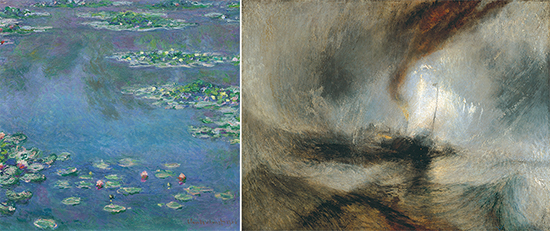
Figure 1. Left: Water Lilies by Claude Monet.
Right: Snow Storm by J. M. W. Turner.
I
mages from WikiArt (www.wikiart.org).
Such ability of artworks evoking dynamic emotional experiences supports mood regulation and pleasure. According to Kreitler and Kreitler (1972), art experiences absorb and relieve tension in a viewer, and through this process of optimizing arousal, a viewer experiences pleasure. Kreitler and Kreitler (1972) emphasize the role of empathy, which enables a viewer’s emotional engagement with the feelings represented or implied in the artwork, rather than simply reacting to the artwork itself. The concept of Einfühlung, introduced by Vischer et al. (1994) and meaning “feeling into”, highlights a crucial element of empathy—wherein a viewer projects oneself into the artwork and experiences the emotions presented as if they were their own. As it enables a viewer to resonate with the various emotions expressed in the artwork and to engage with it long enough to evoke memories and imagination—culminating in a rich palette of emotions and moods—emotional engagement facilitated by empathy is an important component of art-induced mood regulation (Ho et al., 2015; Yilma et al., 2024).
Evidence shows that artworks, particularly those featuring nature content, benefit various health outcomes, including a decrease in anxiety (Karnik et al., 2014; Ulrich & Gilpin, 2003; Ulrich et al., 1993), depression (Staricoff et al., 2003), loneliness (Trupp et al., 2022), and pain perception (Ulrich et al., 1993), and an increase in pleasure and restoration (Ulrich & Gilpin, 2003). Drawing upon these various benefits, artworks have been widely applied in healthcare contexts ranging from displaying paintings in environments with limited positive stimuli, such as hospitals or care homes (see Figure 2, left; Zwirs, 2020), to creating relaxing atmospheres in anxiety-inducing settings, such as MRI examination rooms (see Figure 2, middle and right; Philips, 2024).
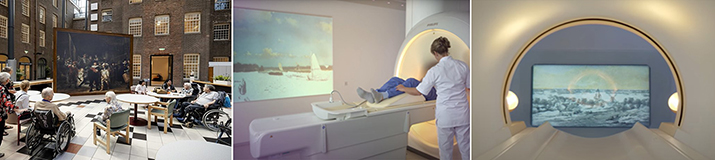
Figure 2. Examples of various art experiences in clinical settings.
The top image is sourced from Philips (www.philips.com). The middle and bottom images are screen captures of a YouTube video published by Philips (2017).
The role of artworks here mainly relates to their ability to elicit positive feelings and sustain attention without generating stress, thereby deflecting negative feelings and thoughts in patients (Ulrich, 1991). As such, artworks in healthcare contexts have served as positive distractions, with careful selection favoring concrete, familiar scenes while avoiding abstract or ambiguous content to prevent triggering negative emotions in vulnerable patients (Ulrich, 1991).
However, while evoking positive emotions is beneficial during moments of illness or vulnerability, stimulating negative emotions could also be helpful in the overall healing journey of patients who have gone through stressful and traumatic experiences. In the context of art therapy for treating post-traumatic stress disorder (PTSD), for instance, the roles of arts widen to include means to reconnect with and externalize traumatic experiences (Spiegel et al., 2006). While externalizing traumatic experiences through engagement with artwork involves negative emotions, it can help individuals to establish emotional distance from traumatic experiences, which supports integrating these experiences into their personal history and self-concept, contributing to the healing process (Spiegel et al., 2006). A study by Lee and colleagues (2017) demonstrated that art therapy, including appreciation of various (nature and other subject) paintings, featuring a diverse range of emotional stimuli, led to improvements in anxiety and depression among cancer patients. This showcases that the role of paintings in supporting healing processes goes beyond stimulating positive emotions. However, despite acknowledging the diverse functions of art experiences and the potential for negative emotions to support healing, the mechanisms underlying art-induced healing experiences and the insights into the associated qualities of artworks remain limited.
Alongside the various roles of artworks in supporting healing, individual differences in art experience are important to consider. Feng et al. (2017) proposed that imagination allows one to consider implausible or impossible things and helps to “discover new values and meanings by adopting diverse perspectives.” Hence, imagination is important for connecting viewers to artworks on a deeper level and allowing them to form their own interpretations, which enhances the healing effect of the art experience. Next to imagination, resilience is another personal trait that could play an important role. Leventhal’s (1971) parallel process model explains differences in responses to health threats in terms of individuals’ ability to manage illness threats. We anticipate that, depending on the individuals’ ability to cope with it (resilience), the potential of artworks to support healing may vary. In addition to the personal traits, we also consider the severity of the illness one has experienced in the past and its influence on art-induced healing experiences. Previous studies (Kim, van Rompay, et al., 2024; Regan & Horn, 2005) have explored individual differences in the context of nature experience and relaxation. However, these studies focused on healthy participants and did not address the dynamic nature of art experiences as proposed here.
In summary, nature provides a wealth of inspiration for the creation of artwork, and the visual experience of nature paintings can stimulate dynamic, both positive and negative, emotions and thoughts, opening up the healing potential of artwork beyond mere positive distraction. To further explore this potential of art, the present study aims to answer the following research questions:
- RQ1. Could visual art experience, involving the stimulation of both positive and negative emotions through nature paintings, support one’s healing process?
- RQ2. What are the qualities of positive and negative nature paintings that contribute to one’s healing experiences?
- RQ3. How do personal traits (imagination and resilience) and the severity of illness characterize healing experiences induced by artwork?
The insights of this study will contribute to the knowledge base on visual experiences that support one’s healing process. In the following sections, we report on the process and results of an empirical study that evaluates the efficacy of involving dynamic emotions in art experiences for therapeutic purposes. We also examine the influence of imagination, resilience, and the severity of illness and explore the qualities that contribute to different pathways in individuals’ art experiences. Based on the findings and insights of this study, we propose a framework that supports the design of personalized therapeutic visual experiences and discuss design implications.
Material and Method
To explore how different qualities of nature paintings support one’s healing process and to examine the roles of personal traits (imagination and resilience) and the severity of illness in an art-supported healing process, we designed a mixed-methods study in the form of an online guided art therapy session. This session included asking participants both closed- and open-ended questions. Close-ended questions were asked to evaluate the efficacy of experiencing negative and positive artworks in one’s healing process, as well as the influence of personal differences. Open-ended questions were used to explore which particular qualities contribute to this. All methods described in this section were approved by the University of Twente Institutional Review Board (approval number: 2021.103).
Participants
Adult participants who are older than 18 years old with previous experience of illness were recruited through university notice boards of the University of Twente and the University of Toronto, and via active online groups for former patients, including ICU and cancer survivor groups. A total of 186 participants were recruited, including 91 men, 94 women, and 1 non-binary. The sample included diverse age groups: 37 were aged 18 or 19, 77 in their 20s, 53 in their 30’s, 12 in their 40s, and 3 in their 60s. The sample represented various countries of residence: 132 from the Americas, 32 from Asia, 17 from Europe, and 5 from Africa. All participants reported their experiences of past illness, with 55 reporting hospitalization (9 in intensive care and 45 in a general ward), and 132 reporting being ill without hospitalization.
Nature Paintings Representing Positive and Negative Emotions
A total of 12 nature paintings were used to help participants reflect on their traumatic and healing experiences throughout their recovery from illness. The selection of these paintings was based on the negative emotions (associated with traumatic experiences) and positive emotions (associated with healing experiences) commonly experienced by patients. These 12 paintings were selected through pre-selection and a pilot test. First, a list of positive and negative emotions was identified based on patient experience literature (Kim, van der Heide, et al., 2024; Krampe et al., 2021) and summarized into a total of eight, including four negative emotions (fear, anger, loneliness, and sadness) and four positive emotions (calm, cheerful, hopeful, and awe). Next, the first author preselected paintings from WikiArt (www.wikiart.org), an online platform that serves as a digital repository of visual art. Four to five paintings that best represented each emotion were selected, while also considering their stylistic diversity (i.e., from realistic to abstract). How paintings represent emotion was based on both the impression conveyed by their style and subject matter. For instance, to select paintings representing fear, paintings featuring harsh lines and dark colors, as well as those featuring dangerous situations likely to evoke fear, such as the edge of a cliff, were included. Only copyright-free images of paintings were included. A total of 36 paintings were selected through this process. Next, two design researchers with at least 5 years of experience assessed the pre-selected paintings in separate sessions, prioritizing the paintings in order of how well they represented the assigned emotion. An average was calculated from the paintings’ rankings, and the highest-ranked painting for each emotion was selected. When multiple top-ranked paintings for the same emotion had very different styles and subject matter, these were also included. This is because, although the sampling began with a small list of representative emotions, the study aims to explore more nuanced emotional characteristics, and including diverse paintings supports this goal. Based on the results of these sessions, the list of paintings was narrowed to 12: 6 traumatic and 6 healing. An overview of the final paintings representing various positive and negative emotions is presented in Figures 3 and 4.
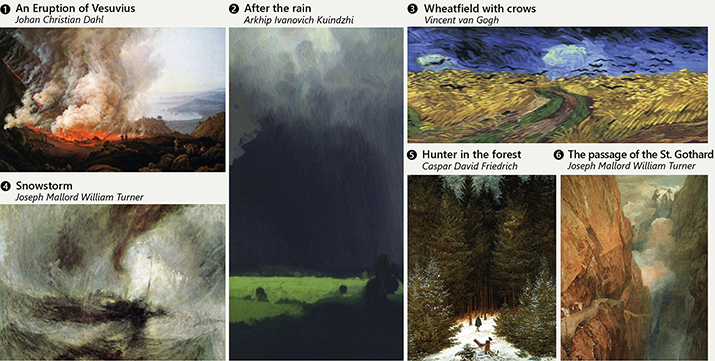
Figure 3. An overview of traumatic paintings with their representative emotions.
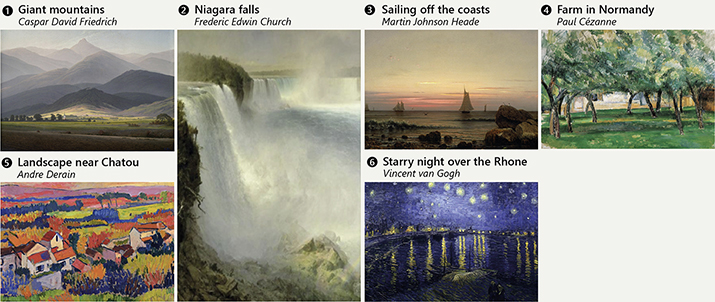
Figure 4. An overview of healing paintings with their representative emotions.
Procedure
Participants were asked to complete an online survey using their laptops in a quiet area where they could focus without disturbance from others. At the beginning of the online survey, all participants were provided with information about the study, including the aim, associated risks, compensation, and the anonymization of collected data. After giving their consent, participants completed a demographic questionnaire that included questions about their previous illness, such as the length and severity of illness.
Next, participants completed two questionnaires, an imagination scale (Feng et al., 2017) and a resilience scale (Chan et al., 2022), both consisting of 10 items, using a 7-point Likert scale. Next, participants reported their baseline mood by selecting one of nine common mood types, as classified by Desmet et al. (2012)—excited, cheerful, relaxed, calm, bored, neutral, sad, tense, and irritated—that best aligned with their mood at the moment.
Participants were then asked to recall their memories of past illnesses and describe what happened and how they felt during that time in a few sentences. After stimulating traumatic experiences, participants reported their mood again using nine common mood types (Desmet et al., 2012).
Next, participants engaged in a guided art therapy, outlined on the subsequent pages of the online survey. We designed the guided art therapy used in this study to offer step-by-step guidance and prompts, assisting individuals in navigating an emotional journey using paintings to reflect on traumatic experiences and transition toward a healthier life. After recalling illness experiences, six traumatic nature paintings were presented, and participants were asked to select one that best resonated with their illness experiences. Participants were then asked to reflect further on their chosen painting by responding to the following prompt: “Why did you choose this painting? In what way does this painting express how you felt when you were ill? Please describe your reasons for choosing this painting in 4-5 sentences.” After answering the prompt, they were also asked to describe how the chosen painting expresses their illness experience using a 7-point Likert scale capturing the 13 preselected qualities (i.e., anger, annoyance, anxiety, fatigue, fear, feeling lost, guilt, hopeless, insecurity, loneliness, pain, sadness, and shame).
After processing the illness experiences, participants were given a brief moment to imagine themselves moving away from illness and towards a healthy life. Upon clicking through to the next page, six positive nature paintings were shown, and participants were again asked to select one portraying an environment that would best support their healing journey. Next, participants were encouraged to further engage with their chosen painting by responding to the following prompt: “How did you feel while spending time in this painting? What did you do? How would this experience contribute to you feeling whole again? Please, describe your healing experience in this painting in 4-5 sentences.” In this way, we aimed to amplify the concept of “feeling into” (Vischer et al., 1994) and to maximize the impact of the painting experience by increasing immersion, as showcased in recent studies demonstrating the greater effects of more immersive experiences (Feng et al., 2017; Radikovic et al., 2005; Veling et al., 2021). After this imagined healing journey, viewers were prompted to describe what activities they would undertake in the painting and which of the 13 preselected qualities of the painting (i.e., beauty, calming, dreamy, engaging, evoking memories, familiarity, feeling safe, happy, hopeful, mindful, novelty, recharging, stimulating) would contribute to their healing, again using a 7-point Likert scale supplemented with an open-ended answer.
After taking the guided art therapy, participants again reported their mood. The procedure was conducted individually and took an average of 20 minutes. Figure 5 outlines the entire procedure. Figure 6 shows the screenshots of the online study.
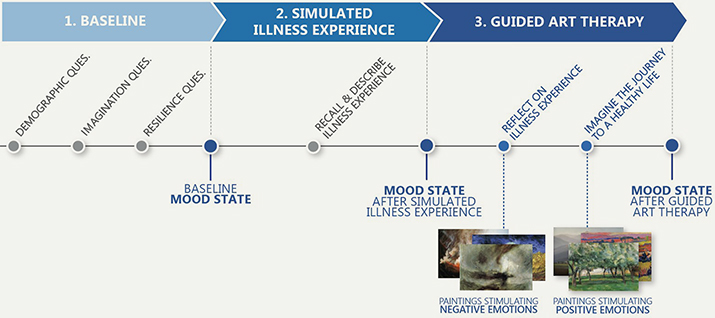
Figure 5. Study outline.
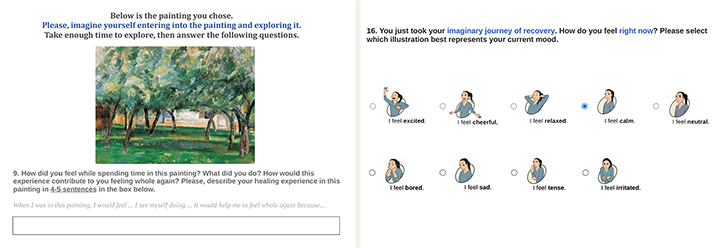
Figure 6. Screenshots of the online study.
Results
Both quantitative and qualitative data analyses were conducted in a complementary way to provide a more comprehensive understanding of the findings. All statistical analyses were performed using IBM SPSS Statistics Version 28. A manipulation check was conducted using Principal Components Analysis (PCA) and Analysis of Variance (ANOVA) to verify whether participants indeed evaluated the traumatic paintings as negative (as indicated by high scores on the associated qualities) and vice versa for the healing paintings. Next, Chi-Square tests were conducted to assess the impact of a guided art therapy on before and after mood state, as well as, significant associations between mood change and individual difference variables—resilience, imagination, and severity of illness. The qualitative data was analyzed by conducting reflexive thematic analysis (Braun & Clarke, 2019). Codes were first made by the first author and reviewed and discussed with the second author. These codes capture key elements contributing to positive or negative experiences derived from paintings. Through an iterative analysis process, agreements on the codes were reached, and codes related to the same concept were grouped into categories, from which themes were identified. The subsequent sections elaborate on the findings, incorporating illustrative quotes from participants.
Manipulation Check for Selected Paintings
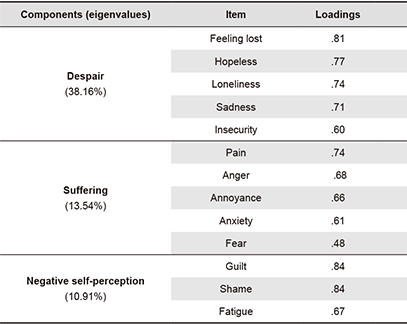
To explore whether participants perceived the paintings as intended, an exploratory factor analysis was conducted to examine the correlations among the 13 preselected items (qualities) in traumatic paintings. The Kaiser-Meyer-Olkin (KMO) value was 0.82, indicating the sampling is adequate. The Bartlett’s test of sphericity was statistically significant (χ²(78) = 1053.296, p < .001), indicating the correlations between items were adequate for factor analysis.
One item (fear) was removed from the final analysis because it cross-loaded on multiple factors with comparatively weak loadings (less than .50). Three factors were derived with Eigenvalues of 1.00 or greater, and factor labels were based on items with factor loadings of .50 or greater. These factors (accounting for 62.61% of the total variance) are:
- Despair (38.16%): Factor 1 includes items related to existential feelings associated with an absence of hope, including feeling lost, hopeless, lonely, and sad.
- Suffering (13.54%): Factor 2 includes items associated with emotions that one experiences when going through suffering: pain, anger, annoyance, and anxiety.
- Negative self-perception (10.91%): Factor 3 includes items related to emotions that reflect negative self-perception, including guilt, shame, and fatigue.
The semantics of the labels for the derived factors from traumatic paintings were consistent with prior literature: despair relating to hopelessness, loneliness, and sadness (TenHouten, 2023); suffering relating to pain, negative emotional arousal, and stress (Chapman & Gavrin, 1993); and negative self-perception relating to guilt and shame (Wilson et al., 2006).
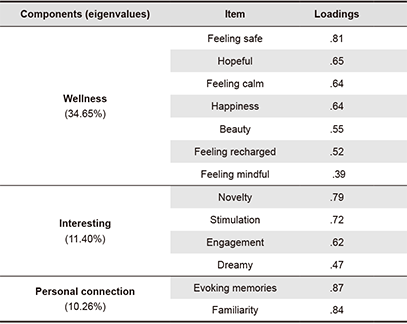
Next, a factor analysis on 13 pre-selected items (qualities) in healing paintings yielded three factors with Eigenvalues of 1.00 or greater, and factor labels were based on items with factor loadings of .50 or greater. Two items (feeling mindful and feeling dreamy) were deleted from the final analysis due to weak loadings (less than .50). Three factors (accounting for 56.31% of the total variance) were derived that are:
- Wellness (34.65%): Factor 1 includes items associated with well-being, such as feeling safe, hopeful, happy, calm, and recharged.
- Interesting (11.40%): Factor 2 includes items that trigger a sense of interest, such as novelty, stimulation, and engagement.
- Personal connection (10.26%): Factor 3 includes items linked to intimate perceptions, evoking memories and familiarity.
The semantics of the labels for the derived factors from healing paintings were also aligned with prior literature: wellness relating to hope, happiness, comfort, safety, and security (Allen et al., 2007); interesting relating to novelty, stimulation, and engagement (Silvia & Kashdan, 2009); and personal connection (relation) relating to nostalgia and familiarity (Holak & Havlena, 1992).
The full list of factor loadings for exploratory factor analysis on traumatic and healing paintings can be found in the Appendix.
To validate whether each of the selected paintings expresses identified factors, ANOVA’s were conducted with, each time, the identified factors (e.g., despair) as the dependent variables and painting as the independent variable. The results showed that most paintings scored higher than the midpoint—4 on a 7-point Likert scale—for identified factors (see Table 1 and Table 2), with the exception of one factor: negative self-perception. Scores ranged from a mean of 3.41, SD = 1.66 (painting 1) to a mean of 3.91, SD = 1.42 (painting 3) for all traumatic paintings. This indicates that (apart from this exception) the paintings successfully portray the intended key qualities.
Table 1. Perceived qualities from six traumatic paintings (1 = Not at all, 7 = Extremely well).

Table 2. Perceived qualities from six healing paintings (1 = Not at all, 7 = Extremely well).

The Effect of Guided Art Therapy in Enhancing Mood States
The comparison of reported mood states at the three points—baseline, after simulating illness experience, and after the guided healing journey—shows that at baseline, the majority of participants were in a positive mood (n = 109, 58.6%), yet after recalling illness (simulated illness experience), the number of participants with a positive mood substantially decreased (n = 47, 25.3%) and the majority experienced negative mood states (n = 107, 57.3%). Conversely, after the guided art therapy, all participants with a negative mood showed mood improvement: no negative moods were reported, and nearly everyone ended up being in a positive mood (n = 178, 95.7%), with only a minority remaining neutral (n = 8, 4,3%; See Figure 7).
To validate the mood-enhancing effect of guided art therapy, a Chi-square test was conducted to compare participants’ mood states at baseline and after the intervention. For valid calculation, each cell (option) requires a minimum count of 5 times. Therefore, we merged mood states into three categories: negative (i.e., irritated, tense, sad, and bored), neutral, and positive (i.e., calm, relaxed, cheerful, and excited) moods (see legend of Figure 7). A Chi-square test result indicates a significant change in participants’ mood state after the healing journey compared to the baseline, χ2 (2, N = 186) = 6.23, p = 0.04.
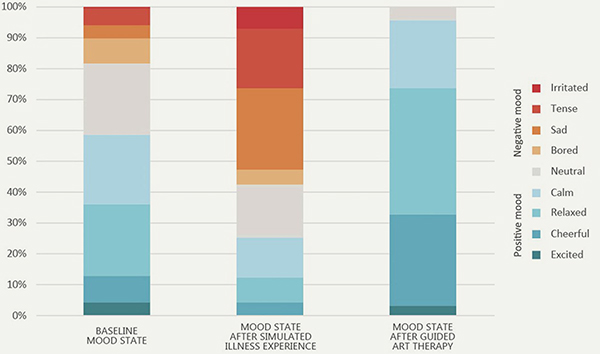
Figure 7. Comparison of participants’ mood states (n = 186) at three points during the experiment.
Perceived Qualities from the Chosen Paintings
Count of Selections per Painting
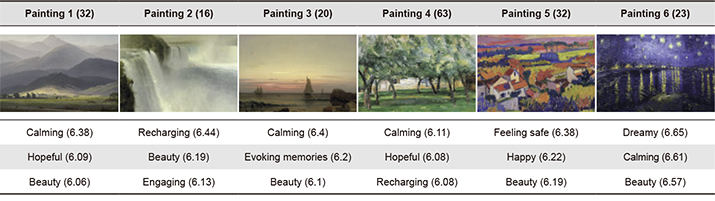
The number of times participants chose a certain painting to reflect their illness experiences ranged from 8 to 47. The most chosen traumatic paintings were painting 4–Snowstorm (n = 47), painting 2–After the Rain (n = 45), and painting 5–Hunter in the Forest (n = 35). The least chosen painting was painting 3–Wheatfield with Crows (n = 8). The number of times participants chose a painting to envision a healthy life ranged from 16 to 63. The most chosen healing paintings were painting 4–Farm in Normandy (n = 63), painting 1–Giant Mountains (n = 32), and painting 5–Landscape near Chato (n = 32). The least chosen painting was painting 2–Niagara Falls (n = 16). An overview of the scores of all paintings is presented in Tables 3 and 4.
Most Strongly Perceived Qualities from the Paintings
For their chosen painting, participants rated how they perceived it based on 13 predefined qualities. The mean score of each quality for each painting was calculated and compared. The top three qualities (based on mean scores) are presented in Table 3 for traumatic paintings and Table 4 for healing paintings. Overall, the perceived qualities varied across paintings, and the mean scores of the highest-rated qualities for healing paintings were generally higher than those for traumatic paintings.
Table 3. Top three perceived qualities for traumatic paintings. Each painting shows its selection count and the top three qualities with their mean scores: Painting # (Count) – Quality (Mean).
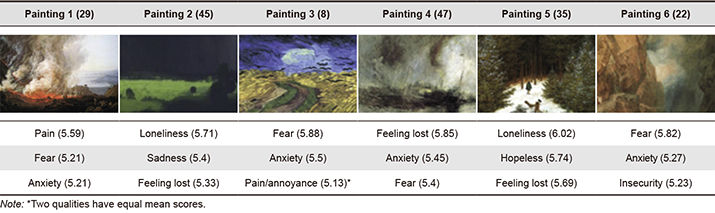
Table 4. Top three perceived qualities for healing paintings. Each painting shows its selection count and the top three qualities with their mean scores: Painting # (Count) – Quality (Mean).
Extensive List of Perceived Qualities from the Most Chosen Paintings
Alongside the quantitative analysis of preselected qualities, a qualitative analysis was conducted using participants’ descriptions of their experiences with the most chosen paintings. The results revealed an extensive list of qualities that characterize individuals’ traumatic and healing experiences. From the traumatic paintings, a total of 15 qualities were identified, which were grouped into six higher-level themes based on their underlying thread: confinement, death, desolation, desperation, suffering, and inner chaos. From the healing paintings, a total of 15 qualities were identified, also grouped into seven higher-level themes: belonging, flourishing, inner peace, inner strength, liberation, relief from suffering, and renewed life. An overview of themes, qualities, and example quotes, along with the related paintings, is presented in Tables 5 and 6.
Table 5. Six themes of qualities related to experiences of illness derived from traumatic paintings.
| No. | Theme / Description | Quality | Example quote |
| 1 | Confinement A state of being trapped in an undesired situation or environment, unable to move freely or escape |
No escape | “I felt I have no way to go (further).” -Painting 2 |
| Suffocated / Feeling trapped | “I felt like I was frozen in ice. I couldn’t move and felt like being surrounded by something that couldn’t break free from. It was suffocating.” -Painting 4 | ||
| 2 | Death Feelings and thoughts directly associated with death |
Death | “I was constantly thinking about death. I felt death was close at hand and preferable to my experience of physical pain.” -Painting 2 |
| 3 | Desolation A state of profound emptiness, loneliness, and sadness resulting from a lack of connection |
Loneliness | “It’s like falling into a world of ignorance, no one, no help, very lonely.” -Painting 4 |
| Isolated | “I felt like being alone and away from this world.” -Painting 4 | ||
| 4 | Desperation A state of despair resulting from a loss of hope |
Depression / Sadness |
“The painting is similar to how I felt depressed and dark and couldn’t find much color in my life.” -Painting 2 |
| Hopelessness | “I felt like falling into a huge whirlpool and there’s no hope of getting out of it.” -Painting 4 | ||
| 5 | Inner chaos A state of mental turmoil, characterized by confusion and a lack of clarity and structure in one’s thoughts and feelings |
Ambiguity | “I felt like I was in a blur. I had no good vision of what would happen next.” -Painting 4 |
| Chaos | “My whole being was in chaos. My mind was a mess.” -Painting 4 | ||
| Confusion | “It all felt confusing and unimaginable. I was unaware of what to do or what to think.” -Painting 4 | ||
| Uncontrolled | “I felt like my illness was sweeping in like a storm.” -Painting 4 | ||
| 6 | Suffering An experience of physical or emotional pain, discomfort, and distress |
Anger | “I was so angry for not taking care of my health.” -Painting 4 |
| Fear | “It reminds me of the fear I felt when I was sick.” -Painting 4 | ||
| Pain | “It (being sick) was very painful. I felt a lot of pressure every day.” -Painting 2 | ||
| Physical symptoms | “This painting depicted the dizziness I felt.” -Painting 4 |
Table 6. Seven themes of qualities related to the experience of recovery derived from healing paintings.
| No. | Theme / Description | Quality | Example quote |
| 1 | Belonging A feeling of being connected within a community or environment where common values or experiences are shared. |
Nostalgia | “It (the painting) made me feel like I had become a little girl again. I used to hang out with my friends until the sun went down, just like in this painting, then go home for dinner.” -Painting 5 |
| Sense of companionship | “It (the painting) gives me a warm feeling of home and a feeling of companionship.” -Painting 5 | ||
| 2 | Flourishing A state of thriving in physical and psychological well-being, characterized by a sense of vitality and fulfillment. |
Beauty (of life) | “I felt suddenly bright, found the world is very beautiful, I wanted to live well, feel the beauty of life.” -Painting 5 |
| Happiness | “I felt alive. The different bright colours made me feel excited, light, and very positive.” -Painting 5 | ||
| Sensory pleasure | “I felt the cool breeze and saw the leaves falling off the tree, which was relaxing.”-Painting 4 | ||
| Vitality | “I felt life full of hope and full of vitality.” “I like mountains, it gives me strength.” -Painting 1 | ||
| 3 | Inner peace A state of psychological and emotional tranquility, characterized by a sense of calmness, contentment, and harmony within oneself. |
Feeling comfortable | “I felt very comfortable and relaxed in a peaceful atmosphere.” -Painting 1 |
| Sense of calmness | “Everything is still, I felt whole again because I value steadiness and calmness.” -Painting 1 | ||
| Sense of safety | “I felt at peace and ease, like nothing would harm me.” -Painting 1 | ||
| 4 | Inner strength An ability to cope with difficult situations, characterized by hope, yearning, and resilience. |
Hope | “It (the painting) made me feel hope. All bad feelings are washed away” -Painting 4 |
| Resilience | “(I felt) eager to get better, eager to continue pursuing my day.” “I must strive to live and fight against disease.” -Painting 1 | ||
| Yearning | “Yearning for this kind of refreshing made me understand the meaning of living.” -Painting 1 | ||
| 5 | Liberation A state of being free from constraints, limitations, or unwanted situations and environments. |
Carefree | “It (the painting) helped me let go of my feelings and emotions from the sickness. I felt significantly better as if a weight had been lifted off my shoulders from all the worries.” -Painting 4 |
| Self-expansion | “Seeing this painting makes me feel very broad.” -Painting 1 | ||
| Sense of freedom | “I felt free again after suffering from the illness, knowing I could go anywhere I want, enjoy nature, and finally do the things I always wanted.” -Painting 1 | ||
| 6 | Relief from suffering A state of being free from physical or emotional pain, discomfort, and distress |
Relief from pain, sorrow, and worries | “The scent of fresh grass really helped reduce my anxiety, sitting under one of those trees would reduce sorrow.” -Painting 4 |
| 7 | Renewed life Feelings and thoughts associated with a sense of starting anew, fresh energy, and purpose. |
Renewal | “When I saw the green forest and the bright sunshine, it was as if the depression and insecurity in my heart were cured, and everything was renewed and full of vitality.” -Painting 1 |
| Revival (rebirth) | “I feel like I've been resuscitated and reborn like a tree.”-Painting 4 |
From the list of qualities, we observed that the identified themes in traumatic paintings oppose those in healing paintings. For instance, the theme of inner chaos, characterized by qualities such as chaos, confusion, and ambiguity, opposes the theme of inner peace, which involves a sense of safety and calmness. Similarly, the theme of confinement, evoking a sense of suffocation and having no escape, opposes the theme of liberation, which entails feelings of carefreeness and freedom. Figure 8 illustrates the themes from traumatic paintings (marked in red) that counteract those from healing paintings (marked in green).
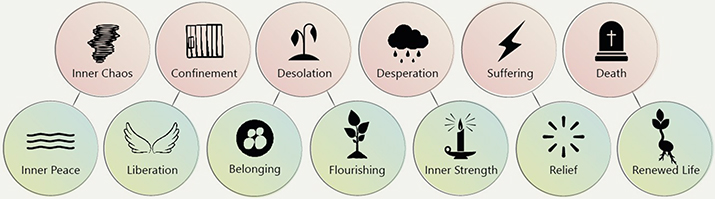
Figure 8. Overview of defined themes from traumatic (red) and healing paintings (green) counteracting each other. All icons are from The Noun Project (www.thenounproject.com).
Visual properties of paintings mentioned by participants in relation to the qualities were also collected. Overall, traumatic paintings commonly featured darkness, boundaries, abstractness, and chaotic elements such as fog, tornado, and windstorm. In contrast, healing paintings often displayed brightness, colorfulness, openness, and lively and vibrant elements such as sunshine, trees, and flowers, which are associated with spring and summer. A detailed overview of these visual properties for each quality is provided in Tables 7 and 8.
Table 7. Six themes of qualities derived from traumatic paintings and their mentioned visual properties.
| Theme | Quality | Relevant paintings | Physical properties |
| Confinement | No escape | 2 | Darkness, walls, and roadless areas |
| Suffocated / Feeling trapped | 4 | Visual cues that suggest spatial compression such as being surrounded or wrapped | |
| Death | Death | 2, 5 | Blackness and a big unpassable wall |
| Desolation | Loneliness | 2, 4, 5 | Darkness, quietness, a primeval forest, and a lone individual. |
| Isolated | 4 | Ambiguous ambience indicating detachment from the world | |
| Desperation | Depression / Sadness | 2, 4, 5 | Darkness, colorlessness, and paleness |
| Hopelessness | 2, 4, 5 | Strong tension, darkness, a vast whirlpool, an endless forest, and many boundaries and challenges. | |
| Inner chaos | Ambiguity | 2, 4, 5 | Blur, darkness, a distant dark cloud, and abstract, ambiguous features |
| Chaos | 2, 4 | Tornado, windstorm, chaotic and messy features | |
| Confusion | 4, 5 | Fog, blur, abstract and blended features | |
| Uncontrolled | 4 | Windstorm, blur, and mess | |
| Suffering | Anger | 4 | Tension |
| Fear | 2, 4, 5 | Tension, darkness, a vast whirlpool, and a deep forest | |
| Pain | 2 | Darkness | |
| Physical symptoms | 4 | Dizziness |
Table 8. Seven themes of qualities derived from healing paintings and their mentioned visual properties.
| Theme | Quality | Relevant paintings | Visual properties |
| Belonging | Nostalgia | 5 | Warm colors, evening atmosphere |
| Sense of companionship | 5 | Bright and warm colors, flowers, houses, and small-town-like areas | |
| Flourishing | Beauty (of life) | 4, 5 | Colorfulness, freshness, greenness, brightness, liveliness, trees, and harmonious scenery |
| Happiness | 4, 5 | Colorfulness, liveliness, greenness, sunshine, flowers, a gentle breeze, and summer atmosphere | |
| Sensory pleasure | 4, 5 | Freshness, breeze, sunshine, and flowers | |
| Vitality | 1, 4, 5 | Bright colors, greenness, fresh air, spouts, trees, forest, and mountains | |
| Inner peace | Feeling comfortable | 1, 4 | Greenness, nearby nature areas with grass and trees, and peaceful atmosphere |
| Sense of calmness | 1, 4, 5 | Stillness, steadiness, greenness, mist, a place to rest (lying down or seated), and morning atmosphere | |
| Sense of safety | 1, 4 | Greenness, serenity, and absence of treat | |
| Inner strength | Hope | 1, 4, 5 | Brightness, quietness, greenness, soft light, sunshine, and spring atmosphere signaling vitality |
| Resilience | 1, 4 | Greenness, grass, and mountain | |
| Yearning | 1, 4 | Grass, mountains, and dense woods signaling vitality | |
| Liberation | Carefree | 4 | Openness and calmness |
| Self-expansion | 1 | Magnificent natural landscape (e.g., layers of intertwined mountains) | |
| Sense of freedom | 1, 5 | Spaciousness and fresh air | |
| Relief from suffering | Relief from pain, sorrow, and worries | 4, 5 | Calmness, trees, and sunshine |
| Renewed life | Renewal | 1, 4, 5 | Openness, peacefulness, sunshine, and spring atmosphere |
| Revival (rebirth) | 1, 4, 5 | Greenness, tree, and peaceful scenery |
The Relationship Between the Personal Traits and the Mood-Enhancing Effects of Guided Art Experiences
Imagination
Applying a median split to the scores of the 10 imagination items (Mdn = 5.00), two groups with high and low imagination levels were formed. For each group, a Chi-square test was conducted to compare participants’ mood states at baseline and after the guided art therapy. However, in both groups, the effect was not significant (high imagination: χ2 (2, N = 97) = 4.46, p = .11; low imagination: χ2 (2, N = 89) = 3.97, p = .14).
Resilience
Likewise, applying a median split to the 10 resilience items (Mdn = 5.44) yielded two groups with high and low resilience levels. For each group, a Chi-square test was conducted to compare participants’ mood states at baseline and after guided art therapy. The Chi-square test showed a significant change in mood state among people with low resilience, χ2 (2, N = 88) = 7.89, p = .019, whereas no significant change was observed among people with high resilience, χ2 (2, N = 98) = 2.13, p = .35.
The Different Pathways of Art Experiences Depending on The Severity of the Illness
To study the role of the severity of the illness in art-induced healing experiences, we compared two groups based on participants’ responses to the length and severity of past illness questions (recorded on 5-point Likert scales): the severe illness group (top 25% high score, n = 46) and the mild illness group (bottom 25% score, n = 46). Next, we compared the most selected traumatic and healing paintings and perceived qualities from these two groups. Interestingly, the most chosen paintings for traumatic and healing experiences differed between the two groups. Among the paintings that resonate best with their illness experience, the severe illness group chose painting 5–Hunter in the Forest (n = 11), while the mild illness group chose painting 4–Snowstorm (n = 16). We also observed the differences in terms of perceived qualities from these paintings between the two groups: in the severe illness group, hopelessness (n = 14) and loneliness (n = 12) were predominantly mentioned, “the painting shows one person lost in the woods, which is similar to how I felt when I was ill. I was alone where no one else could understand how I felt. I was helpless and lost,” while in the mild illness group, most often mentioned quality was fear and anxiety (n = 7), “It (snowstorm) reminds me of the fear I felt when I was sick.” For the painting that best illustrates their imagined healing journey, both groups chose painting 4–Farm in Normandy: severe illness group (n = 16) and mild illness group (n = 19). Yet the qualities that two groups associated with this painting were different: in the severe illness group, hope (n = 9) was most apparent followed by vitality (n = 8), “I see hope in this picture. Green, vitality, and full of spring as if I am recovering from the illness,” while in the mild group, sense of calmness (n = 16) and sense of joy and happiness (n = 10) were mentioned most often, “This picture radiates positive silence and has a calming effect,” “(In this painting,) I felt relaxed. I see myself lying down and enjoying the hot summer with a slight breeze.”
Summarizing, we observed different pathways of art experiences depending on the severity of the illness: people with severe illnesses often resonate with qualities related to existential feelings, from hopelessness and loneliness to hope and vitality, while people with mild illnesses relate more to affective feelings, from anxiety and fear to joy and a sense of calmness.
Discussion
Nature paintings that capture a wide variety of emotional experiences can be a powerful means of evoking and transforming one’s emotions and thoughts, contributing to overcoming trauma and healing. This study aimed to expand the understanding of the therapeutic potential of visual art experiences by involving dynamic emotions—both negative and positive—stimulated by nature paintings. Additionally, the study explored how individual differences—imagination, resilience, and the severity of illness—influence the ways individuals experience nature paintings. Reflecting on our findings, we answer and discuss our research questions.
Therapeutic Potential of Visual Art Experience Stimulating Negative and Positive Emotions
Our results demonstrated the therapeutic value of involving negative emotions (evoked during reflecting illness experiences) followed by positive emotions (evoked during imagining oneself on a journey towards healing). The use of paintings designed to stimulate negative emotions in healthcare settings, while intended to make positive contributions to healing, is novel, because paintings and visual nature experiences in healthcare settings in general have focused on promoting positive emotions in patients. For example, Attention Restoration Theory (ART) (Kaplan & Kaplan, 1989; Kaplan, 1995) emphasizes positive qualities in nature, such as fascination and a sense of being away, which contribute to restoration. Similarly, the concept of positive distraction (Ulrich, 1991) highlights the role of paintings in eliciting positive emotions and diverting attention from distressing thoughts and feelings. As a positive distraction, paintings featuring dark colors, abstract, or ambiguous figures have been discouraged, as they are likely to trigger negative emotions that could lead to adverse health outcomes. Previous studies (Diliberto-Macaluso & Stubblefield, 2015; Gruber & Oepen, 2018) comparing the effects of paintings associated with positive and negative emotions support this line of thought, as results showed that only paintings depicting positive emotions had significant effects on mood enhancement, whereas those associated with negative emotions did not.
Our approach, however, structurally introduced traumatic paintings evoking negative emotions as a means of externalizing trauma related to illness, supporting confrontation and ultimately overcoming. This was then followed by healing paintings, helping to envision the journey toward recovery. This dynamic sequence—moving from the externalization of trauma to the prospect of healing—resulted in significant mood enhancement. As such, the results of this study provide an answer to our first research question, demonstrating that visual art experiences that stimulate dynamic emotions can indeed support a healing process. It is noteworthy, however, that introducing negative emotional experiences needs to be carefully structured, as in our case, followed by positive emotional experiences that complement and balance the negative ones. This approach resonates with the study by Fokkinga and Desmet (2013), who proposed a framework enabling designers to systematically apply both negative emotions (e.g., fright) and positive emotions (e.g., joy) to create notable experiences (e.g., thrilling).
Nuanced Concepts of Trauma and Healing Experiences
Our results also identified the qualities present in the paintings that contribute to the healing process. We found six themes of qualities in traumatic experiences: (1) confinement, (2) death, (3) desolation, (4) desperation, (5) inner chaos, and (6) suffering. Most themes align with previous findings on negative patient experiences (Kim, van der Heide, et al., 2024; Krampe et al., 2021), such as isolation and loneliness (desolation), sadness and hopelessness (desperation), and ambiguity (inner chaos), confirming the potential of paintings inducing negative emotions to stimulate the projection of a diverse range of traumatic experiences. Likewise, we identified seven themes of qualities for healing experiences: (1) belonging, (2) flourishing, (3) inner peace, (4) inner strength, (5) liberation, (6) relief from suffering, and (7) renewed life. These themes resonate with positive factors contributing to patient experience (Kim, van der Heide, et al., 2024) as well as connecting to fundamental or salient human needs (Desmet & Fokkinga, 2020; Hassenzahl, 2010), such as, a sense of companionship (belonging), a sense of safety (inner peace), hope (inner strength), and a sense of freedom (liberation). This extensive list of qualities provides designers with elements that can be used to address a wide range of traumatic experiences, supporting healing.
We also identified visual properties linked to negative qualities, such as abstractness, darkness, storms, and fog. Positive qualities are linked to more concrete styles, greenness, warmth, and vibrancy, as well as to specific content, including trees and sunlight, which reflect vitality. This aligns with Cupchik (2016), who argues that an abstract style provides space for projection and reflection on emotional experiences, while the subject matter relates to symbols and meanings that, in our case, connect to death (for traumatic paintings) or vitality (for healing paintings). The list of visual properties in paintings, linked to positive and negative qualities, serves as a concrete example of how these qualities can be translated into design concepts that engage with specific traumatic and healing experiences.
The Roles of Individual Differences in Art-Induced Healing Experiences
Our findings showed how individual differences affect art experiences and their healing potential. The influence of imagination on one’s art experiences was not statistically significant. This result was surprising considering that our approach relies on one’s imagination, and we naturally expected imagination to play an important role. We assume that our approach providing concrete visual aids (nature paintings) combined with instructions on how to engage with the paintings (e.g., ‘Imagine yourself entering into the painting and exploring it. How did you feel while spending time in this painting? What did you do?’), might help participants engage in the imagined art therapy effectively regardless of their level of imagination. This might have resulted in participants with lower imaginative ability gaining similar benefits as those with higher imaginative ability.
Resilience, on the other hand, seems to play a significant role in one’s art experiences. We found that people with low resilience experience a significant mood-enhancing effect from the guided art therapy, while those with high resilience showed no such effect. This might indicate that individuals with low resilience have a greater need for healing and support, whereas highly resilient individuals are more capable of coping with their illness and recovery process on their own. This finding showcases the potential of a guided art therapy approach for vulnerable people (and patients) who may face severe challenges in recovery from trauma and stress.
Regarding the severity of illness, we observed that it influences one’s perspective, thereby shaping how individuals engage with and interpret art experiences. The existence of distinct pathways to healing, motivated by the context of illness, resonates with Leventhal’s parallel model (1971). According to the model, there are two different coping modes for health treatment: seeking emotional support to manage fear and anxiety, or engaging cognitive processes to understand and take control over the illness. Consistent with this model, our results show that individuals with mild illness tend to engage at the emotional level, while severe illness prompts deeper existential reflection. These insights provide an outline for how visual therapy can be tailored to meet the unique needs of individuals depending on the context of their illness.
Toward Personalized Healing Experiences
Based on the insights from this study, we propose a conceptual framework for designing healing experiences (see Figure 9). The framework outlines the transition from resonating with trauma to establishing renewed hope, along with diverse concepts of trauma and healing that support tailoring experiences to personal needs. Individual concepts can translate into different levels of experience, ranging from surface-level experiences, which focus on stimulating affective feelings (e.g., transitioning from sadness to joy), to deeper-level experiences, which focus on stimulating existential feelings (e.g., transitioning from hopelessness to finding hope in life), depending on the individual’s context of illness.
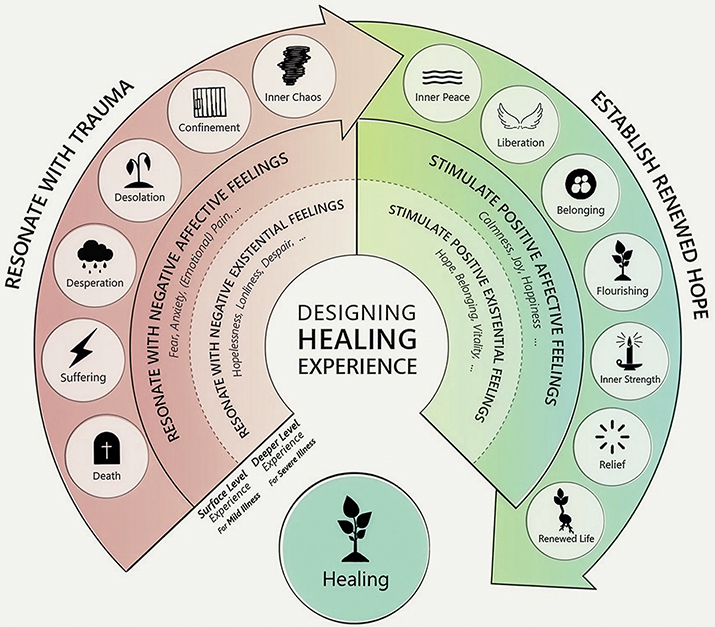
Figure 9. Framework for designing a healing experience. All icons are from The Noun Project (www.thenounproject.com).
While the focus of our study was primarily on mood enhancement, healing is a multidimensional process that encompasses existential, social, and cognitive dimensions, extending beyond mood improvement and emotional rebalancing. The proposed framework offers these broader implications: it can support designers in developing interventions that address existential concerns and provide psychosocial care, encouraging a more comprehensive approach to healing that acknowledges its complexity and supports diverse pathways toward recovery.
Inspired by the framework, designers could adapt our dynamic, sequential approach, which transitions from trauma reenactment to a journey toward healing, to foster a healing experience in their own design context. For instance, to support a person experiencing desolation, such as loneliness and isolation, tailored trauma-reflecting experiences could be designed using properties like darkness and quietness, creating an environment that feels detached from the world. To facilitate recovery and moving on from trauma, desolation in this case, a healing experience could be designed emphasizing a sense of belonging, evoking nostalgia or companionship by depicting a small village with a bright, colorful, and warm atmosphere, surrounded by vibrant nature such as flowers and trees. The design of such healing experiences could be extended into immersive forms using technologies such as extended reality (XR), and further enriched through multimodal elements such as scent, sound, or touch.
Additionally, to create therapeutic emotional experiences, we recommend further investigation to expand understanding of the link between the properties of paintings and qualities associated with healing. For instance, a sense of enclosure provided by a depicted green space in a painting resonates with intimacy and security (Te Vaarwerk et al., 2015; Van Rompay & Ludden, 2015), or a blue sky and rays of sunshine symbolize positive prospects (Kim, van Rompay, et al., 2024). Creating an overview of why and how visual properties express qualities relevant to the context of trauma and healing would be the next step in supporting designers to foster visual-inspired healing experiences.
This study has explored the potential of nature paintings that provoke dynamic emotions—both negative and positive—in supporting the healing process. It investigated the variety of qualities perceived in those paintings during the course of healing, as well as the influence of personal traits and the severity of illness. The main contribution of this study lies in demonstrating how negative and positive paintings can play a meaningful role in supporting healing by providing a means to reflect on and confront trauma and envision a path to recovery. The study also offers an overview of qualities in various concepts of trauma and healing that can respond to individual needs and foster a personalized healing journey. The method used in our study, guided art therapy, also suggests that paintings can have therapeutic effects beyond mere exposure, through active engagement and immersion. The overview of qualities and visual properties further suggests opportunities to develop design interventions to support healing. Furthermore, our study demonstrated that nature, as a motive of human life, provides rich inspiration for emotions, thoughts, and reflections. We encourage designers to further investigate the multifaceted aspects of nature-inspired design, beyond its traditionally positive connotations, to enrich the field of design for health and well-being.
Limitations and Future Work
Several limitations of our study should be acknowledged. First, our study is based on healthy participants’ recollections of past illness experiences. Although this approach served our purpose by leading participants to negative mood states like their state when ill, further research is warranted to investigate how this process plays out in patients who are undergoing (rather than looking back) traumatic conditions. Additionally, while our study makes a meaningful contribution by showing how resilience and the severity of illness may inform different approaches to creating healing experiences, obviously, there are other individual and cultural differences to consider. Particularly, considering that our study population was represented by 18-40-year-olds who are American residents, it warrants exploring other age groups—for instance, older adults—and cross-cultural contexts to investigate possible variations in the interpretation of natural elements and associations between visual properties and content related to death and healing (Osgood, 1960). For the generalization and international application of the study’s findings, we invite future studies to take these factors into account to build a stronger foundation for a mixed-emotions approach to designing healing experiences.
Disclosure
ChatGPT-4 was used to check grammar and enhance sentence structure, with the final review conducted by the authors.
Acknowledgments
We would like to express our gratitude to Thomas Falck, MSc (Philips), for providing their feedback on the earlier version of the paper. Additionally, we extend our thanks to the participants of our study for sharing their valuable experiences and to the anonymous peer reviewers for their constructive comments. This work was supported by the Top Technology Twente Connecting Industry program (TKI Topsector HTSM).
References
- Allen, D., Carlson, D., & Ham, C. (2007). Well-being: New paradigms of wellness–Inspiring positive health outcomes and renewing hope. American Journal of Health Promotion, 21(3), 1-12. https://doi.org/10.4278/0890-1171-21.3.TAHP-1
- Braun, V., & Clarke, V. (2019). Reflecting on reflexive thematic analysis. Qualitative Research In Sport, Exercise and Health, 11(4), 589-597. https://doi.org/10.1080/2159676X.2019.1628806
- Chan, H. W., Ignacio, A., Rebello, C., & Cupchik, G. (2022). The therapeutic value of creative art-making during the COVID-19 pandemic. Journal of Gifted Education and Creativity, 9(1), 93-113.
- Chapman, C. R., & Gavrin, J. (1993). Suffering and its relationship to pain. Journal of Palliative Care, 9(2), 5-13. https://doi.org/10.1177/082585979300900202
- Cupchik, G. C. (2016). The aesthetics of emotion: Up the down staircase of the mind-body. Cambridge University Press. https://doi.org/10.1017/CBO9781139169301
- Desmet, P., & Fokkinga, S. (2020). Beyond Maslow’s pyramid: Introducing a typology of thirteen fundamental needs for human-centered design. Multimodal Technologies and Interaction, 4(3), Article 38. https://doi.org/10.3390/mti4030038
- Desmet, P. M. A., Vastenburg, M. H., Van Bel, D., & Romero, N. (2012). Pick-a-mood: Development and application of a pictorial mood-reporting instrument. In Proceedings of the 8th international conference on design and emotion. Central Saint Martins college of Art Design.
- Diliberto-Macaluso, K. A., & Stubblefield, B. L. (2015). The use of painting for short-term mood and arousal improvement. Psychology of Aesthetics, Creativity, and the Arts, 9(3), 228-234. https://doi.org/10.1037/a0039237
- Feng, Z., Logan, S., Cupchik, G., Ritterfeld, U., & Gaffin, D. (2017). A cross-cultural exploration of imagination as a process-based concept. Imagination, Cognition and Personality, 37(1), 69-94. https://doi.org/10.1177/0276236617712006
- Fokkinga, S. F., & Desmet, P. M. A. (2013). Ten ways to design for disgust, sadness, and other enjoyments: A design approach to enrich product experiences with negative emotions. International Journal of Design, 7(1), 19-36. https://doi.org/10.57698/v7i1.02
- Gruber, H., & Oepen, R. (2018). Emotion regulation strategies and effects in art-making: A narrative synthesis. The Arts in Psychotherapy, 59, 65-74. https://doi.org/10.1016/j.aip.2017.12.006
- Hassenzahl, M. (2010). Experience design: Technology for all the right reasons (Vol. 8). Morgan & Claypool Publishers.
- Ho, R. T. H., Potash, J. S., Fang, F., & Rollins, J. (2015). Art viewing directives in hospital settings effect on mood. HERD: Health Environments Research & Design Journal, 8(3), 30-43. https://doi.org/10.1177/1937586715575903
- Holak, S. L., & Havlena, W. J. (1992). Nostalgia: An exploratory study of themes and emotions in the nostalgic experience. Advances in Consumer Research, 19(1), 380-387.
- Kaplan, R., & Kaplan, S. (1989). The experience of nature: A psychological perspective. Cambridge university press.
- Kaplan, S. (1995). The restorative benefits of nature: Toward an integrative framework. Journal of Environmental Psychology, 15(3), 169-182. https://doi.org/10.1016/0272-4944(95)90001-2
- Karnik, M., Printz, B., & Finkel, J. (2014). A hospital’s contemporary art collection: Effects on patient mood, stress, comfort, and expectations. HERD: Health Environments Research & Design Journal, 7(3), 60-77. https://doi.org/10.1177/1937586714007003
- Kim, C. M., van der Heide, E. M., van Rompay, T. J. L., & Ludden, G. D. S. (2024). Reimagine the ICU: Healthcare professionals’ perspectives on how environments (can) promote patient well-being. HERD: Health Environments Research & Design Journal, 17(2), 97-114. https://doi.org/10.1177/19375867231219029
- Kim, C. M., van Rompay, T. J. L., Louwers, G. L. M., Yoon, J., & Ludden, G. D. S. (2024). From a morning forest to a sunset beach: Understanding visual experiences and the roles of personal characteristics for designing relaxing digital nature. International Journal of Human–Computer Interaction, 40(24), 8535-8552. https://doi.org/10.1080/10447318.2023.2285626
- Krampe, H., Denke, C., Gülden, J., Mauersberger, V.-M., Ehlen, L., Schönthaler, E., Wunderlich, M. M., Lütz, A., Balzer, F., & Weiss, B. (2021). Perceived severity of stressors in the intensive care unit: A systematic review and semi-quantitative analysis of the literature on the perspectives of patients, health care providers and relatives. Journal of Clinical Medicine, 10(17), Article 3928. https://doi.org/10.3390/jcm10173928
- Kreitler, H., & Kreitler, S. (1972). Psychology of the arts. Duke University Press.
- Lee, J., Choi, M. Y., Kim, Y. B., Sun, J., Park, E. J., Kim, J. H., Kang, M., & Koom, W. S. (2017). Art therapy based on appreciation of famous paintings and its effect on distress among cancer patients. Quality of Life Research, 26(3), 707-715. https://doi.org/10.1007/s11136-016-1473-5
- Leventhal, H. (1971). Fear appeals and persuasion: The differentiation of a motivational construct. American Journal of Public Health, 61(6), 1208-1224. https://doi.org/10.2105/AJPH.61.6.1208
- Osgood, C. E. (1960). The cross-cultural generality of visual-verbal synesthetic tendencies. Behavioral Science, 5(2), 146-169. https://doi.org/10.1002/bs.3830050204
- Philips. (2017). Dutch masters: Philips improves patient experience with music & art. Youtube. Retrieved 13, March, 2024 from https://www.youtube.com/watch?v=qZ8T6WxQ9TI
- Radikovic, A. S., Leggett, J. J., Keyser, J., & Ulrich, R. S. (2005). Artificial window view of nature. In Proceedings of the conference on human factors in computing systems (pp. 1993-1996). ACM. https://doi.org/10.1145/1056808.1057075
- Regan, C. L., & Horn, S. A. (2005). To nature or not to nature: Associations between environmental preferences, mood states and demographic factors. Journal of Environmental Psychology, 25(1), 57-66. https://doi.org/10.1016/j.jenvp.2005.01.001
- Silvia, P. J., & Kashdan, T. B. (2009). Interesting things and curious people: Exploration and engagement as transient states and enduring strengths. Social and Personality Psychology Compass, 3(5), 785-797. https://doi.org/10.1111/j.1751-9004.2009.00210.x
- Spiegel, D., Malchiodi, C., Backos, A., & Collie, K. (2006). Art therapy for combat-related PTSD: Recommendations for research and practice. Art Therapy, 23(4), 157-164. https://doi.org/10.1080/07421656.2006.10129335
- Staricoff, R., Loppert, S., Kirklin, D., & Richardson, R. (2003). Integrating the arts into health care: Can we affect clinical outcomes. In D. Kirklin & R. Richardson (Eds.), The healing environment: Without and within (pp. 63-79). Royal College of Physicians.
- Te Vaarwerk, M. C., Van Rompay, T. J. L., & Okken, V. S. (2015). Under cover and close at hand: Embodied metaphor in packaging design. International Journal of Design, 9(1), 29-37. https://doi.org/10.57698/v9i1.03
- TenHouten, W. (2023). The emotions of hope: From optimism to sanguinity, from pessimism to despair. The American Sociologist, 54(1), 76-100. https://doi.org/https://doi.org/10.1007/s12108-022-09544-1
- Trupp, M. D., Bignardi, G., Chana, K., Specker, E., & Pelowski, M. (2022). Can a brief interaction with online, digital art improve wellbeing? A comparative study of the impact of online art and culture presentations on mood, state-anxiety, subjective wellbeing, and loneliness. Frontiers in Psychology, 13, Article 782033. https://doi.org/10.3389/fpsyg.2022.782033
- Ulrich, R. S. (1991). Effects of interior design on wellness: Theory and recent scientific research. Journal of Health Care Interior Design, 3, 97-109.
- Ulrich, R. S., & Gilpin, L. (2003). Healing arts: Nutrition for the soul. In S. B. Frampton, P. Charmel, & P. A. Charmel (Eds.), Putting patients first: Designing and practicing patient-centered care (117-146). Jossey-Bass.
- Ulrich, R. S., Lunden, O., & Eltinge, J. L. (1993). Effects of exposure to nature and abstract pictures on patients recovering from heart surgery. Psychophysiology, 30(Supplement 1), 7.
- Van Rompay, T. J. L., & Ludden, G. D. S. (2015). Types of embodiment in design: The embodied foundations of meaning and affect in product design. International Journal of Design, 9(1), 1-11. https://doi.org/10.57698/v9i1.01
- Veling, W., Lestestuiver, B., Jongma, M., Hoenders, H. J. R., & van Driel, C. (2021). Virtual reality relaxation for patients with a psychiatric disorder: Crossover randomized controlled trial. Journal of Medical Internet Research, 23(1), Article e17233. https://doi.org/10.2196/17233
- Vischer, R., Mallgrave, H. F., & Ikonomou, E. (1994). On the optical sense of form: A contribution to aesthetics. In Empathy, form, and space: Problems in German aesthetics, 1873-1893 (pp. 89-124). Getty Center for the History of Art and the Humanities.
- Wilson, J. P., Droždek, B., & Turkovic, S. (2006). Posttraumatic shame and guilt. Trauma, Violence, & Abuse, 7(2), 122-141. https://doi.org/10.1177/1524838005285914
- Yilma, B. A., Kim, C. M., Cupchik, G. C., & Leiva, L. A. (2024). Artful path to healing: Using machine learning for visual art recommendation to prevent and reduce post-intensive care syndrome (PICS). In Proceedings of the conference on human factors in computing systems (Article No. 447). ACM. https://doi.org/10.1145/3613904.3642636
- Zwirs, B. (2020, November 18). Philips commits to supporting the Rijksmuseum for further five years. Philips. https://www.philips.com/a-w/about/news/archive/standard/news/press/2020/20201118-philips-commits-to-supporting-the-rijksmuseum-for-further-five-years.html
Appendix
The full list of factor loadings for exploratory factor analysis on traumatic and healing paintings.
Appendix 1. Factor loadings of traumatic paintings.
Appendix 2. Factor loadings of healing paintings.